
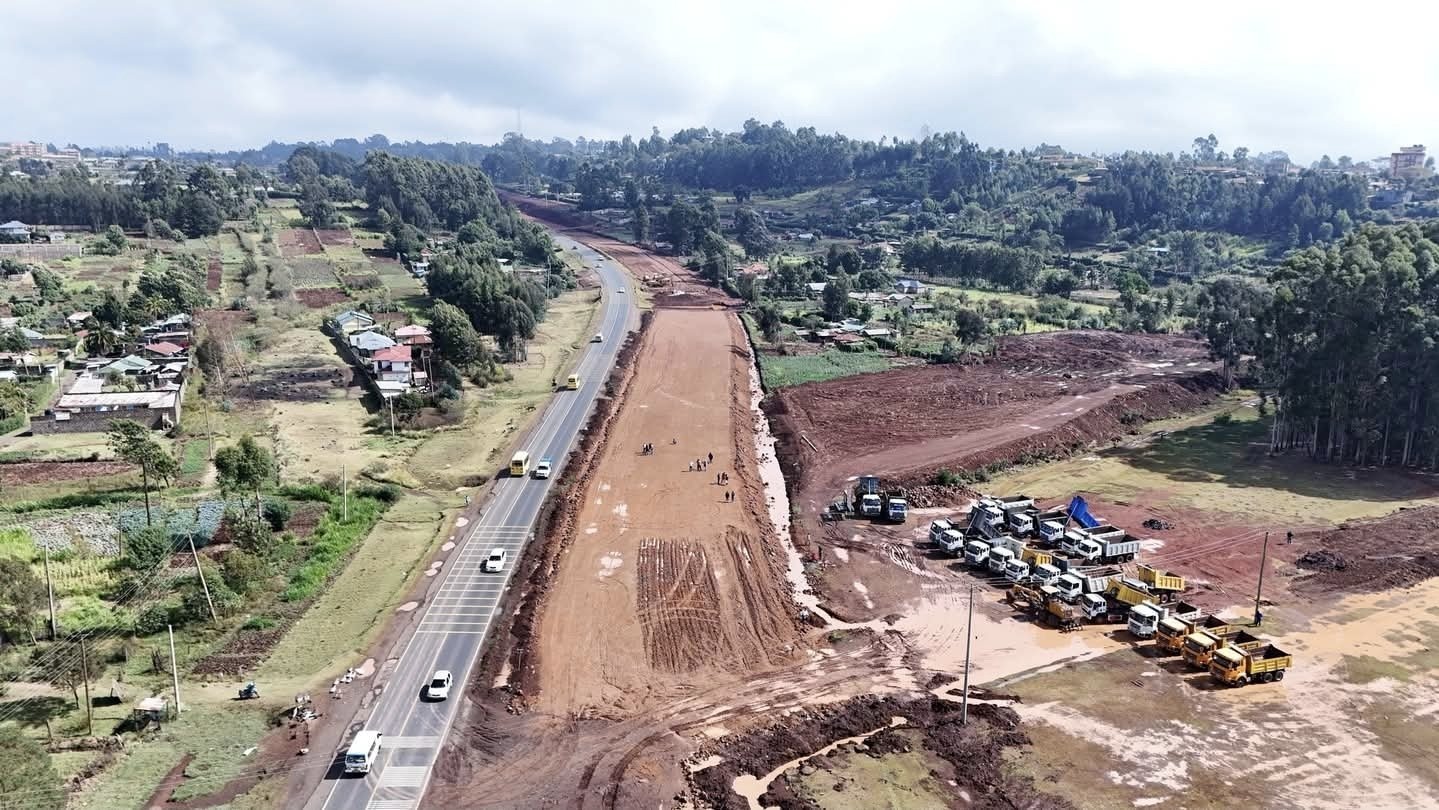

The Star newspaper on 4 March reported that the Rironi-Mau Summit highway project has already created 10,000 direct and indirect jobs. The story also noted stronger business activity for communities around Limuru and its surrounding areas.
The report described the scheme as lifting commerce for local traders and suppliers in the region.

Separately, the government spokesperson posted an update on the project on 3 March. The thread showed rapid progress on the 139-kilometre Rironi–Naivasha–Gilgil dual carriageway since President William Ruto launched construction in late November 2025.
Works are advancing on several sections at once. The upgrade widens the Northern Corridor into a four-to-six lane highway and fixes long-known blackspots such as Salgaa and parts of the A8 South.
An 81-kilometre stretch toward Gilgil is on track for completion by mid-2026, with the full road due for handover in April 2027.

The spokesperson highlighted practical benefits. The new alignment will speed up farm-to-market transport for producers in Naivasha and nearby zones. It will support suppliers in Kiambu and Nakuru counties and open a smoother route for goods moving from Mombasa port to Uganda, Rwanda and South Sudan.
On employment, the official post spoke in general terms, saying the project is “boosting jobs in Kiambu and Nakuru” and helping local suppliers. No specific total appeared in the update or the accompanying site photographs.
Those images showed graders and excavators active on multiple stretches, together with teams in safety gear and trucks lined up near the works. A separate photo of the official launch plaque from 28 November 2025 confirmed the scope covers both the Rironi-Naivasha-Gilgil section and the Rironi-Maai Mahiu-Naivasha South road.
Road projects of this size in Kenya commonly create temporary positions during earthworks, paving and related supply activities. Local traders in Limuru have reported busier roadside outlets and higher demand for materials since construction began. Residents along the route have also noted increased truck movements and ongoing site activity.
The dual carriageway forms part of wider efforts to modernise Kenya’s main trade artery. Once finished it should cut journey times and reduce the congestion that currently slows cargo heading inland or toward landlocked neighbours.
Safety improvements at Salgaa have formed a key part of the design after years of concern over narrow lanes and poor visibility in that area. The new layout aims to deliver better flow and fewer incidents.
Both the newspaper report and the government thread cover the same stretch of road now under active construction. The Star gave a clear number on jobs while the official account described the effect in broader terms.
As the works move through 2026, contractors and the Kenya National Highways Authority are expected to keep updating the public on milestones. Communities in the corridor will continue to watch how the project translates into steady opportunities beyond the initial construction phase.
The Rironi upgrade sits among several major road schemes underway on the Northern Corridor. Its progress is being followed closely because of the route’s importance to both local economies and regional trade.
Comments (0)
Leave a Comment
No comments yet. Be the first to share your thoughts!