
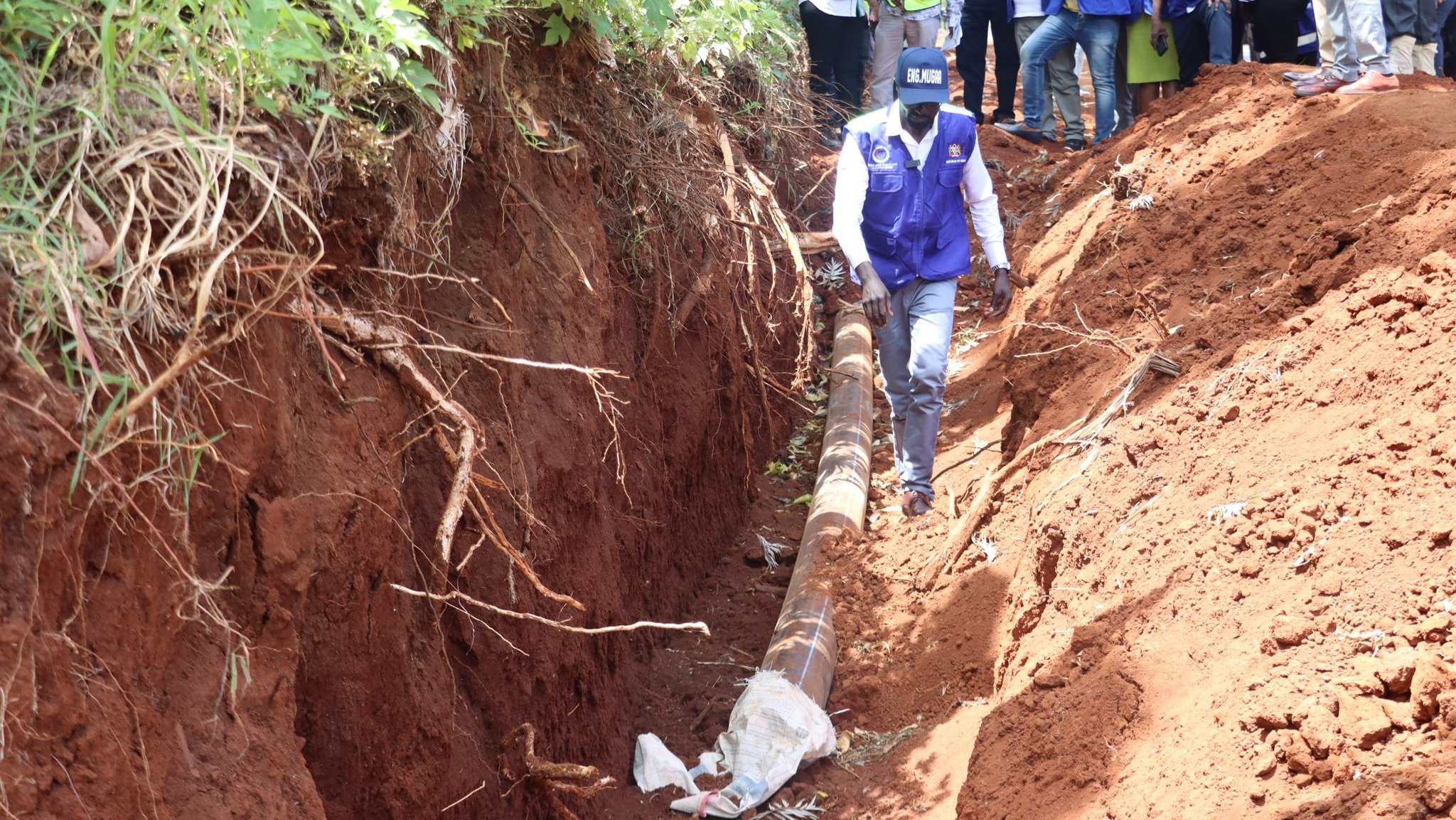

Cabinet Secretary for Water, Sanitation and Irrigation Eric Mugaa led a group of officials to Kathwana in Tharaka Nithi County for the launch of extra components in the Chuka and Chogoria Water Supply Project. The event drew local leaders, including Chuka Igambang'ombe MP Patrick Munene and Tharaka Nithi Women Representative Susan Mwindu. Also present were Tana Water Works Development Agency board chairman Theobald Mukundi Wambugu and CEO Philip Gichuki, along with national and county representatives.
The additions cover several key areas. Crews will extend lines to the Kabui and Kaanwa tanks. A new 37-kilometer transmission main heads to Kathwana. Plans include break pressure tanks to manage flow. In Chogoria, connections will reach households and institutions. Reinstatement addresses eroded sections of the raw water gravity main, where soil loss has exposed pipes.
Work kicked off in November 2025. The timeline points to wrapping up by June 2026. Once done, the setup should deliver better water access to people in Chuka, Chogoria, and broader Kathwana areas. Mugaa tied the effort to the government's Bottom-Up Economic Transformation Agenda, which channels funds into local infrastructure to foster jobs and growth from the ground level.
Tharaka Nithi County, in Kenya's eastern region, has long grappled with water scarcity. Its terrain mixes highlands and semi-arid zones, making distribution tricky. The Tana Water Works Development Agency, established under the Water Act of 2016, oversees bulk water systems in the Tana and Athi river basins. This project falls under its mandate, building on existing intakes from rivers like the Thuci.
Similar initiatives dot the country. In neighboring Meru County, the Isiolo Water and Sewerage Company expanded networks last year, adding 20 kilometers of piping to serve 15,000 more residents. Nationally, the Ministry of Water aims for universal access by 2030, per Vision 2030 goals. Current coverage sits at about 60 percent for water and 25 percent for sewerage, with rural areas trailing urban ones.
Funding for such projects often blends government budgets, donor aid, and loans. The African Development Bank has backed several, including the Kenya Towns Sustainable Water Supply and Sanitation Program, which targets mid-sized towns like Chuka. Costs for the Chuka-Chogoria extensions weren't detailed at the launch, but comparable works run into hundreds of millions of shillings.
Construction involves standard practices for water lines. HDPE pipes, visible in site photos, resist corrosion and handle pressure well. Trenches dug along routes expose roots and red soil typical of the region. Reinstatement fixes erosion, often caused by heavy rains washing away backfill. Break pressure tanks prevent bursts in downhill sections.
Local involvement matters. County governments handle last-mile connections, while national agencies manage bulk supply. In Tharaka Nithi, devolution since 2013 has boosted water committees that maintain communal points. The launch highlighted coordination between levels, crucial for avoiding overlaps or gaps.
Challenges in water projects include terrain hurdles. Hilly areas require pumping stations, raising energy costs. Vandalism hits isolated pipes, and climate shifts bring droughts or floods that strain systems. The 2022-2023 dry spell affected over 5 million Kenyans, underscoring resilience needs like storage tanks.
Progress shows in metrics. The Water Services Regulatory Board reports improved efficiency, with non-revenue water dropping from 45 percent in 2019 to 38 percent by 2025. Metering and leak detection tech help. For Chuka-Chogoria, new connections could cut walking distances for water, freeing time for education and work, especially for women and girls.
The agenda's bottom-up focus extends to jobs. Construction phases employ locals in digging, laying, and backfilling. Skilled roles go to engineers and technicians. Post-completion, operations create maintenance positions. In Kathwana, a growing administrative center, reliable water supports small businesses and agriculture.
Broader context includes the National Water Master Plan 2030, which maps out investments. It prioritizes basins like Tana, where demand rises with population growth. Kenya's 54 million people, per 2025 estimates, strain resources. Urban migration adds pressure on towns like Chuka, the county headquarters.
Environmental considerations apply. Pipe routes avoid sensitive ecosystems, and reinstatement includes replanting to curb soil loss. The ministry enforces standards under the Environmental Management and Coordination Act.
Public feedback emerged online. Some praised the launch, asking about pipe fusion methods. Others urged visits to underserved spots like Chiakariga ward or Kuria in western Kenya, where old pumps failed. Such input reflects widespread needs, with the ministry fielding similar requests countrywide.
Mugaa's role, appointed in 2024, emphasizes engineering expertise. His background in civil works informs decisions on projects like this. The launch aligns with quarterly reviews by principal secretaries, ensuring alignment with national priorities.
As works advance, monitoring will track milestones. Community meetings likely follow to address concerns. Success here could model for similar expansions elsewhere, like in arid northern counties.
In essence, the Chuka-Chogoria additions represent targeted investment. They address immediate needs while building toward sustainable water security, a cornerstone for Kenya's development.
Comments (0)
Leave a Comment
No comments yet. Be the first to share your thoughts!