
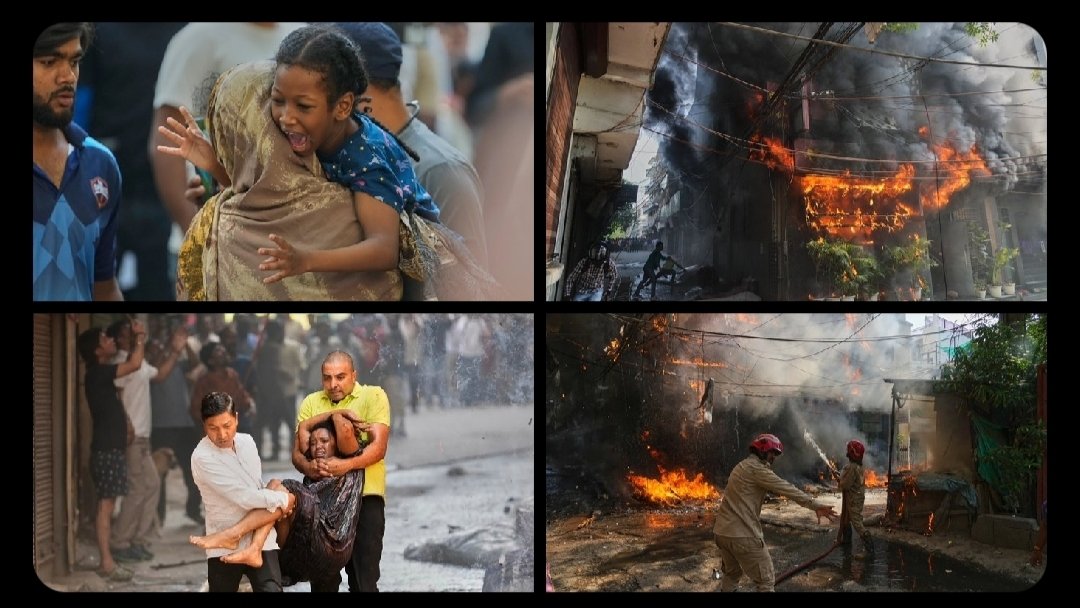

A major fire swept through Flourish Stay, a bed-and-breakfast hotel in New Delhi's Malviya Nagar area on Wednesday morning, leaving at least 21 people dead. Police described it as one of the deadliest blazes in the Indian capital in recent years.
The fire broke out around 8:50 am in the basement of the building, which also housed a restaurant. Rescue operations involved multiple fire engines, but thick smoke and limited access complicated efforts. More than 40 people were hospitalised, with eight in critical condition.
Reports indicate the five-storey structure had only one narrow entry and exit point. Poor ventilation and possible illegal modifications contributed to the rapid spread of smoke and flames. Some trapped guests jumped from upper floors onto mattresses placed by residents below.
Many of those killed were foreign visitors, including medical tourists from African countries. The incident has drawn attention to safety standards in buildings catering to transient populations in dense neighbourhoods.
Indian authorities routinely cite electrical short circuits from poorly maintained wiring as a leading cause of such fires. Building fires remain common due to weak enforcement of safety regulations and inadequate firefighting infrastructure in many areas.
Local lawmaker Satish Upadhyay said an inquiry is underway. Officials have promised arrests for anyone found responsible for breaking safety norms. Prime Minister Narendra Modi expressed condolences and called the incident tragic.
For the global construction industry, tragedies like this underscore persistent challenges in emerging markets. Rapid urbanisation often outpaces regulatory oversight, leading to buildings with compromised fire exits, insufficient suppression systems, and substandard materials.
In Kenya, where similar pressures exist in Nairobi and other growing cities, developers and regulators continue to grapple with enforcement of fire safety codes in hotels, apartments and commercial structures. The New Delhi case serves as a reminder of the human cost when compliance falls short.
Construction professionals note that proper fire-rated compartmentalisation, multiple escape routes, and regular inspections can dramatically reduce risks. Yet in many congested districts, older buildings and unauthorised extensions create vulnerabilities that prove deadly during emergencies.
The Delhi Fire Services deployed eight tenders to control the blaze. Search operations continued as authorities assessed the full extent of structural damage. The cause remains under investigation, with early indications pointing to possible electrical faults.
This incident follows a pattern seen in previous Indian fires, including a 2019 Delhi factory blaze that killed 43. It highlights the need for stronger integration of fire safety into building design and retrofitting processes.
As Kenya advances its own infrastructure push, including hospitality and medical tourism projects, lessons from international failures emphasise proactive measures. These include mandatory sprinkler systems in multi-storey buildings, clear evacuation protocols, and stricter penalties for violations.
The New Delhi hotel fire has prompted calls for wider audits of similar establishments. For contractors and engineers working across borders, it reinforces that safety cannot be an afterthought in fast-developing urban environments.
Comments (0)
Leave a Comment
No comments yet. Be the first to share your thoughts!