
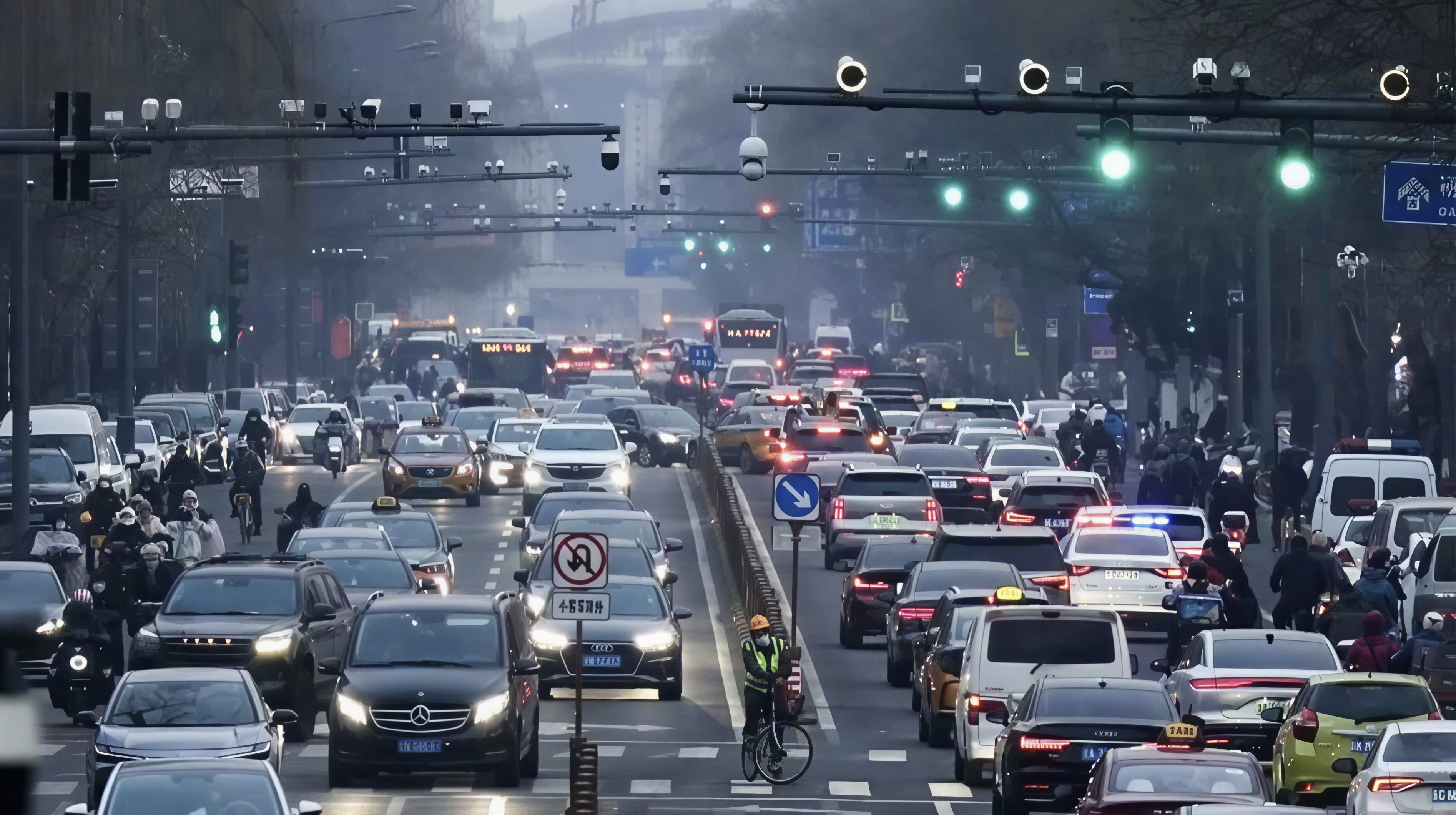

China has proposed adding a dedicated chapter on autonomous vehicles to its Road Traffic Safety Law, according to state-run news agency Xinhua, marking one of the country's most direct legislative attempts yet to define liability for self-driving technology.
The draft amendment was submitted to the National People's Congress Standing Committee, China's top legislature, for an initial review on Tuesday. Xinhua reported that the proposal defines autonomous driving and driver-assistance functions and sets out how responsibility would be assigned when things go wrong.
Under the draft, manufacturers or importers could be held responsible for traffic violations committed while a vehicle operates in autonomous-driving mode. Vehicles driven manually, or using only assisted-driving functions rather than full autonomy, would remain subject to existing traffic rules governing human drivers.
That distinction matters because autonomous-driving and driver-assistance systems differ significantly in how much control they take from a human operator. Driver-assistance features, such as adaptive cruise control or lane-keeping systems, still require a person to actively monitor and control the vehicle. Fully autonomous systems, by contrast, are designed to handle driving tasks without ongoing human input under specified conditions.
China has positioned itself as one of the most active testing grounds for autonomous vehicle technology globally, with several domestic companies operating robotaxi services and testing self-driving systems on public roads in recent years. The legislative proposal would give that testing environment a clearer legal framework, addressing a question that has remained unsettled in many jurisdictions worldwide: who bears responsibility when a self-driving car breaks traffic law.
The bill's path through China's legislative system typically involves multiple rounds of review before a law is formally adopted. An initial reading, such as the one held this week, generally precedes further deliberation, public consultation and possible revisions before the Standing Committee votes on final passage.
Xinhua's report did not specify a timeline for when the amendment might be adopted or take effect. Reuters reported the story from Beijing, with contributions from correspondents Qiaoyi Li and Ju-min Park.
The proposal comes as governments in several countries continue to grapple with how to regulate autonomous vehicles as the technology matures. Liability questions, in particular, have proven complex, since responsibility can shift between drivers, manufacturers, software developers and infrastructure providers depending on how a vehicle is being operated at the time of an incident.
For manufacturers operating in China's automotive market, a clearer liability framework could carry significant implications. Companies producing or importing vehicles with autonomous capabilities would need to account for potential legal responsibility tied directly to how their systems perform on the road, rather than liability resting solely with the human occupant.
The amendment forms part of a broader wave of regulatory activity accompanying the rapid expansion of autonomous vehicle testing and deployment across major automotive markets, as authorities work to establish rules for a technology that has outpaced existing traffic law in many jurisdictions.
Comments (0)
Leave a Comment
No comments yet. Be the first to share your thoughts!