
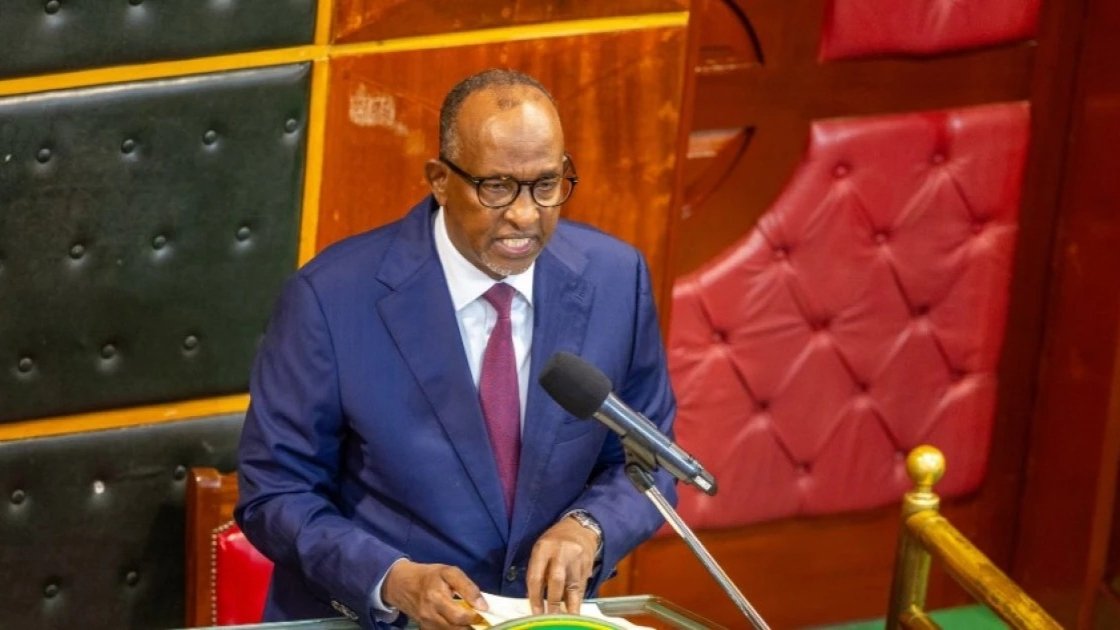

Health Cabinet Secretary Aden Duale appeared before the National Assembly on Wednesday, June 3, and stated that the government will not hold public consultations for the proposed Ebola quarantine facility in Laikipia.
Duale referred to provisions in the Public Health Act that allow the ministry to act quickly on infectious disease threats. The facility, located at Laikipia Air Base in Nanyuki, is part of preparations to manage potential Ebola transmission from neighbouring countries including the Democratic Republic of Congo and Uganda.
He described the current situation as requiring immediate attention. "Under the Public Health Act, we don’t need to do public participation; we are not going to consult citizens," Duale told lawmakers. The emphasis was on protecting Kenyans before any cases arrive.
The site sits on Kenya Defence Forces property. Its selection reflects the need for isolation and access to a long runway for rapid operations. The project falls under a longstanding Kenya-US biological engagement partnership.
Duale indicated the Laikipia facility is one of 23 isolation centres planned nationwide. It will operate jointly under the Kenya Air Force Base commander and the Ministry of Health, serving both Kenyan nationals and foreigners.
During the session, some MPs expressed reservations about community safety and the balance between local and international priorities. Duale responded by highlighting the presence of Kenyan peacekeepers and other personnel in Ebola-affected areas who might require isolation upon return.
He drew parallels to facilities developed during the Covid-19 response with international support. "The facilities will be used to treat both Kenyans and foreigners. Let’s not politicise it," he added.
Separately, Duale outlined that Kenya requires Ksh2.6 billion to prepare for an initial 100 Ebola cases. The allocation would fund border screening, surveillance activities, laboratory services, risk communication, and data management systems. Further resources target staffing, logistics, infection prevention, and frontline worker protection.
A recent assessment showed solid performance in contact tracing and rapid response but identified shortfalls in case management and preparedness at entry points. The funding aims to address those areas promptly.
Laikipia Air Base provides a secure environment distant from populated zones, minimising potential risks during operations. Construction aligns with wider national strategies that include laboratory upgrades and emergency financing.
Duale stressed Kenya’s position in regional health security. With Kenyan staff deployed in high-risk zones and commercial interests present, the possibility of imported cases exists. The facility offers a dedicated space for managed isolation and care.
Screening efforts have already covered more than 71,000 travellers, with suspected cases testing negative so far. Medical surge teams remain on standby.
The US Embassy noted ongoing court processes around the project while underscoring mutual health security objectives. It framed the Laikipia initiative as supporting broader regional stability and protecting Kenya’s domestic health resources.
Some parliamentarians continued to call for greater community involvement. Duale maintained that delays from consultations could increase vulnerability if Ebola reaches Kenya. He suggested that failure to prepare now might lead to difficult questions later.
The case illustrates the balance between swift infrastructure action on health threats and expectations around public engagement in such projects. Work on the Laikipia facility continues under the emergency framework with Kenyan and US collaboration.
Comments (0)
Leave a Comment
No comments yet. Be the first to share your thoughts!