
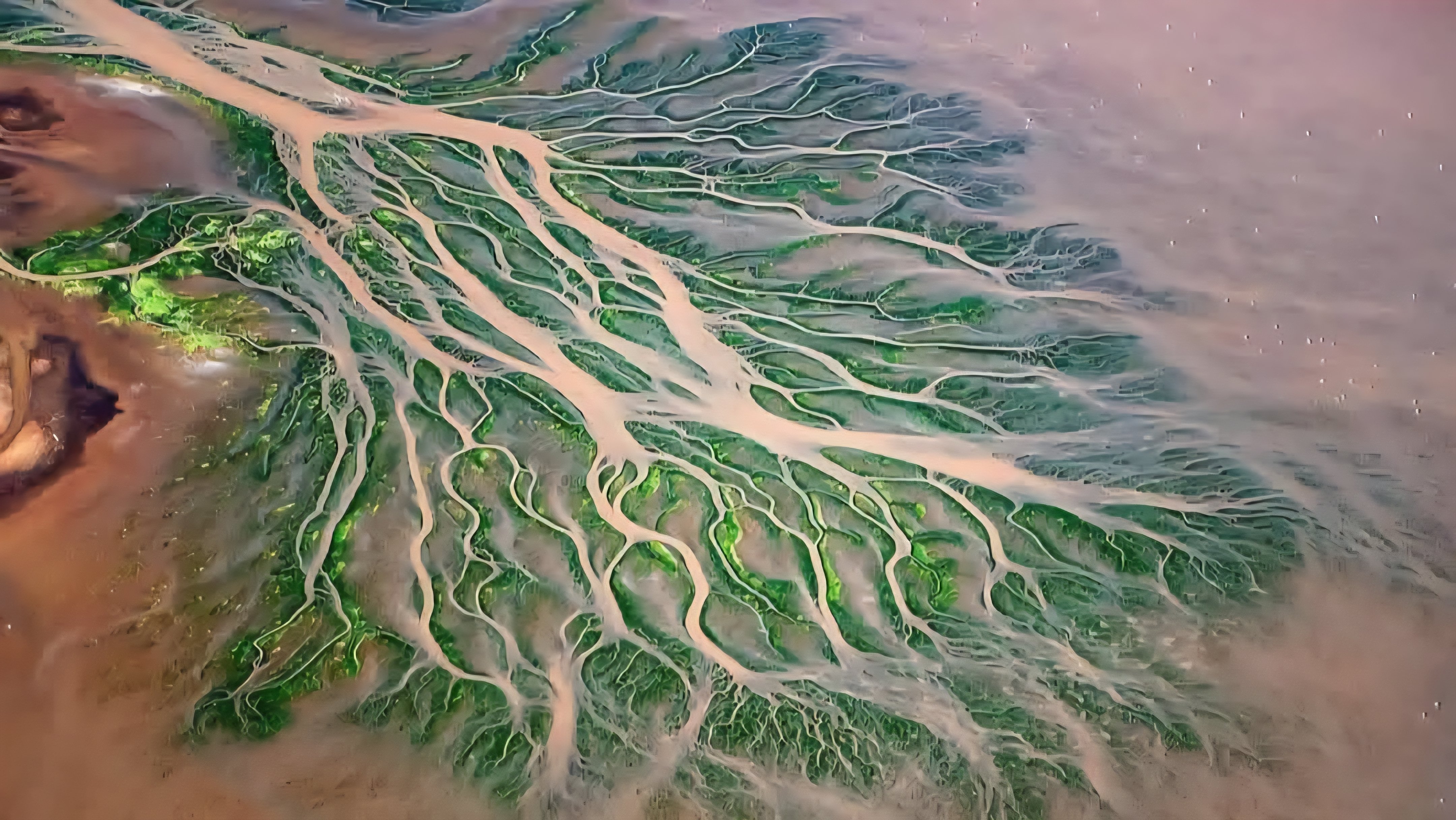

Deep in the Rift Valley, a unique hydrological system demonstrates how natural infrastructure sustains entire wildlife populations. The Southern Ewaso Ng'iro River, originating in the Mau Forest Complex (MFC), flows southward without ever reaching the ocean.
Instead of a typical ocean outlet, this river terminates in a sprawling inland delta. This delta directly feeds Lake Natron, a highly alkaline body of water located across the border in Tanzania, which serves as the primary breeding ground for East Africa's lesser flamingos.
Without the freshwater filtration provided by this specific river system, the delicate breeding cycle of these birds would face immediate collapse. The river flows past Nguruman and Mount Shompole, where its straight path naturally disperses into a massive wetland.
Known as the Engare Ng'iro wetland, this system comprises a permanent swamp spanning 4,000 hectares and an additional 8,000 hectares of seasonal floodplain. The wetland acts as a natural water purification system, filtering out heavy sediments before the water seeps into the brine lake.
Lake Natron is notoriously hostile, containing water so caustic and alkaline that it can cause severe chemical burns to most animals. Yet, the lesser flamingos rely on this extreme environment to protect their nesting sites from land-based predators.
However, the birds cannot survive on the caustic lake water alone. The incoming fresh water from the Engare Ng'iro wetland provides the crucial drinking water they need, and it also allows the flamingos to rinse corrosive salt deposits from their feathers.
This entire ecological chain remains entirely dependent on the headwaters located hundreds of kilometres away in the Kenyan highlands. The Kenya Forest Service (KFS) has long warned that the destruction of upstream water towers threatens major river basins.
If the forest canopy is cleared, increased soil erosion leads to heavy siltation downstream. This siltation would quickly choke the delicate marshlands of the Southern Ewaso Ng'iro, preventing the natural filtration that keeps Lake Natron habitable for the birds.
The National Environment Management Authority (NEMA) coordinates conservation policies to mitigate these transboundary environmental risks, but local implementation remains challenging. Protecting the forest is not merely a localized forestry concern, but a critical effort to preserve a vast regional ecosystem.
For decades, conservationists have monitored the delicate balance between agricultural expansion and natural water preservation. Siltation and altered water flows from the headwaters could permanently disrupt the fragile chemistry of Lake Natron, which would destroy the nesting grounds.
Maintaining the integrity of the MFC is therefore essential to preserving the natural infrastructure. By keeping the forest intact, the downstream flow remains regulated and clean, although climate variability continues to pressure the region.
Local communities in the Shompole area also depend heavily on the river for pastoral livelihoods and watering livestock. This shared reliance highlights the complex connection between community development, land use, and environmental stewardship along the river basin.
Ultimately, the survival of the flamingos is tied directly to the conservation of Kenya's largest water tower. Every tree preserved in the highlands secures the future of the vibrant pink flocks nesting hunreds of kilometres away.
Comments (0)
Leave a Comment
No comments yet. Be the first to share your thoughts!