
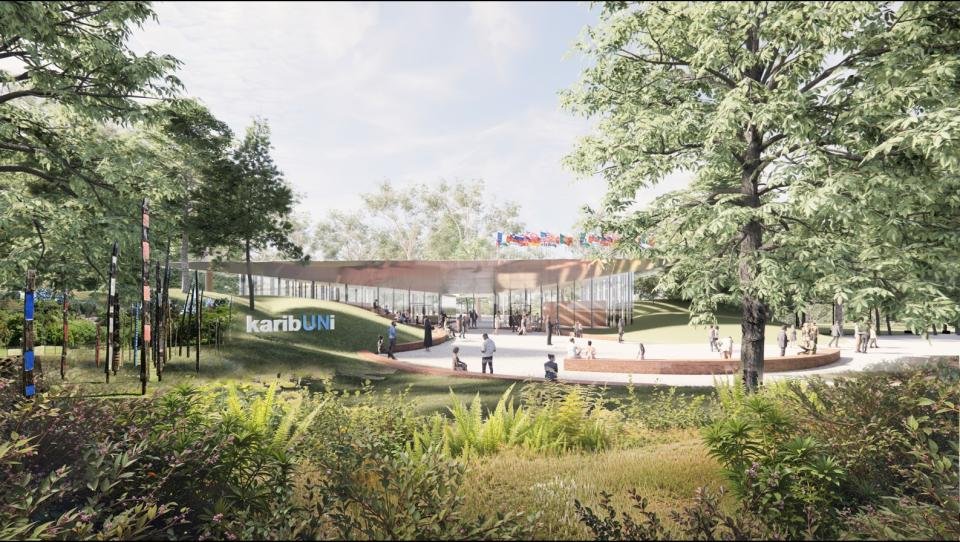

The United Nations Office at Nairobi (UNON) is cementing the city’s status as a global diplomatic hub with a colossal expansion project at its Gigiri headquarters. The multi-phased upgrade, which began this week, represents the largest UN investment outside New York and is set to reshape Kenya’s construction industry. With a budget of $327.6 million, equivalent to about KES 42.3 billion, the project signals Nairobi’s rising importance on the world stage and offers a major opportunity for local contractors, engineers, and suppliers.
The expansion has two main components. The first is a $62 million (KES 8 billion) program to construct new office blocks and modernize existing facilities across the 140-acre complex, increasing capacity by around 20 percent. This will allow more UN agencies to relocate operations to Nairobi as part of efforts to decentralize from traditional headquarters. The second and larger element is a $265.6 million (KES 34.3 billion) state-of-the-art conference facility. Once complete, it will raise meeting capacity from 2,000 delegates to 9,000, making Nairobi one of the world’s leading diplomatic venues.
For Kenya’s construction sector, the project promises significant benefits. The demand for advanced engineering, interior finishes, and technology systems will create thousands of jobs, from masons and plumbers to architects and project managers. Local supply chains will play a central role, with increased demand for cement, steel, timber, glass, and sanitary ware. By engaging Kenyan firms in such a complex development, the UN will also contribute to skills transfer and higher industry standards, leaving a lasting impact beyond the 2026 completion date.
Sustainability will be central to the new facilities. The design is expected to include energy-efficient lighting and cooling systems, rainwater harvesting, and modern waste management solutions. These green building practices will position Nairobi as a leader in sustainable construction in Africa and set a benchmark for future mega-projects in the region.
The economic ripple effects are expected to reach far beyond the UN compound. Nairobi’s hotels, transport providers, and service industries stand to benefit from the influx of thousands of additional delegates every year. For the city’s real estate and infrastructure sector, the investment highlights international confidence in Kenya’s ability to manage large-scale projects. It also strengthens Nairobi’s position in Africa, where Addis Ababa and Johannesburg have traditionally been seen as diplomatic hubs.
Ultimately, the UNON expansion is not just about adding new buildings. It is about reinforcing Nairobi’s foundation as Africa’s premier international hub. By 2026, the new offices and conference center will give Kenya the capacity to host major global events on a scale never seen before, while creating jobs, boosting local industries, and driving innovation in sustainable construction. For the country’s building sector, it is a clear sign that the world is looking to Nairobi as a center for growth, diplomacy, and opportunity.
Comments (0)
Leave a Comment
No comments yet. Be the first to share your thoughts!