
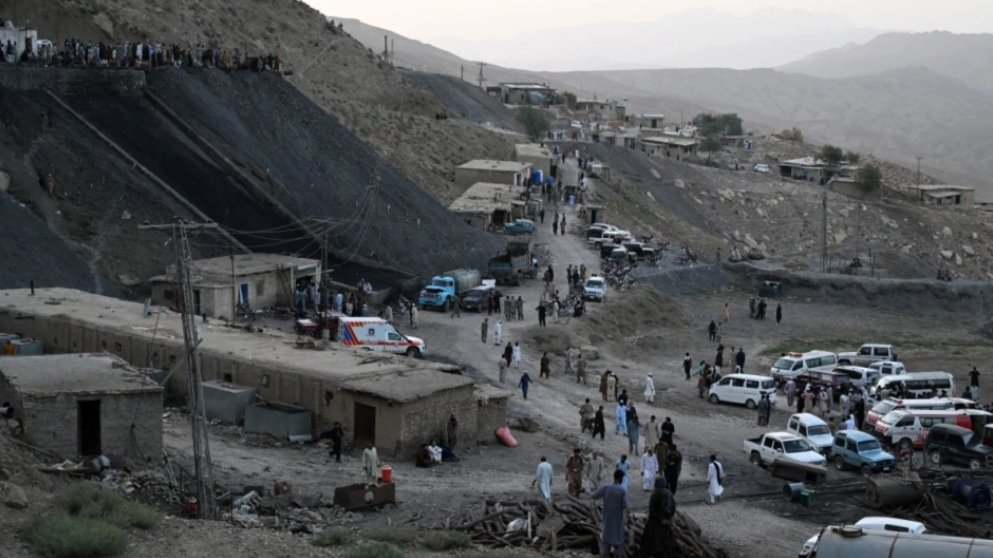

A methane gas explosion at a coal mine in southern Pakistan has killed at least 34 workers. The blast occurred on Thursday near the Surange area, about 50 kilometres east of Quetta, the capital of Balochistan province. Provincial disaster management authorities confirmed the recovery of 34 bodies in a statement issued early on Friday.
Rescue teams remained on site searching for additional miners who may still be trapped. Officials did not immediately disclose how many workers were underground at the time of the explosion. The operation continued through the night as emergency crews worked to reach remaining sections of the mine.
Mining accidents are frequent in Balochistan. The province is Pakistan’s largest by land area and its poorest by most development indicators. It holds significant mineral resources, including extensive coal deposits that support local livelihoods and national energy needs. Safety standards in many small and medium-scale operations have long drawn criticism from labour groups and industry observers.
Methane accumulation is a recognised hazard in underground coal mining. When concentrations reach explosive levels and an ignition source is present, the resulting blast can collapse tunnels, trigger secondary fires and cut off escape routes. In regions where ventilation systems and gas monitoring are limited, the risk rises sharply.
The latest incident adds to a long record of fatalities in Balochistan’s coal fields. Families of the victims gathered near the site as recovery work progressed. Local officials coordinated with national disaster response teams to manage the operation and support bereaved households.
Pakistan’s mining sector employs tens of thousands of people, many in informal or poorly regulated pits. Enforcement of safety regulations varies widely between provinces and between large commercial operations and smaller private mines. Repeated accidents have prompted calls for stricter oversight, better training and mandatory gas detection equipment.
For the wider construction and extractive industries, the event underlines the human cost of inadequate underground safety systems. Similar methane-related disasters have occurred in other coal-producing countries where regulatory capacity lags behind production pressures. Effective prevention relies on continuous ventilation, real-time monitoring and strict limits on ignition sources.
Balochistan’s economic challenges compound the problem. Limited alternative employment options keep workers entering high-risk environments. Resource extraction remains one of the few significant sources of income in many districts, creating a difficult balance between livelihoods and occupational safety.
Authorities have not yet released a full account of the mine’s ownership, operational status or recent inspection history. Further details are expected once the rescue phase concludes and formal investigations begin. In the meantime, the confirmed death toll stands at 34, with the possibility of additional casualties as search efforts continue.
The tragedy once again focuses attention on the conditions under which coal is extracted in one of Pakistan’s most resource-rich yet underdeveloped regions. Improving safety will require sustained investment in equipment, training and regulatory enforcement if future losses are to be reduced.
Comments (0)
Leave a Comment
No comments yet. Be the first to share your thoughts!