

United States (US) President Donald Trump signed two executive orders on Thursday aimed at curtailing birthright citizenship. The directives represent a new attempt to limit citizenship guarantees following a high court setback.
The action comes five weeks after the Supreme Court (SC) struck down an earlier, broader executive decree. Administration officials argue that these latest directives fall entirely outside the scope of that judicial ruling.
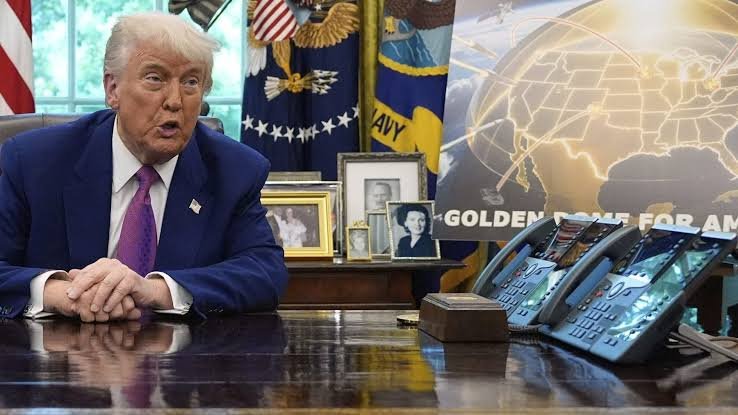
Speaking during an Oval Office signing ceremony, President Trump criticized the 6-3 decision handed down on June 30. He called the ruling unfortunate, but added that his team made adjustments to address specific practices.
The first executive order focuses on eliminating commercial travel arranged specifically for foreign nationals to deliver babies on American soil. White House (WH) aide Stephen Miller announced that the practice of birth tourism is now banned.
Federal officials contend that foreign visitors routinely exploit non-immigrant visas to secure automatic citizenship for children. The administration asserts that commercial operators built profit-making enterprises around short-term travel for expectant mothers.
Under the new rules, consular officers receive expanded discretion to review visa applications for prospective visitors. Department of Homeland Security (DHS) agents will evaluate whether applicants intend to enter the country primarily for childbirth.
A second executive order seeks to redefine eligibility exemptions under the Fourteenth Amendment of the US Constitution. The measure targets children born to foreign government staff, embassy personnel, and individuals linked to foreign organizations.
The directive also restricts citizenship claims for children of parents identified as alien enemies or members of designated groups. Administration lawyers maintain that these classifications mirror long-standing, historical exceptions established under federal law.
Civil rights advocates quickly condemned the executive action and promised immediate challenges in federal court. Lawyers from the American Civil Liberties Union (ACLU) declared that birthright citizenship remains a constitutional right that executive actions cannot dismantle.
Legal scholars noted that existing statutes already prohibit using visitor visas for fraudulent purposes like birth tourism. They raised concerns that broad enforcement guidelines could penalize pregnant travelers who enter the country for legitimate reasons.
Data from federal health agencies indicates that around 9,600 children were born in 2024 to foreign mothers residing abroad. Critics argue that official statistics do not support administration claims regarding the true scale of birth tourism.
Chief Justice John Roberts previously wrote that the Fourteenth Amendment guarantees political membership to every free-born individual. Lower courts are expected to receive emergency filings from advocacy groups seeking injunctions against the directives.
The White House maintains that Congress failed to resolve statutory loopholes, forcing executive intervention. Administration officials expressed confidence that the tailored scope of the new orders will survive upcoming legal scrutiny in federal courts.
Federal judges in multiple jurisdictions will likely hear consolidated lawsuits within days. Legal experts anticipate that federal district courts may issue temporary restraining orders while proceedings determine the constitutional validity of the administration measures.
Immigration enforcement agencies are scheduled to issue operational guidelines outlining how field officers must apply the new directives. Further litigation will determine whether these restrictions can take effect before judges review their constitutionality.
Comments (0)
Leave a Comment
No comments yet. Be the first to share your thoughts!