

Lake Baringo and Lake Bogoria are approaching a critical threshold. Principal Secretary for Defence Dr Patrick Mariru has warned that the two Rift Valley lakes risk merging unless urgent measures are taken. One is freshwater and the other is saline. A merger would create a major ecological problem.
Lake Baringo has risen between 12 and 14 metres over the past 15 years. Roughly two billion cubic metres of water have been added in that period. Its surface area has expanded from 108 square kilometres to 130 square kilometres. The rising waters have submerged homes and public amenities and disrupted livelihoods around the lake.
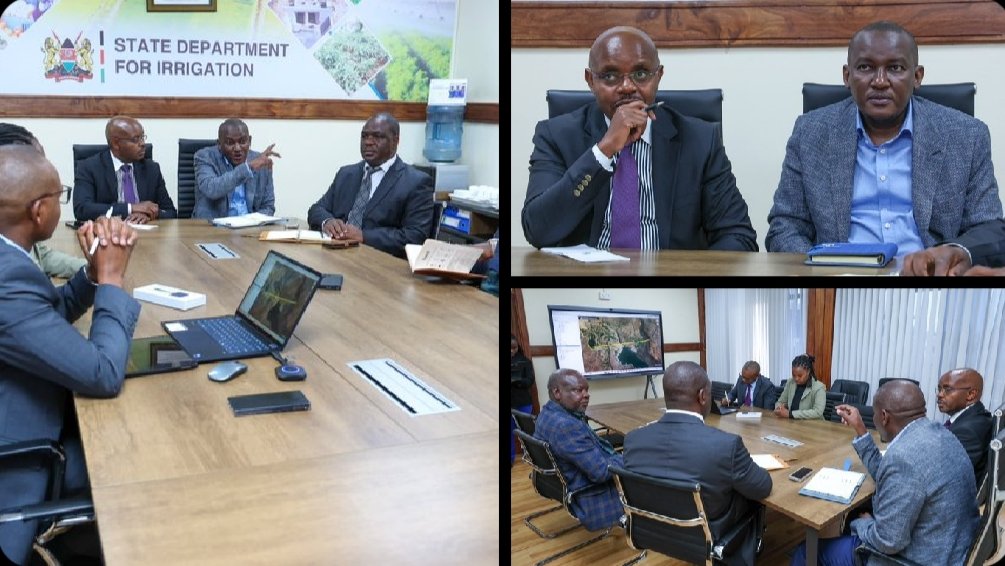
Mariru met the Principal Secretary for Irrigation and Brigadier Titus Sokobe of the Defence forces to discuss possible interventions. The discussions focused on evacuating excess water from Lake Baringo and using it to irrigate up to 100,000 acres in Baringo and possibly Turkana counties. The proposal envisages a private investment model.
Under the plan, the Department of Defence would construct evacuation tunnels as well as primary, secondary and tertiary canals. Preliminary work on the programme is already under way. Officials view the scheme as a way to convert a flooding risk into an agricultural opportunity while protecting the distinct character of the two lakes.
Lake Bogoria is known for its alkaline waters and large flamingo populations. Lake Baringo supports freshwater fisheries and surrounding communities. Mixing the two systems would alter salinity levels, damage existing ecosystems and affect both wildlife and human activities that depend on the current conditions.
Rising water levels in the Rift Valley lakes have been observed for more than a decade. Scientists and local authorities have linked the increases to higher rainfall, changes in catchment land use and geological factors. The human cost has been immediate: displaced families, lost farmland and damaged infrastructure.
Irrigation offers one practical response. Diverting surplus water into productive farmland could support food production in semi-arid parts of Baringo and Turkana. Private capital would be expected to finance parts of the scheme, with government agencies providing technical and construction support.
The involvement of the Defence forces in canal and tunnel works reflects the scale of the engineering challenge. Large water transfer projects require coordinated planning, environmental assessment and sustained maintenance. Early engagement between the two principal secretaries signals an attempt to move from diagnosis to action.
Communities living near the lakes have already adapted in limited ways, relocating homes and adjusting fishing practices. Without larger-scale intervention, further rises could expand the flooded zone and increase pressure on remaining dry land. The proposed water evacuation and irrigation programme aims to interrupt that trajectory.
Success will depend on accurate hydrological data, workable financing and careful management of environmental impacts. If implemented effectively, the initiative could reduce flooding risk while expanding irrigated agriculture in a region that has long faced water scarcity and climate variability.
Comments (0)
Leave a Comment
No comments yet. Be the first to share your thoughts!