
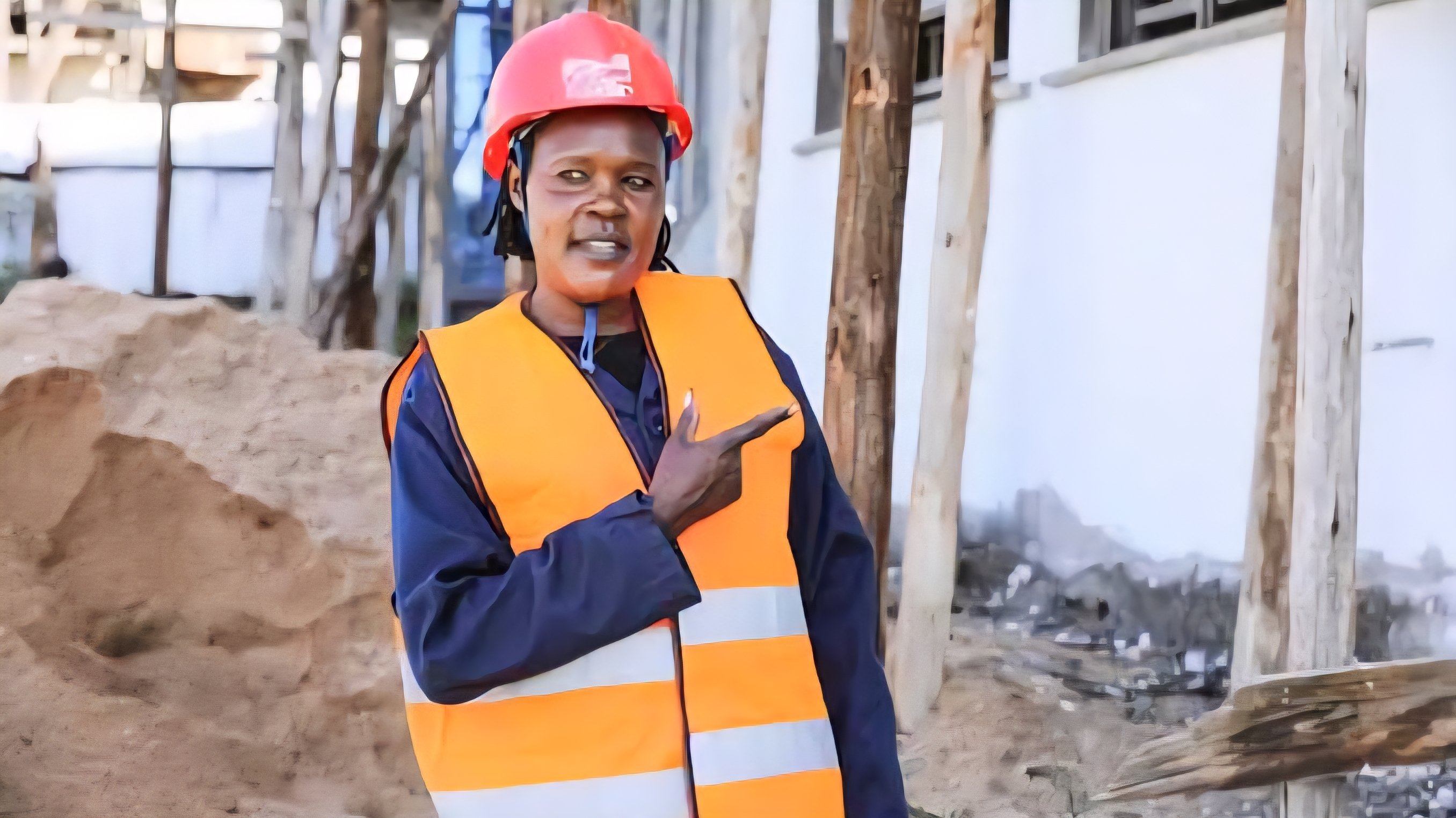

Rebecca Cherop moves through the half-finished halls of the new hospital in Kapenguria like someone who knows every corner of the job. The Sh100 million project for West Pokot County has hit about 80 percent completion. When it opens, the 40-bed facility will deliver maternity wards, delivery rooms, operating theatres, a small intensive care unit, laboratories, X-ray services and gynaecology care to an area where such specialised services have long been scarce.
Her entry into construction came from a simple need. After completing secondary school in 2000, university or college fees were beyond her family’s reach. She signed on with local building crews working on school projects, mixing mortar, pushing wheelbarrows loaded with sand and earning day wages. Those earnings slowly paid her way through studies.
The labour itself grew on her. She pursued a diploma at Kitelakapel Technical Training Institute, sharpened her skills as a mason and eventually worked as a foreman. In 2009, she registered her own company and began bidding on public jobs. Over the years, she has delivered schools, dispensaries, sanitation blocks and short roads across the county.
This hospital marks her most substantial contract yet. Construction started in 2023. The design includes four delivery suites, two theatres, newborn units and supporting administrative spaces.
Cherop makes a point of bringing women into her workforce. She targets roughly half the casual labour positions for female workers. When skilled roles open up, she actively seeks qualified women in plumbing, masonry, electrical work and carpentry. Others handle cooking for the crews or water supply.
Resistance in the community runs strong. In parts of Pokot society, construction remains widely seen as men’s domain. Cherop has encountered direct pushback at public gatherings where male contractors have openly questioned what business women have on building sites instead of staying in the kitchen.
Financing presents its own set of hurdles. Construction demands heavy upfront capital, and government payments frequently arrive late. The national 30 percent procurement preference for women, youth and persons with disabilities has helped her secure work, but the playing field stays uneven.
Training through a UN Women programme backed by the United Arab Emirates proved decisive. The sessions introduced her to electronic procurement systems and the AGPO portal. After completing the course, she and another woman contractor landed two county contracts.
Stephen Kapel, who heads procurement for West Pokot County, noted that women have received at least 14 percent of contracts overall. They already supply most hospital goods and have started winning some construction tenders. Persistent challenges include poor internet connectivity for online bidding and banks’ reluctance to finance certain local purchase orders.
On the hospital site, foreman Collins Okaro speaks with respect about working under Cherop. He calls her decisive and technically sound. He estimates that women with formal training in key trades still account for only about 30 percent of the skilled labour pool. He encourages more women to enrol in technical courses, citing good pay and steady demand.
Cherop carries the same conviction when speaking to others. She urges women to form companies, register them properly and pursue available opportunities. She credits her husband with consistent support during the tougher early phases of her career.
The completed hospital will not fix every maternal health gap in the region, yet it represents a concrete gain in local services. For Cherop, the project also serves as living proof that a woman who once earned her fees through manual labour can now oversee major public infrastructure.
Her firm continues to scan for the next tender. Each successful job adds another chapter to a career assembled one bag of cement at a time.
Comments (1)
Leave a Comment
Moureen
Apr 21Faith Benter ✓
Apr 21