
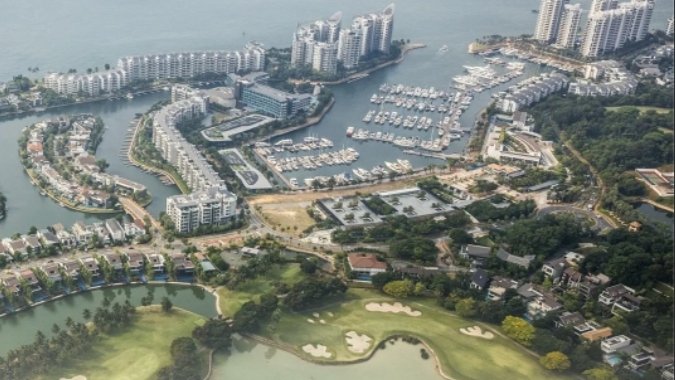

Sentosa Island, was once promoted as the city-state’s answer to Monte Carlo. More than two decades after its launch, many of its luxury villas stand empty and some show clear signs of decay. Property values in the gated district have underperformed the broader prime market for years, with numerous sales completed at steep discounts.
Sentosa Island itself remains one of Singapore’s strongest tourism draws. Millions of visitors arrive each year for its beaches, casino and leisure attractions. The residential component on the eastern tip, however, has followed a different trajectory. What was intended as a magnet for affluent foreigners has become a difficult investment for many owners.
The original government vision relied on seaside luxury living to attract high-net-worth individuals. Waterfront homes, marina access and a controlled, high-security environment were expected to sustain demand. Over time that formula has weakened. High additional buyer stamp duties on foreign purchases, lease decay on the predominantly 99-year properties, and limited new supply have narrowed the buyer pool.
Market data from recent years show non-landed homes in Sentosa Cove declining from their 2023 peak while mainland prime districts continued to rise. A significant share of resale transactions has recorded capital losses. Landed properties have also softened. Thin transaction volumes and long marketing periods have become common.
Empty houses accelerate physical deterioration. Porches, roofs and external finishes suffer when properties remain unoccupied for extended periods. The visual contrast with the well-maintained tourist zones elsewhere on the island is striking. For a location marketed on exclusivity and prestige, visible neglect undermines the original brand.
Singapore’s policy environment has also shifted. Earlier enthusiasm for attracting global capital into ultra-luxury housing has been tempered by domestic concerns over inequality and the cost of living. Authorities now place greater emphasis on balancing openness to international wealth with measures that address local pressures. Higher stamp duties on foreign buyers form part of that recalibration.
The construction and real-estate sectors watch such outcomes closely. Large gated projects depend on sustained demand, active occupancy and ongoing maintenance. When those elements falter, the physical and financial performance of the development suffers. Sentosa Cove illustrates how even carefully planned luxury enclaves can drift when macroeconomic and policy conditions change.
For Kenya and other markets developing high-end residential schemes, the experience offers a cautionary note. Location, lifestyle amenities and security are powerful selling points, yet they do not guarantee long-term value if buyer pools shrink or holding costs rise. Continuous occupancy and realistic pricing remain essential to prevent similar patterns of vacancy and decline.
Sentosa Cove still offers waterfront living and island security that few other addresses in Singapore can match. Whether those attributes can reverse the current underperformance will depend on policy settings, foreign buyer interest and the willingness of owners to maintain properties even when returns remain muted.
Comments (0)
Leave a Comment
No comments yet. Be the first to share your thoughts!