
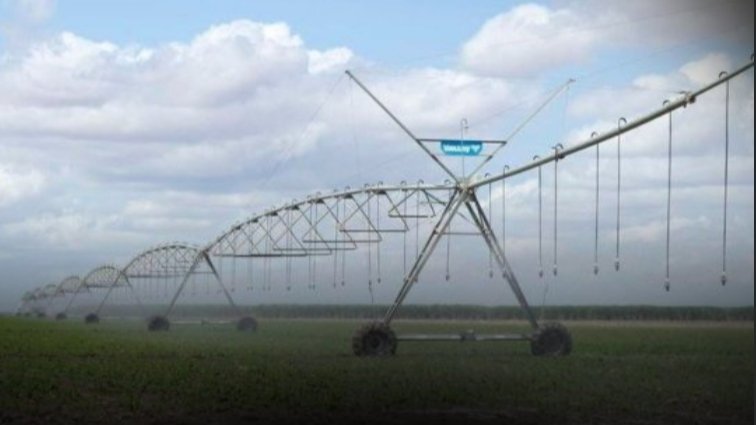

The Galana-Kulalu Food Security Project, once emblematic of Kenya’s agricultural challenges, is showing signs of revival. Launched in 2013 as a one-million-acre scheme to transform semi-arid land into a major food production hub, the 1.8-million-acre ranch straddling Kilifi and Tana River counties has struggled for years due to funding and management issues.
A shift to public-private partnerships is changing the narrative. Companies including Nyumba Agri, Selu Limited, and Al-Dhara Group have been allocated sections to develop irrigated farming. From the air, green circles of centre-pivot irrigation now dot the landscape where dry scrubland previously dominated.
Nyumba Agri operates more than 50 acres of mature onions ready for harvest, alongside maize, cassava, soybeans, and sisal. The farm has 23 centre-pivot systems, with plans to expand to 71 by September. Production includes value addition such as onion flakes and cassava crisps to reduce post-harvest losses.
Water infrastructure underpins the transformation. Fourteen earth dams, gravity-fed canals, and pumping stations support year-round farming. Solar power and diesel generators power operations in an area without grid electricity. Hydrological studies confirm the project’s water use is minimal relative to Galana River capacity.
More than 3,200 acres are currently under irrigation. The government has invested in intake works, reservoirs, roads, and bridges. The proposed Athi (Galana) Dam is expected to provide long-term security for up to 300,000 acres. Construction of the Galana Bridge will improve movement of inputs and produce.
Employment has risen significantly. Over 1,300 people, mostly from local communities, work as operators, technicians, and labourers. Indirect jobs in processing, transport, and services are expected to grow.
President William Ruto has described Galana-Kulalu as central to food security. The PPP model combines public infrastructure with private expertise. Water, Sanitation and Irrigation Cabinet Secretary Eric Mugaa said the project demonstrates successful collaboration for agricultural transformation.
Challenges remain. Completion of supporting infrastructure and sustained investment will determine long-term success. Yet visible progress — from irrigated fields to processing facilities — suggests the project is turning a corner after years of stalled ambition.
Comments (0)
Leave a Comment
No comments yet. Be the first to share your thoughts!