
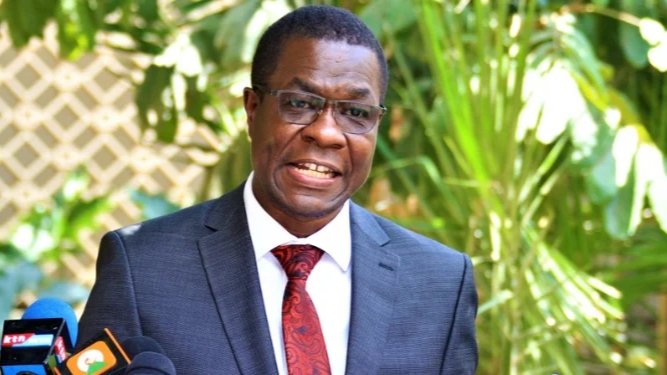

Kenya’s push for commercial oil production in Turkana took a major step forward on Monday after more than 14 years since the initial discovery. Energy Cabinet Secretary Opiyo Wandayi confirmed that authorities have approved a field development plan and welcomed a new investor ready to move the project ahead.
The announcement focuses on the South Lokichar Basin, where oil was first struck in 2012. Subsequent years brought repeated setbacks, including investor withdrawals and shifting global priorities that slowed momentum on new oil projects.
Wandayi framed the moment as a turning point. “The discovery happened in 2012. Many people doubted whether we would ever get to this stage. Today, we have an approved development plan, an investor committed to production and a clear pathway to the first oil,” he said.
Gulf Energy took over Tullow Oil’s stake and submitted a revised development plan in September 2025. Regulators gave the green light in November, followed by parliamentary ratification. The plan uses a phased rollout to reduce initial capital needs and allow early revenue generation.
Output is expected to start at 20,000 barrels per day, rising to 50,000 barrels daily by 2032. The basin holds an estimated 2.85 billion barrels of oil in place, with about 429 million barrels recoverable.
Officials project Ksh646 billion in capital investment over the project lifetime and more than Ksh1 trillion in operating expenditure across 25 years. The development is also forecast to create at least 3,000 direct jobs during construction and production phases.
Wandayi pointed to wider economic benefits. “The operating expenditure alone represents a huge opportunity for Kenyan businesses. These are resources that will circulate through the economy and create jobs for our people.”
Communities in Turkana are expected to see gains through better roads and increased local business activity once production begins. The project could also stimulate related sectors such as transport, logistics and hospitality in the region.
Initial crude will be exported, since Kenya still lacks a refinery suited to process the output locally. This follows the model of the Early Oil Pilot Scheme, which ran from 2018 to 2022 and exported 414,777 barrels, earning Sh3.7 billion in revenue.
That pilot scheme tested logistics and market demand even though costs exceeded returns. Insights from it are now shaping the larger commercial phase.
Environmental management and fair benefit-sharing with local residents remain key concerns as work advances. Kenya’s continued dependence on imported refined products leaves the economy exposed to global price swings.
If successful, the Turkana development could help improve energy security and reduce some foreign exchange pressures in the long term. Early works will centre on supporting infrastructure needed for the phased production.
This latest progress arrives as Kenya balances resource extraction ambitions with the realities of global energy transitions. Observers will now watch how quickly ground activity picks up in the months ahead.
Comments (1)
Leave a Comment
echoproperties limited ✓
Jun 08