
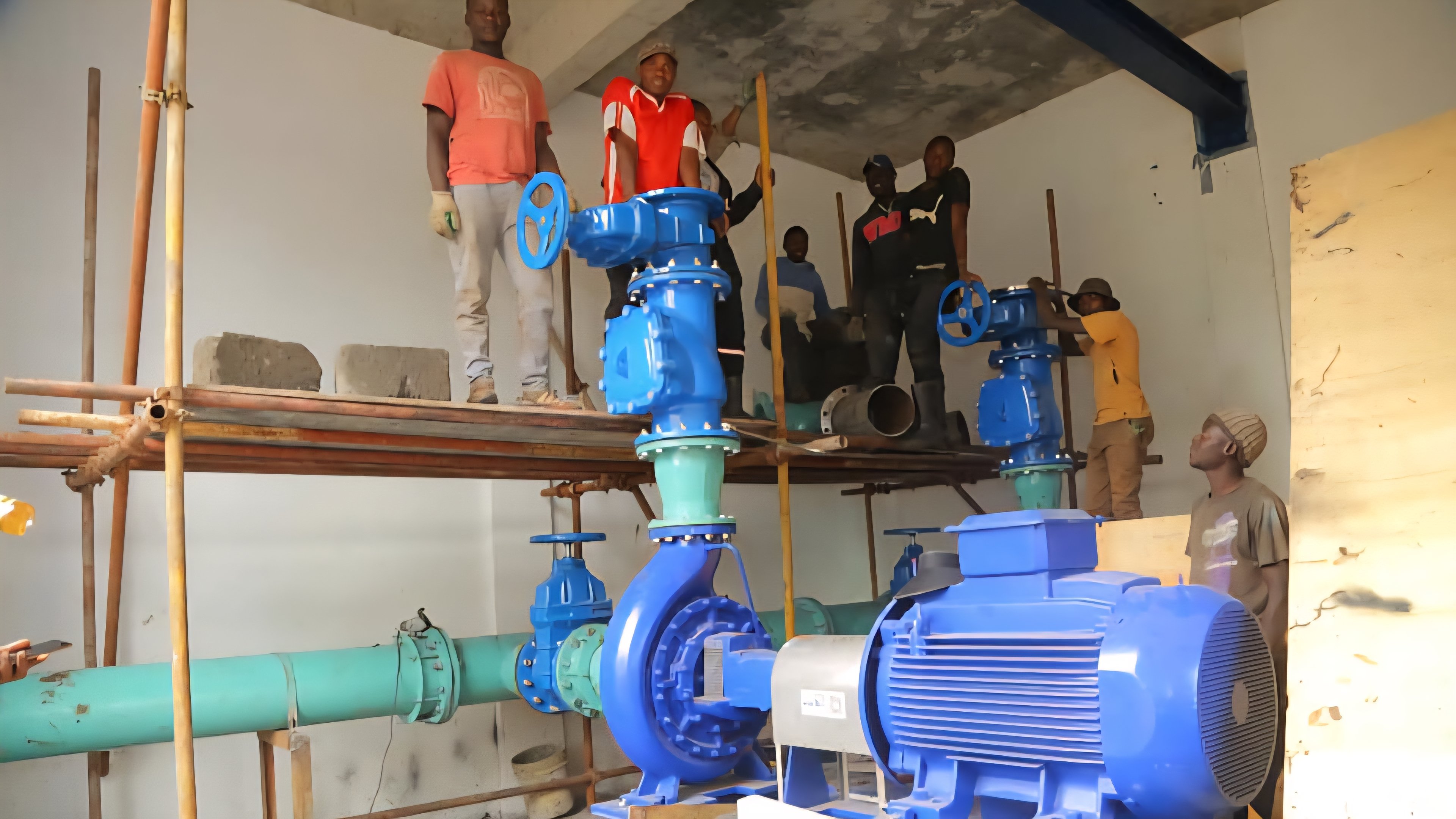

The stability of water supply in Kajiado County is under immediate threat following an audit report that exposed a debt crisis at the Oloolaiser Water and Sewerage Company. Total liabilities for the utility provider have reached Ksh586 million, a figure that far exceeds the company’s current asset base and raises questions about its long-term viability. Auditor General Nancy Gathungu, in her latest report, highlighted that the company’s current liabilities of Ksh586,819,657 outweigh its current assets of Ksh232,537,131. This creates a working capital deficit of over Ksh354 million, placing the firm in a precarious financial position that could lead to a total shutdown of services if not addressed by the county government.

A significant portion of this debt is owed to the Coast Water Works Development Agency. The utility has failed to remit Ksh157 million for bulk water purchases, a failure that directly risks the disconnection of supply to thousands of households. This specific debt has been accruing over several years, suggesting a systemic failure in revenue collection or financial management within the utility. Beyond bulk water costs, the company is also struggling with statutory obligations. The audit revealed that Oloolaiser owes Ksh32.7 million in unremitted staff taxes to the Kenya Revenue Authority and a further Ksh14 million in unpaid pension contributions. These defaults carry the risk of heavy penalties and legal action, which would further deplete the company's limited resources.
Operational inefficiencies are also contributing to the financial bleed. The Auditor General noted that the company is losing 53 percent of its water to "non-revenue water" causes, which include leakages, illegal connections, and metering inaccuracies. Under the guidelines set by the Water Services Regulatory Board, non-revenue water should not exceed 25 percent. By losing more than half of its product before it reaches a paying customer, the company is recording a monthly loss of approximately Ksh12 million. This translates to an annual loss of Ksh144 million, money that could otherwise be used to service debts or upgrade aging pipe networks.
The physical infrastructure managed by the company is also under scrutiny. The audit found that many water meters currently in use are obsolete or malfunctioning, which prevents accurate billing and contributes to the high rate of non-revenue water. In some areas, residents have reported inconsistent supply despite paying their bills, while other neighborhoods have seen no water for weeks due to burst pipes that remain unrepaired for extended periods. The lack of investment in new infrastructure is a direct consequence of the company's inability to generate a surplus, creating a cycle of decay that is difficult to break without a massive capital injection from the Kajiado County government.
Governor Joseph Ole Lenku’s administration now faces the task of restructuring the utility to prevent a humanitarian crisis. Kajiado remains one of the fastest-growing counties in Kenya due to its proximity to Nairobi, and the demand for water in satellite towns like Ngong, Ongata Rongai, and Kiserian is at an all-time high. The Oloolaiser Water and Sewerage Company is the primary provider for these urban centers. If the company defaults further on its payments to bulk suppliers or power utilities, the resulting water scarcity could stall construction projects and affect public health in these densely populated areas.
Furthermore, the audit highlighted governance issues, noting that the company’s board of directors has been operating without a full complement of members, and some key management positions have remained vacant or filled in an acting capacity for too long. This lack of stable leadership has likely hindered the implementation of a clear debt recovery strategy. The Auditor General has warned that unless the county government intervenes to settle the outstanding debts and oversees a total overhaul of the company’s billing systems, the utility remains technically insolvent. For the residents of Kajiado, the financial health of this single company is the only thing standing between them and dry taps.
Comments (0)
Leave a Comment
No comments yet. Be the first to share your thoughts!