

A version of this article appeared on OkDiario.
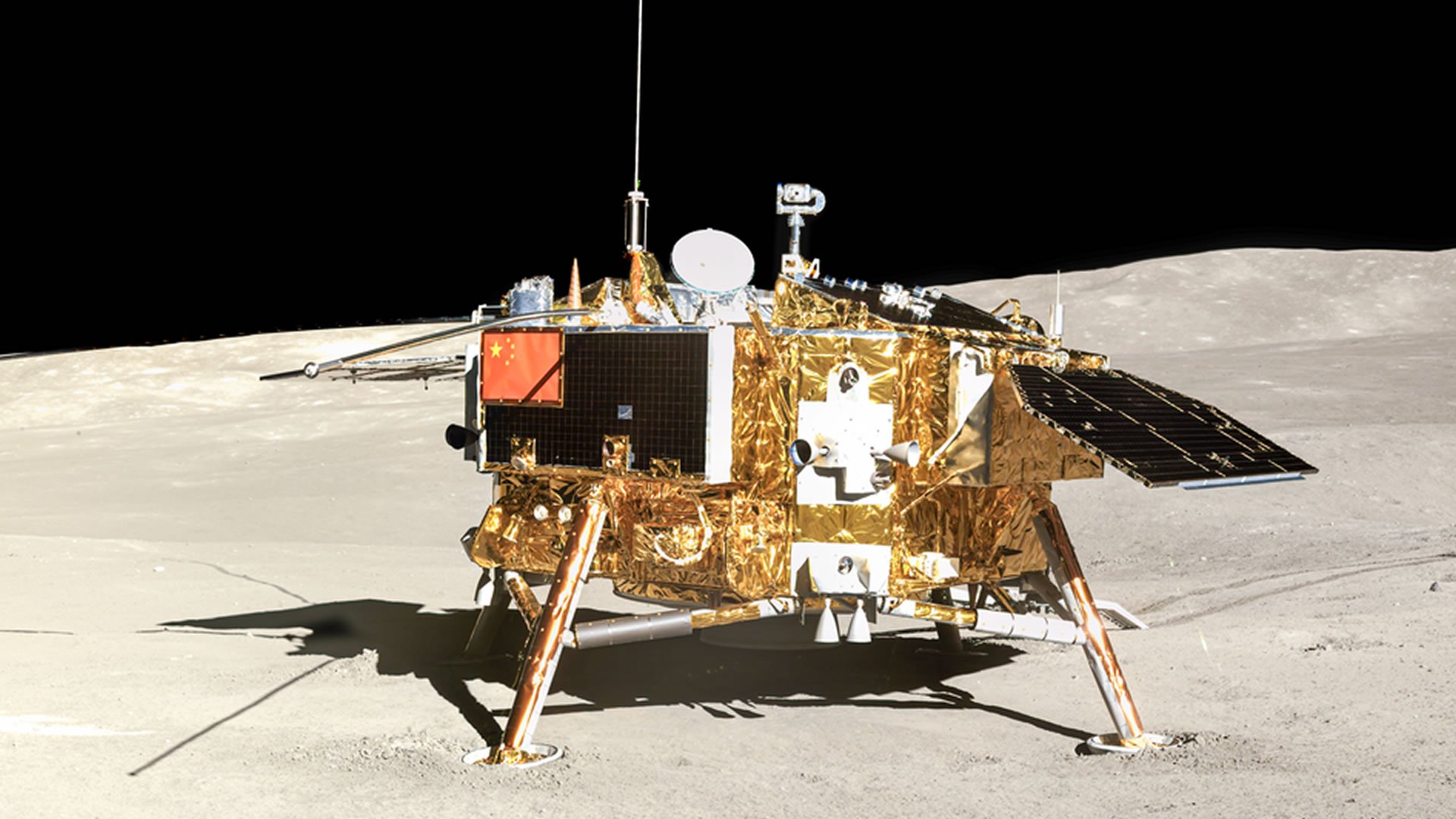
China is detailing a lunar operation robot designed to carry tools and help establish a future outpost near the Moon's south pole, tied to the Chang'e-8 mission planned for around 2028. The machine is not a conventional rover. It is closer to an autonomous field technician, with a roughly 100-kilogram chassis, four wheels, and a humanoid torso fitted with two arms for handling equipment.
The Hong Kong University of Science and Technology (HKUST) says it is leading an international effort to develop the robot for Chang'e-8, targeting instrument deployment and sample collection in extreme conditions. The robot is solar-powered and built to hibernate through lunar nights, periods of roughly two weeks where temperatures plunge and sunlight disappears entirely.
China's National Space Administration (CNSA) has outlined the mission as involving a lander, a rover, and the operation robot working in the lunar south polar region. The south pole has become a priority zone because permanently shadowed craters are cold enough to have preserved water ice over billions of years, ice that could eventually be converted into fuel and drinking water on-site.
China's leadership has also linked Chang'e-8 directly to construction technology. In 2023, the chief planner of China's lunar programmes said the mission would test three-dimensional (3D) printing using lunar soil, reducing the volume of material that needs to be launched from Earth. CNSA's cooperation framework opens payload slots to outside partners, meaning the operation robot could quickly evolve from an engineering demonstration into a commercial platform.
Environmental questions trail the ambition. Research published in Geophysical Research Letters found that high rocket launch volumes could warm parts of the stratosphere by up to 1.5 kelvin, while a separate 2025 study linked frequent launches to delayed ozone recovery. If lunar activity scales up, those costs land in Earth's atmosphere first. The Moon's polar zones also carry planetary protection obligations under the Outer Space Treaty, and with more agencies targeting the same terrain, the legal and environmental frameworks will be tested alongside the hardware.
Comments (0)
Leave a Comment
No comments yet. Be the first to share your thoughts!