
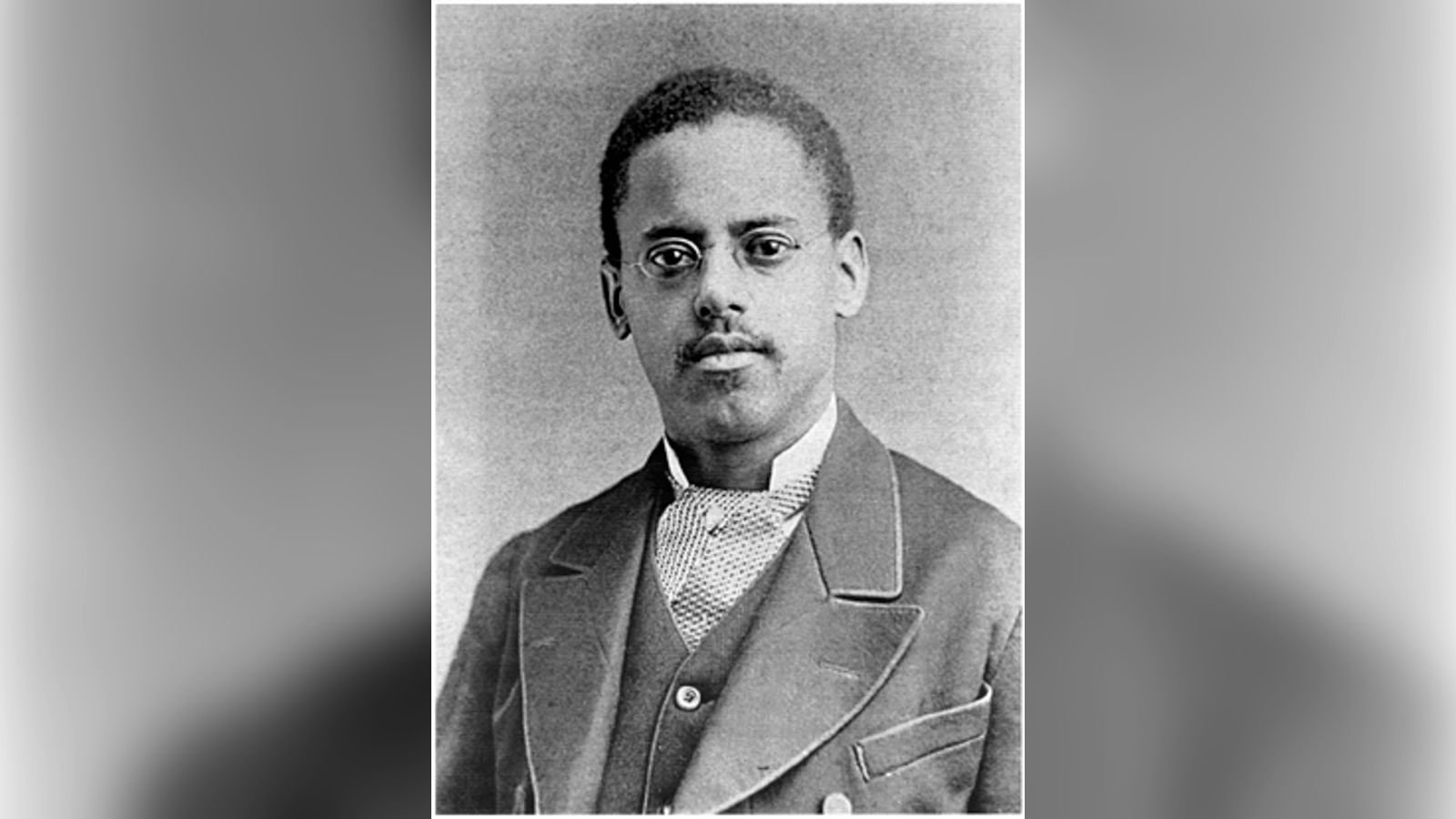

Long before Lewis Howard Latimer became known for his contributions to electric lighting, he solved a much less celebrated problem: the railroad toilet. In 1874, working alongside Charles W. Brown, Latimer co-patented an improved water closet for railroad cars, U.S. Patent 147,363, issued on February 10 that year.
At the time, toilets aboard trains opened directly onto the tracks below, with dust, cinders and debris thrown up from the rail bed frequently entering the cabin through the same opening. Latimer and Brown redesigned the system to address that flaw, producing a safer, more contained water closet for passengers.
Latimer arrived at the idea through his work rather than formal engineering training. After an honorable discharge from the US Navy in 1865, he took a job as an office boy at the Boston patent law firm Crosby, Halstead and Gould, earning three dollars a week. There, he taught himself drafting tools including the set square and ruler.
His talent for sketching patent drawings for other inventors' ideas eventually earned him promotion to head draftsman, a role that exposed him to a steady stream of new mechanical concepts. That exposure, according to historical accounts, is what led him to develop inventions of his own, beginning with the railroad water closet.
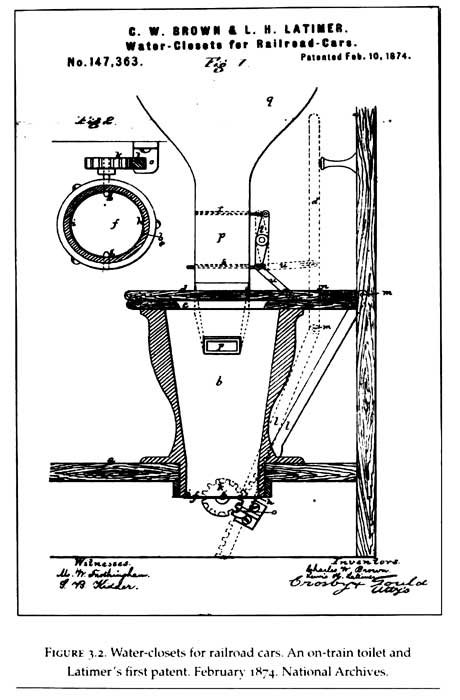
The patent proved to be the first of several credited to Latimer over his career. He later worked as a draftsman for Alexander Graham Bell, producing the drawings needed to secure Bell's telephone patent in 1876, before moving into electric lighting work with Hiram Maxim's US Electric Lighting Company and eventually the Edison Electric Light Company.
Latimer went on to patent an improved method for manufacturing carbon filaments for light bulbs and other inventions spanning electric lamp supports and cooling systems. In 1918, he became the only African American charter member of the Edison Pioneers, an elite group of 28 inventors associated with Thomas Edison's work.
Latimer was born in Chelsea, Massachusetts, in 1848, the son of parents who had escaped slavery in Virginia in 1842. He died in Flushing, Queens, in 1928, having built a career that stretched from railroad plumbing to some of the defining technologies of the electrical age.
Comments (0)
Leave a Comment
No comments yet. Be the first to share your thoughts!