
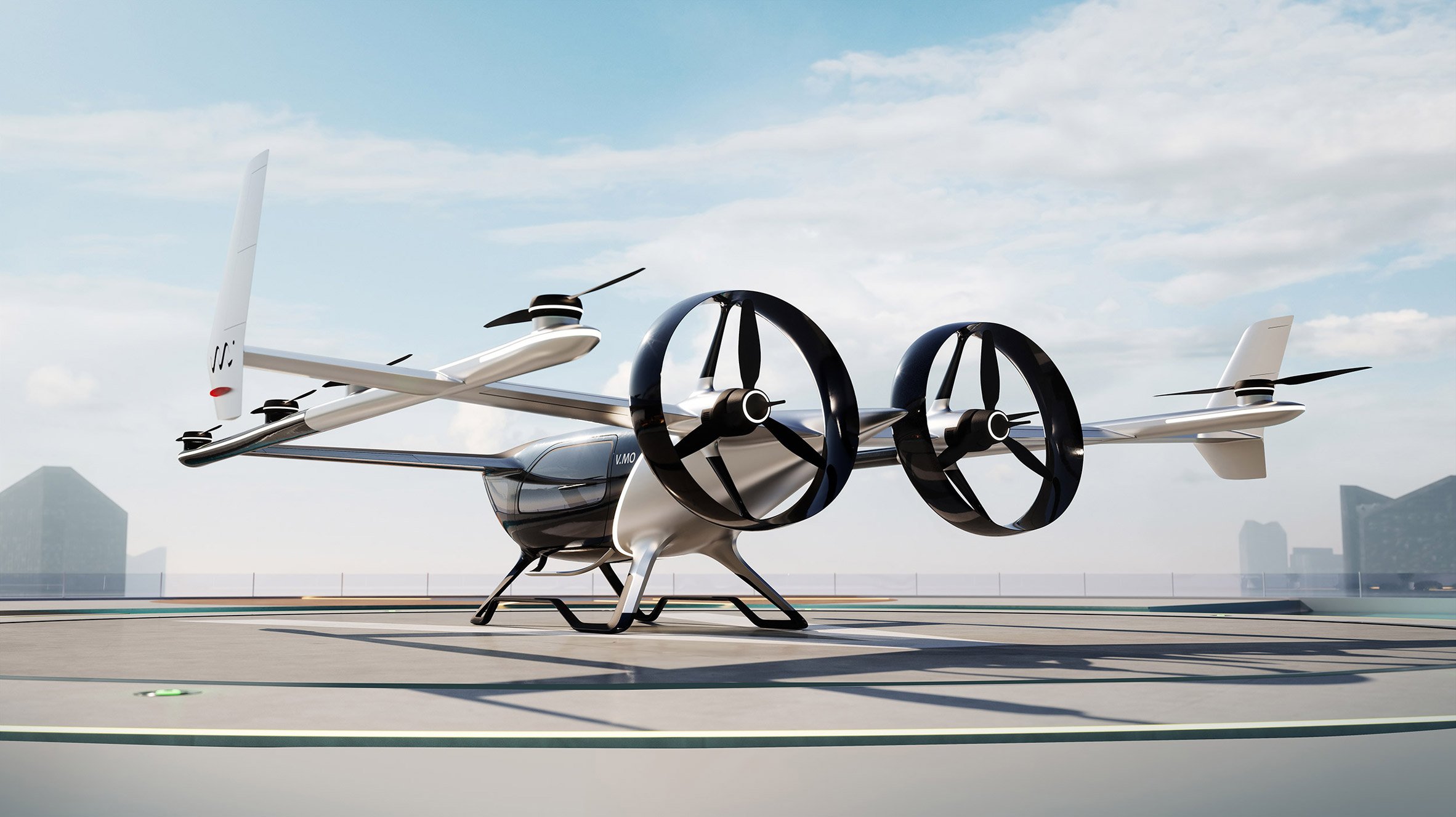

Volkswagen has abandoned a five-year effort to build a flying car for the Chinese market, shutting down the project in 2024 without ever carrying a single passenger, according to a Reuters investigation drawing on internal documents and interviews.
The German automaker launched the initiative in 2019, after years as China's top-selling carmaker, aiming to extend its dominance from the roads into the sky. Volkswagen envisioned a battery-powered, four-passenger aircraft capable of intercity hops, such as between Beijing and Tianjin, producing roughly half the noise of a helicopter.
To pursue the idea, the then 82-year-old manufacturer established an internal Beijing startup and drew on Chinese design and engineering talent that was beginning to outpace Volkswagen's own development speed in the sector. Project lead Zhou Jin, promoted internally as the face of the effort, described the venture in a 2022 company video as having strong potential to become a key market segment for the Volkswagen Group.
While Chinese competitors moved steadily closer to launching commercial flying-car services, Volkswagen's own project remained grounded. The company struggled to keep pace with China's rapidly expanding low-altitude economy, a sector spanning drones, air taxis and other aircraft operating below 1,000 metres, one increasingly treated as a national priority by Chinese authorities.
Volkswagen's global development structure, built around longer product cycles, layered compliance processes and conventional automotive engineering standards, proved too slow against local rivals backed by fast-moving governments and supply chains. Emerson Xu, chief executive of consultancy NexAvian and a former China head at another firm, said companies that cannot match Chinese speed and local integration in this sector do not stand a chance.
The project's collapse was compounded by legal trouble. Volkswagen faced a lawsuit from Chinese startup Pantuo Aviation, which accused the company of stealing trade secrets, while Zhou Jin, the executive VW had promoted as the face of its flying-car ambitions, later became the subject of a separate criminal case.
At least seven Chinese companies are now preparing to bring flying taxis to market, while Volkswagen's broader position in China has weakened on multiple fronts. The company's China vehicle shipments have declined from 4.2 million to 2.7 million units, and Volkswagen has outlined plans to cut up to 100,000 jobs globally as it works to restructure its business.
The episode stands as one of the clearest examples yet of an established Western manufacturer failing to keep pace with China's accelerating advanced mobility sector, where local players, regulators and supply chains have increasingly outrun the development timelines of foreign incumbents.
Comments (0)
Leave a Comment
No comments yet. Be the first to share your thoughts!