
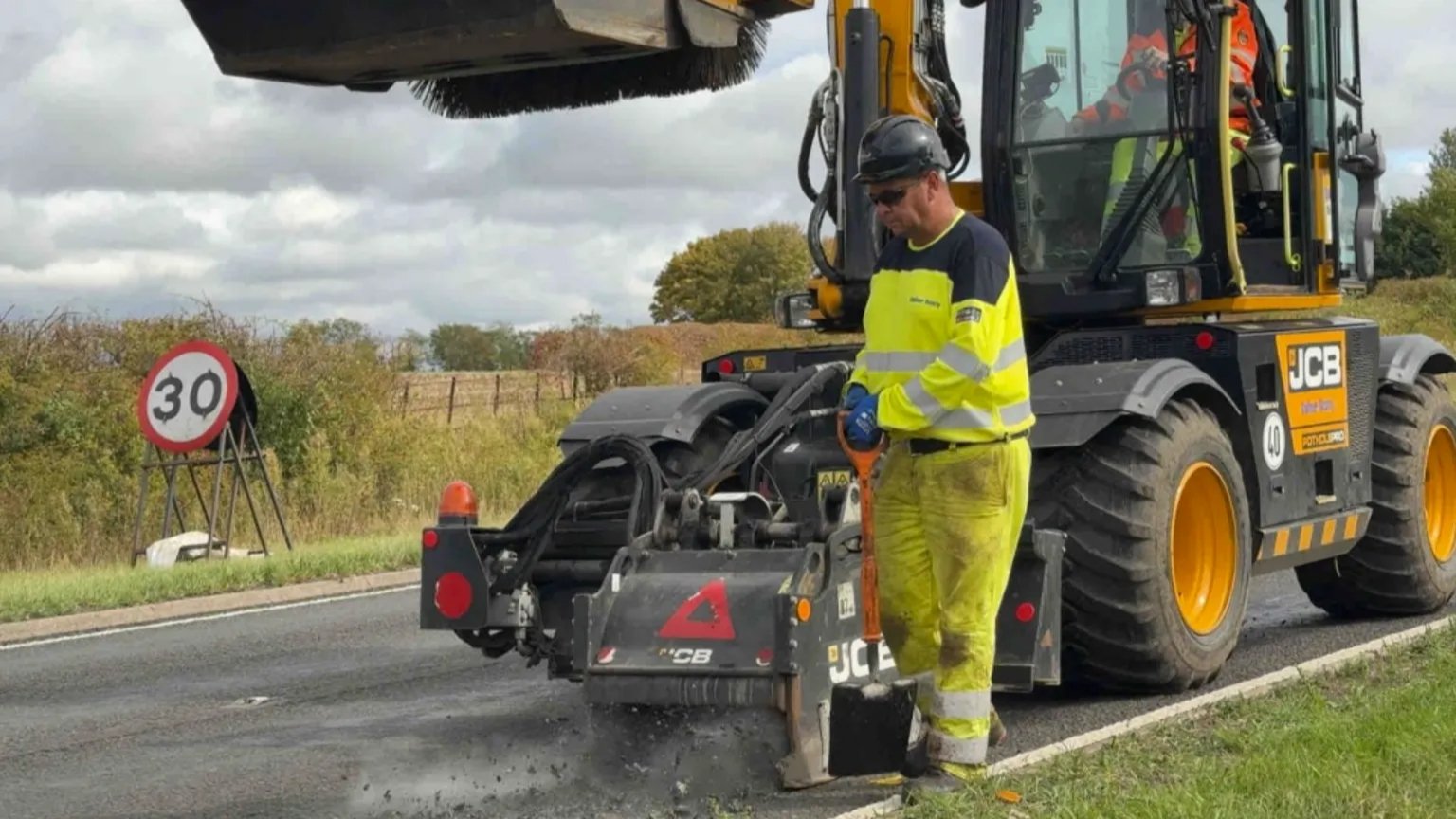

A local authority in the United Kingdom has decided against buying a specialised machine designed to speed up pothole repairs. Leicestershire County Council tested the JCB Pothole Pro but concluded it was not economical or practical for its roads.
The machine uses advanced cutting technology to remove damaged sections cleanly before patching. Manufacturers claim it works up to four times faster than conventional methods. Neighbouring Nottinghamshire and Lincolnshire councils have used or trialled it with encouraging outcomes.
Leicestershire officers who ran a one-day trial in January 2025 found the vehicle too large for rapid response on their network. It would demand extensive traffic management and road closures for scattered defects. The assessment also noted extra sweeping requirements after use.
Council officials said their existing fleet and teams allow them to address as many potholes as possible within available budgets. They recently added Sh340 million equivalent in extra funding for repairs and hired more inspectors.
The decision comes as pothole complaints rise across many regions. In Kenya, similar challenges plague urban and rural roads where maintenance budgets often fall short and traditional patching remains the norm.
JCB criticised the short trial length and pointed to successes such as Stoke-on-Trent, which cleared seven years of backlog in 12 months. The company encouraged longer evaluations before rejecting the technology.
This case illustrates the difficulties local governments face when adopting new road maintenance equipment. Kenyan authorities dealing with KeNHA, KURA and county roads could draw lessons on balancing innovation with local conditions and cost effectiveness.
Potholes continue to damage vehicles, raise accident risks and increase long-term repair expenses worldwide. Efficient solutions remain a priority for infrastructure managers everywhere.
Comments (0)
Leave a Comment
No comments yet. Be the first to share your thoughts!