
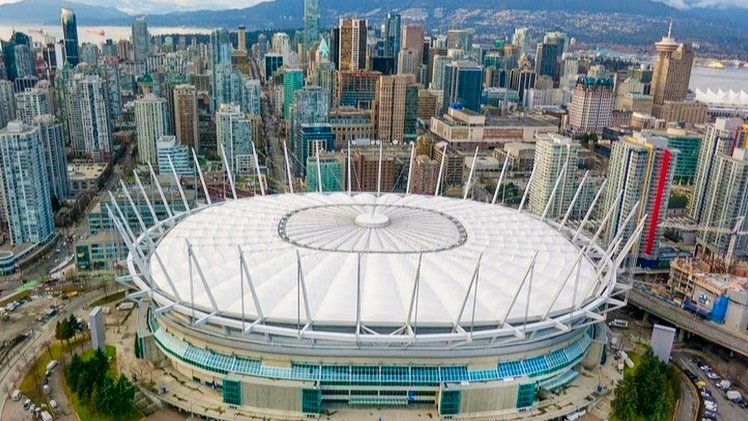

BC Place in downtown Vancouver opens Canada's World Cup account on Sunday morning when Australia face Türkiye in match nine of the 2026 FIFA World Cup. Under FIFA's tournament naming rules, the stadium carries the name Vancouver Stadium for the competition.
The Vision and Construction
Vancouver Stadium was designed by Studio Phillips Barratt and built between 1981 and 1983 at a cost of CA$126 million (approximately KES 12.5 billion). It opened on June 19, 1983, becoming the first domed stadium in Canada.
The original roof was a pressurised teflon membrane held up entirely by air, kept inflated by fans running continuously. At opening, it was the largest air-supported roof structure in the world.
Critics were less generous with its silhouette over Vancouver's False Creek skyline, calling it the marshmallow in bondage. The stadium is owned by the Province of British Columbia, operated through BC Pavilion Corporation.
World Cup Debut and International Events
Vancouver Stadium is not new to major occasions. It hosted the opening and closing ceremonies of the 2010 Winter Olympics and Winter Paralympics, then staged the final of the 2015 FIFA Women's World Cup.
The venue hosts six matches during the 2026 tournament, five group stage games and a Round of 32 fixture. Australia and Türkiye open proceedings today, with Canada's group stage matches also scheduled here.
Engineering and Design
Vancouver Stadium's original roof collapsed in January 2007 when heavy snow tore a seven-metre (23-foot) gash in the teflon membrane. Repairs were made ahead of the 2010 Olympics, but the structure's days were numbered.
On May 6, 2010, the dome was deflated for the last time. A crew of over 5,000 workers then began a 17-month transformation of Vancouver Stadium.
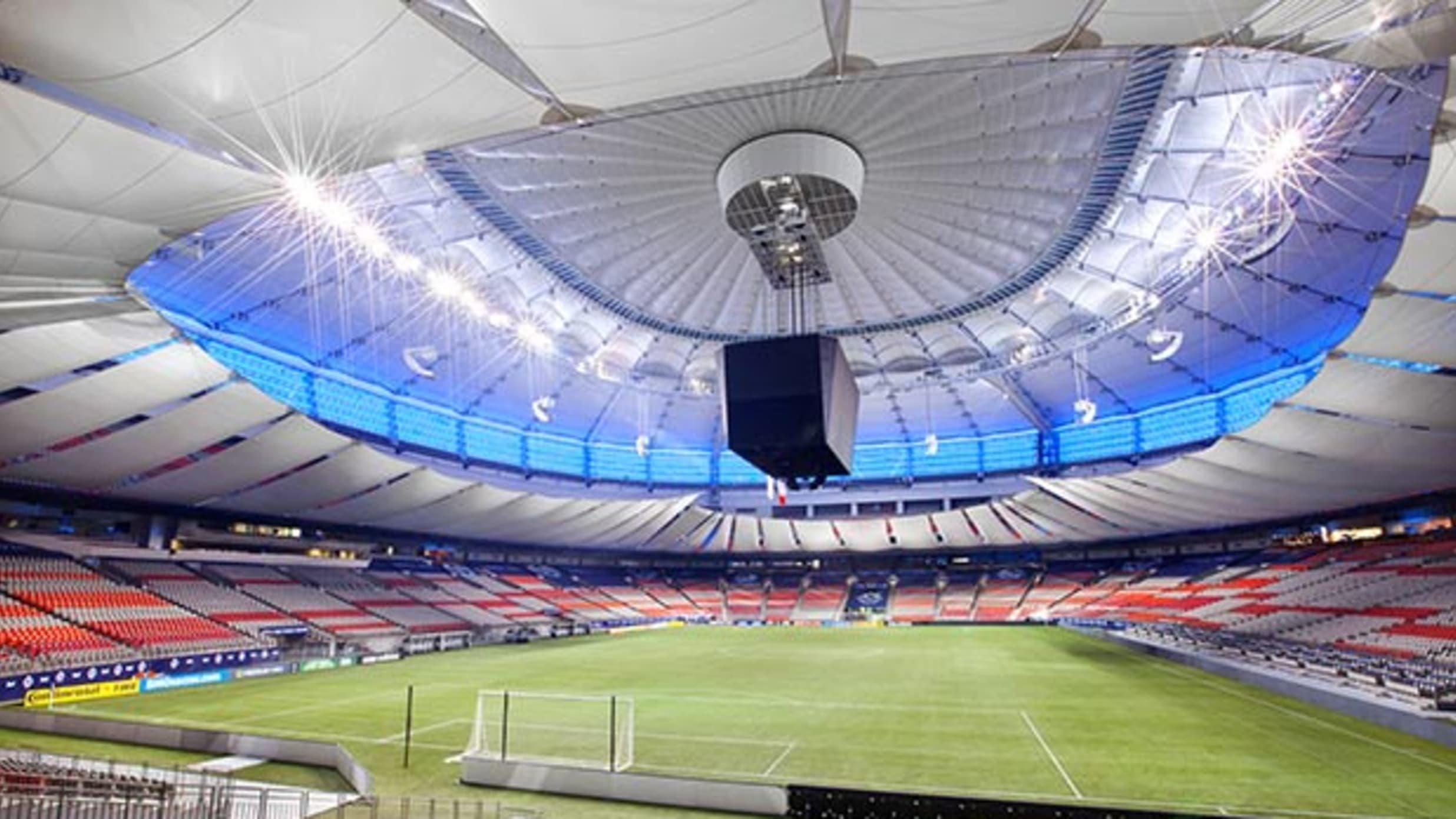
Inside Vancouver Stadium /Whitecapsfc
The renovation was designed by Stantec Architecture and engineered by Geiger Engineers alongside Schlaich Bergermann und Partner. The inflatable roof was replaced with a cable-supported retractable system, now the largest of its kind in the world.
Thirty-six steel masts, each 50 metres (164 feet) tall and weighing 120 tons, support the structure via 35 kilometres of tensioned steel cable. The retractable centre section covers 7,340 square metres (79,000 square feet) and opens or closes in 20 minutes. General contractor PCL Constructors Westcoast delivered the works.
Modern Setup for 2026
The renovation cost CA$563 million (approximately KES 55.8 billion), making Vancouver Stadium the most expensive stadium renovation in Canadian history. FIFA's natural grass requirement meant replacing the existing FieldTurf synthetic surface. World Cup capacity stands at 54,500.
Vancouver Stadium's centre-hung video board features two high-definition screens with total display area equivalent to 450 standard 42-inch flat-screen televisions. Over 800 Wi-Fi access points serve the bowl.
What Makes It Unique
No other stadium in this World Cup has a roof engineered directly around the memory of a collapse. The 2007 failure shaped every structural decision in the 2011 renovation, addressing the weaknesses of the original dome.
The retractable roof also makes Vancouver Stadium one of few venues in this tournament capable of controlling its weather exposure. Vancouver averages 166 days of rainfall per year, making that engineering decision more than aesthetic.
Comments (0)
Leave a Comment
No comments yet. Be the first to share your thoughts!