

Desertification is the process in which land in dry areas loses its ability to support plants, crops and other forms of life. It is linked to factors such as prolonged drought, poor farming practices, deforestation, overgrazing and rising temperatures.
The problem affects many parts of Africa, Asia, Latin America and other dry regions. It does not mean that existing deserts are simply spreading into nearby areas. Instead, it refers mainly to the decline of productive land because of environmental and human pressures.
When land becomes degraded, farmers can face lower crop yields and reduced grazing areas for livestock. This can affect food supplies and household incomes, particularly in communities that depend heavily on farming and livestock keeping.
Desertification can also increase pressure on water resources. As vegetation disappears and soil loses its quality, rainfall may run off more quickly instead of being absorbed into the ground. This can contribute to erosion and make it harder for communities to maintain reliable water supplies.
Climate change has added to these pressures by increasing the risk of drought and extreme heat in many dry regions. However, desertification is not caused by climate change alone. How land, forests, water and livestock are managed also plays an important role.
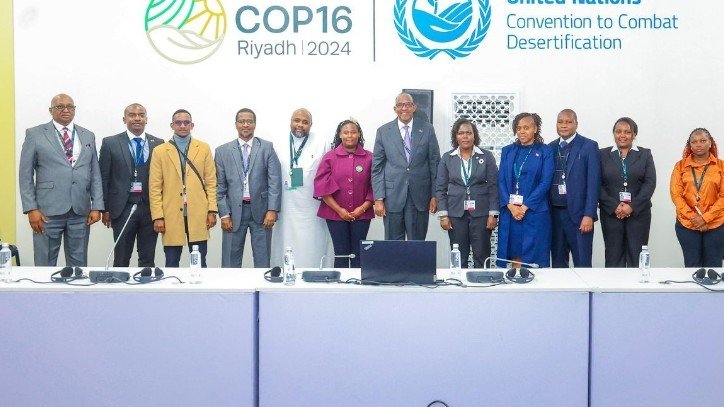
The United Nations Convention to Combat Desertification, known as UNCCD, is the international framework that brings countries together to address land degradation and drought. Its Conference of the Parties or COP, provides a forum for governments to discuss policies, funding and practical measures.
COP17 is another meeting under this process, bringing attention to how countries can respond to land degradation and drought. Discussions are expected to focus on restoring degraded land, improving drought resilience, supporting affected communities and strengthening cooperation between countries.
For African countries, the issue is closely connected to agriculture, rural livelihoods and food security. Many communities depend on land that is already under pressure from changing rainfall patterns, population growth, livestock grazing and the continued use of natural resources.
Restoring degraded land can involve planting trees and native vegetation, improving soil management, protecting water sources and using farming methods suited to local conditions. Such measures can help communities protect productive land while reducing further damage.
The focus of COP17 is therefore not only on deserts. It is about the condition of land that millions of people depend on and how countries can manage drought and land degradation over the long term. The discussions also highlight the need for cooperation, financing and local action.
Comments (0)
Leave a Comment
No comments yet. Be the first to share your thoughts!