
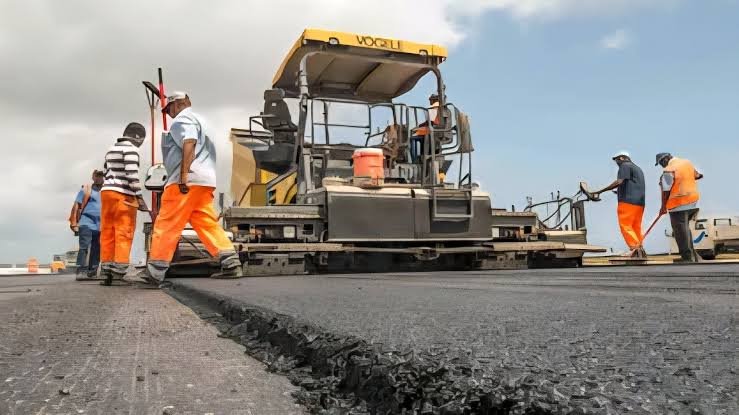

Kenya has raised Sh139 billion through the securitization of future Road Maintenance Levy Fund (RMLF) collections to settle outstanding certified debts owed to road contractors across the country. The financial strategy leverages projected fuel levy revenue to unlock immediate liquidity, aiming to resolve persistent cash flow bottlenecks that have stalled key national infrastructure works.
Payments for eligible claims covering work completed in the final quarter of the previous fiscal period are scheduled to commence during the last week of August. Ministry officials confirmed that the government has already received the initial tranche of the current funding cycle, with subsequent disbursements anticipated shortly to complete the payout schedule.
Under the arrangement, the state previously leveraged Sh7 per litre of fuel levy collections in an earlier phase, raising Sh175 billion to clear certified obligations accrued up to March. The overall debt clearance framework relies on the Trade Development Bank (TDB) to structure the securitized debt instruments against incoming fuel maintenance revenues.
Cabinet Secretary for Roads and Transport Davis Chirchir stated during a stakeholder briefing that conventional Exchequer allocations have proven insufficient to meet ongoing project expenses while simultaneously clearing historical backlogs. He emphasized that the financial structure intends to establish a predictable cash flow mechanism to prevent future accumulation of delayed payment claims.
The government instructed implementing entities, including the Kenya National Highways Authority (KeNHA), the Kenya Rural Roads Authority (KeRRA), and the Kenya Roads Board (KRB), to strictly enforce certification standards before releasing funds. Officials noted that disbursements will only proceed for works that have undergone thorough physical verification, measurement, and professional technical audits.
Technical officers and supervising engineers were explicitly directed to avoid certifying incomplete or unverified work. Departmental leadership warned that premature structural failures, unverified volume claims, or depleted contract quantities would attract direct professional liability for certifying officers.
Contractors have been instructed to remain on project sites and resume stalled works immediately following the disbursement of funds. The ministry reaffirmed that payment processing will follow established administrative protocols strictly, removing middle channels or preferential treatment for individual firms seeking settlement.
Project preparation guidelines for future public works are also undergoing structural adjustments across state agencies. Implementing bodies must now complete comprehensive site investigations, detailed engineering designs, and quantity verifications prior to tendering to eliminate cost overruns during active construction phases.
Comments (0)
Leave a Comment
No comments yet. Be the first to share your thoughts!