
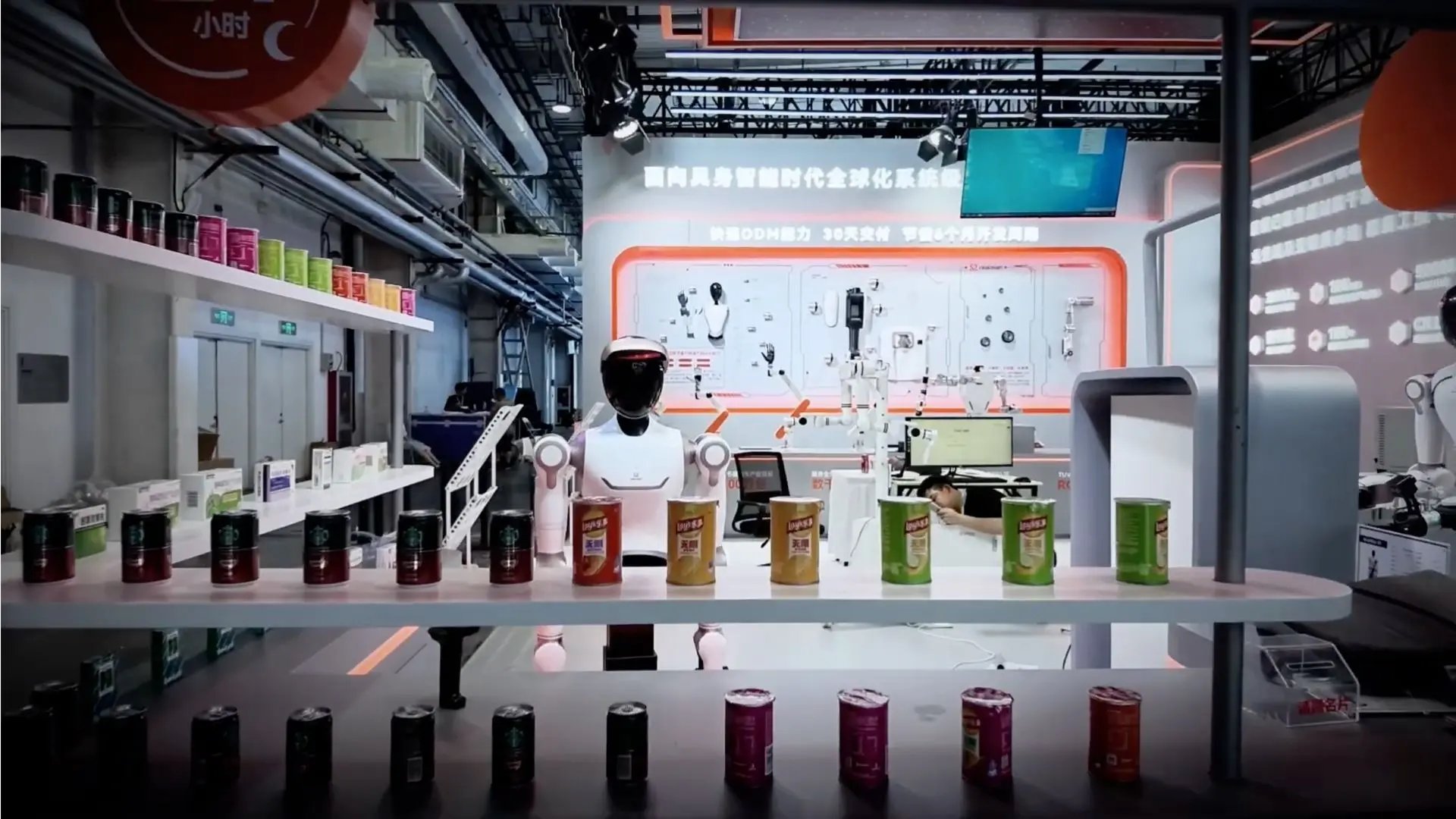

Chinese technology company RealMan Robotics (RMR) plans to deploy nearly 1,000 of its RealBOT units into physical commercial workplaces throughout 2026. The rollout targets operational settings including commercial kitchens, industrial factories, and retail pharmacies to perform repetitive and physically demanding tasks alongside human workforces.
The strategic initiative relies on the company proprietary Global Link Network (GLN) infrastructure. This communication system enables human operators to control the machines remotely with millisecond-level latency, which ensures real-time operational responsiveness across varied commercial settings.
Engineers at RealMan Robotics (RMR) designed the deployment framework to capture detailed operational data during active service. Remote teleoperation allows human workers to navigate complex environments, while integrated software collects real-time telemetry to train autonomous navigation algorithms.
Commercial installations will focus heavily on sectors experiencing persistent labor shortages or high task repetition. In manufacturing environments, the units will manage component handling, while retail pharmacy deployments will focus on inventory handling and order fulfillment routines.
Industry observers note that teleoperated commercial robotics offers a transitional bridge toward full artificial intelligence automation. By using human oversight during initial operations, the machinery maintains functional reliability while gathering training data from physical environments.
The operational architecture ensures continuous data transmission through low-latency connectivity, if network stability remains consistent across facilities. Operators can intervene instantly during physical bottlenecks, which prevents operational halts in industrial supply chains or commercial food service operations.
Deployments are scheduled across international markets, with primary concentrations in regional industrial hubs. Facility managers in target sectors are evaluating integration requirements, as early trials demonstrate high efficiency gains in physical asset management.
As deployment expands through 2026, the accumulated field data will refine algorithm precision. The dual approach combining immediate human control with long-term data collection reflects growing industrial demand for adaptable, multi-environment operational machinery.
Comments (0)
Leave a Comment
No comments yet. Be the first to share your thoughts!