
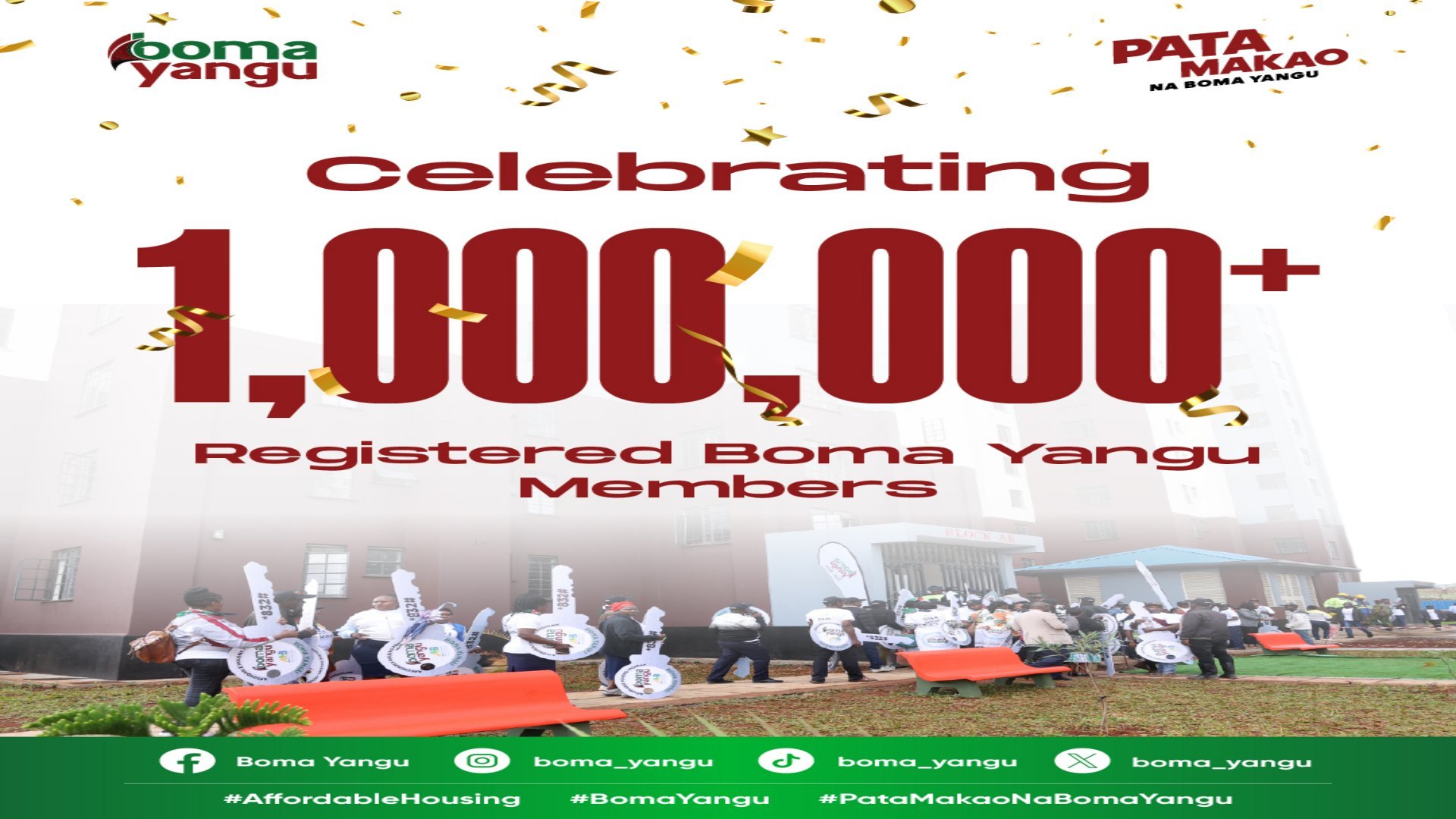

The Ministry of Lands and Public Works has confirmed that over one million Kenyans have now registered on the Boma Yangu portal, the digital platform central to the National Affordable Housing Programme. This data, released through the State Department for Housing and Urban Development, indicates a sharp rise in public interest as several project sites across the country move toward completion.
The portal serves as the primary gateway for citizens to express interest, select their preferred locations, and begin the savings process required to qualify for home ownership. Under the current framework, registered members contribute to the Housing Fund, which is designed to provide a financing pool for both developers and potential homeowners. The government has focused on this model to address a housing deficit that is currently estimated to be at least two million units nationwide.
At the heart of the project is a tiered system intended to cater to different income levels. The program classifies units into social housing, affordable housing, and market-rate apartments. Social housing is targeted at residents currently living in informal settlements, while the affordable housing tier focuses on low-to-middle-income earners who have historically been locked out of the formal mortgage market due to high interest rates and steep deposit requirements.
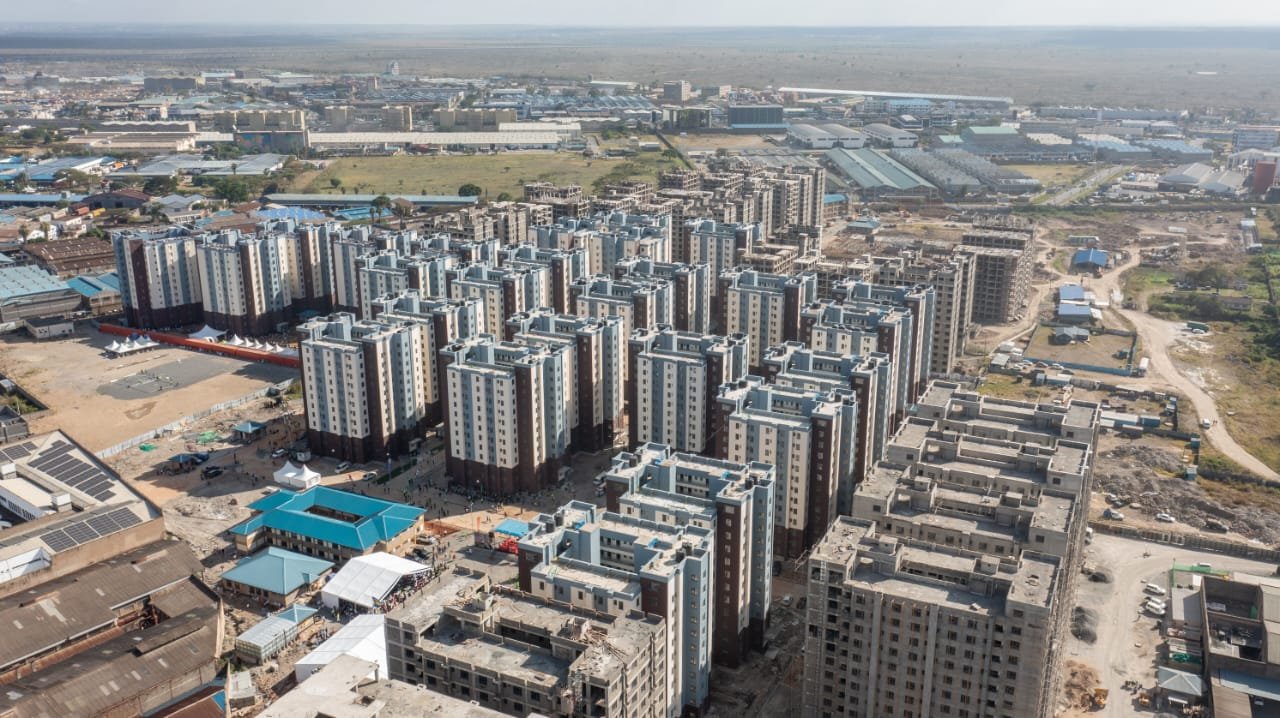
Construction activity has intensified in several counties, including Nairobi, Kiambu, Nakuru, and Mombasa. In Nairobi, sites such as Pangani and Park Road have served as the early blueprints for the scale and density the government intends to replicate. By using a mix of public-private partnerships, the state provides the land and infrastructure while private contractors handle the actual construction. This arrangement is meant to lower the final purchase price for the end user.
The one-million registration figure is viewed by many in the industry as a test of the government's ability to match demand with supply. While the registration numbers are high, the actual delivery of keys remains the critical metric for the program's success. Technical teams within the State Department are currently working to harmonize the digital allocation system to ensure that the distribution of completed units is transparent and based on a first-come, first-served or lottery basis, depending on the specific project terms.
From a construction standpoint, the program has created a steady pipeline of work for both large-scale contractors and local artisans. The government has mandated that a portion of the materials used in these projects, such as steel, cement, and finished joinery, must be sourced locally. This policy is intended to circulate funds within the local construction ecosystem and provide consistent work for the Jua Kali sector, particularly in the fabrication of doors and windows.
Despite the milestone in registrations, the program continues to face logistical and legal hurdles. Land acquisition in urban centers remains a complex process, and the provision of bulk infrastructure, such as sewer lines and access roads, often lags behind the building construction itself. Furthermore, the volatility of global commodity prices has put pressure on the cost of essential building materials, forcing developers to find more efficient ways to manage their overheads without compromising structural integrity.
The Ministry has indicated that more projects will be launched in the coming months to keep up with the rising numbers on the portal. For the contractors involved, the scale of the Boma Yangu initiative represents one of the largest sustained construction efforts in Kenya's history. The focus now shifts to whether the pace of construction can be accelerated to meet the expectations of the one million people currently waiting for an allocation.
Comments (0)
Leave a Comment
No comments yet. Be the first to share your thoughts!