
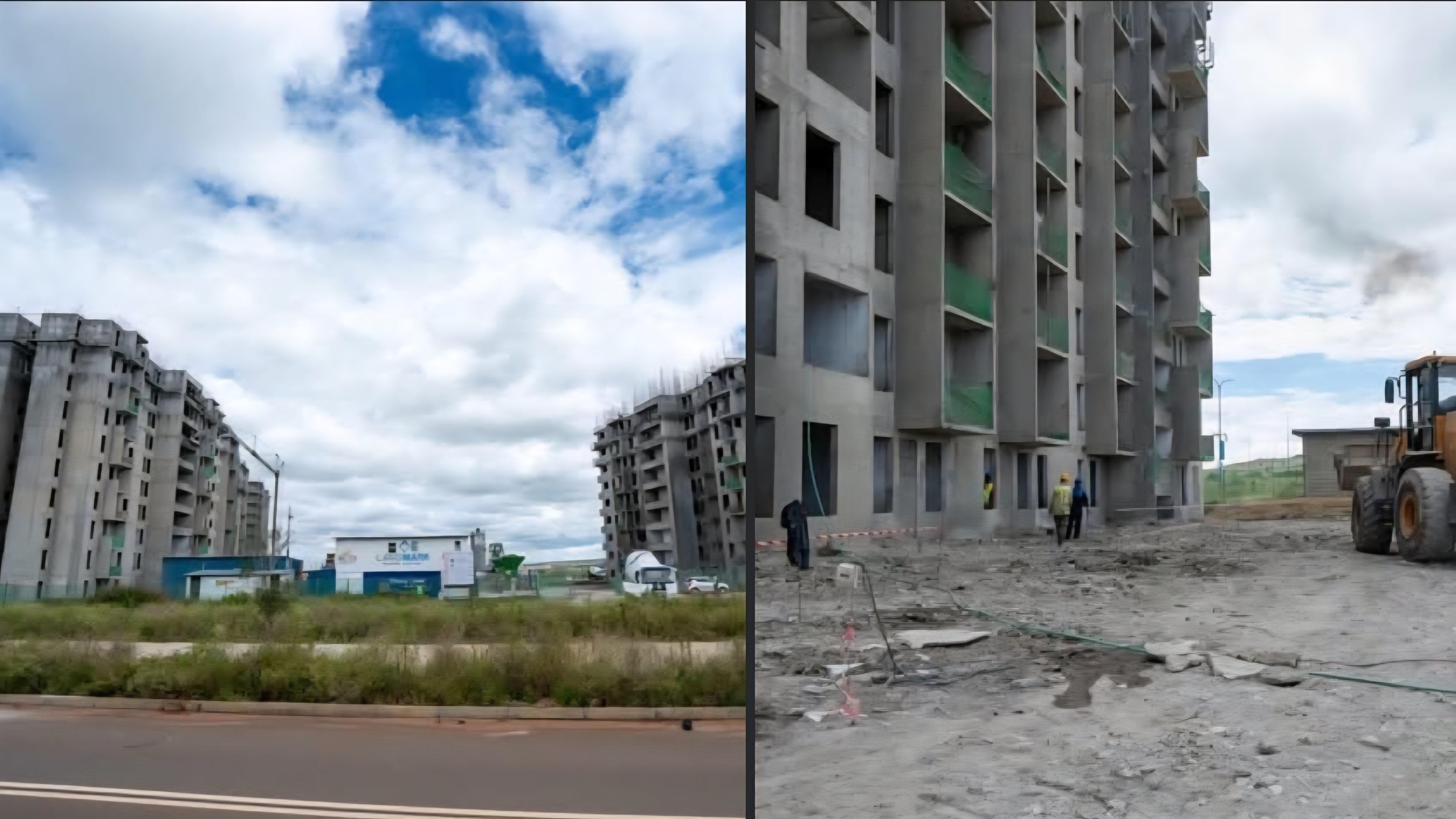

The Konza Technopolis Affordable Housing Project is steadily taking shape, with finishing works now underway across the development site.
Site crews have commenced internal and external finishing tasks, including tiling and painting on the residential blocks. This progress comes as part of the broader implementation of the smart city strategy.
The housing development is a key component of the Smart City vision, which aims to create a modern destination where people can live, work, and innovate.
Heavy machinery, including earthmovers, and tower cranes remain active on the site to facilitate the movement of structural materials and complete the surrounding civil works. The multi-story concrete structures have advanced through their primary framing phases, allowing the contracting teams to transition focus toward these detailed interior and exterior finishes.
As a flagship project within the Konza Technopolis ecosystem, the residential units are positioned to support the incoming workforce and residents expected to occupy the technology hub. The integration of high-density housing within the technopolis ensures that the urban centre avoids the commuter challenges faced by older commercial districts, aligning with modern mixed-use planning principles.
The Government Spokesperson (GoK) confirmed the ongoing milestones, noting that the physical progress reflects the steady realization of the master plan. Contractors are maintaining momentum on the structural facades while simultaneous utility installations proceed inside the completed shells.
The Konza Technopolis Development Authority (KoTDA) continues to oversee the broader infrastructure layout surrounding the housing estate. This includes ensuring connection to dedicated power lines, localized water supply networks, and high-speed fibre optic cabling.
The rollout of these residential blocks forms part of the national Affordable Housing Programme (AHP), which seeks to address the urban housing deficit through structured state-led partnerships. By providing housing within the tech corridor, the project lowers the cost of living for digital workers and support staff, anchoring the local economy.
Local sub-contractors and artisans have been integrated into the supply chain to provide materials such as doors, windows, and paving blocks, keeping construction spending within the domestic economy. This approach aligns with the state policy of utilizing the Jua Kali sector to manufacture standardized building components for public housing projects.
With painting and tiling moving to advanced stages on the initial blocks, the Ministry of Lands, Public Works, Housing and Urban Development is preparing for the subsequent allocation phases. Registered citizens will be able to apply for the completed units through the official Boma Yangu portal once formal handovers are scheduled.
The completion of these initial units will mark a critical transition for the technopolis from an investment-ready site to an active, inhabited urban space. Construction inspection teams maintain a daily presence on the ground to ensure that the finishing quality meets the stringent standards set for the smart city development.
Comments (0)
Leave a Comment
No comments yet. Be the first to share your thoughts!