
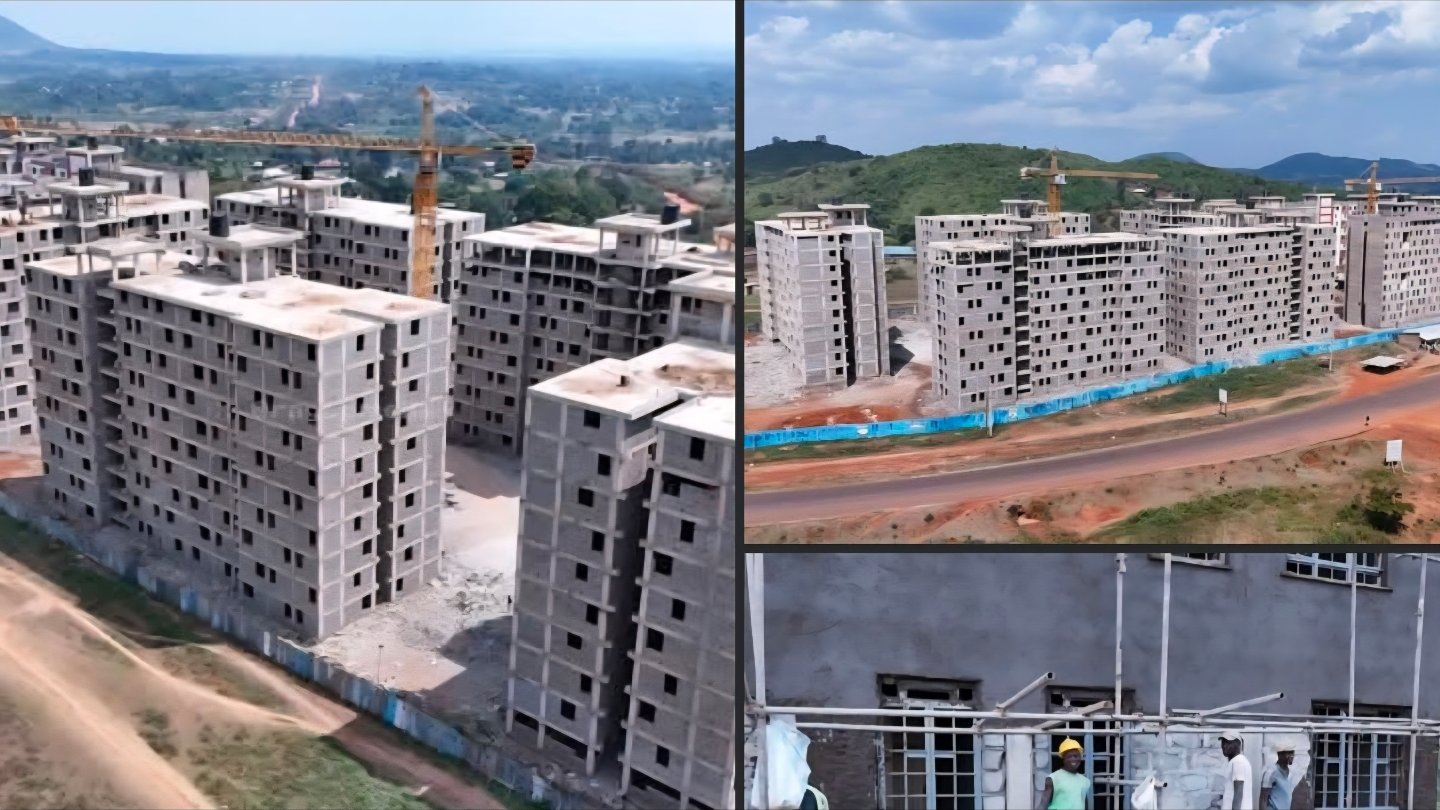

The national government is entering the final phases of construction for the Funyula Affordable Housing Project in Busia County. According to an update from the Government Spokesperson, the development is nearing completion, as workers focus on finishing the structural and internal elements across the site.
The initiative is part of the state-led Affordable Housing Programme (AHP), which seeks to increase the volume of safe, modern, and low-cost residential stock across the country. The project in Funyula Town represents a major capital deployment in the Western region.
Records from the State Department for Housing and Urban Development show that the total investment for the Funyula site stands at KSh 2.6 billion. The funding is directed toward erecting a total of 955 residential units, which are distributed across 10 separate blocks.
The structural blueprint divides the development into diverse housing tiers to cater to different income levels. These include social housing, standard affordable apartments, and market-rate homes. Specifically, five blocks house a mix of social and affordable units, while the remaining five blocks contain dedicated affordable housing.
Individual units within the estate range from single-room social housing spaces to larger three-bedroom market-rate apartments. Prices begin at KSh 640,000 for a one-room social unit, but scale up to KSh 4.8 million for a premium three-bedroom market property.
The government is utilizing the Boma Yangu electronic portal to manage registration and future unit allocations. To qualify for allocation, citizens must register via the platform, and they are required to accumulate a minimum deposit equivalent to five percent of their preferred housing unit value.
Construction has progressed steadily across the ten residential blocks. Recent engineering updates indicate that structural works for the initial lot of buildings are finished, while masonry walling, interior plastering, and window frame fabrications are advancing through sequential stages of completion.
Beyond the residential spaces, the project incorporates extensive supporting infrastructure. The design includes a dedicated borehole for reliable water supply, commercial retail shops, cabro-paved internal driveways, a secured perimeter boundary wall, landscaped green spaces, and a dedicated outdoor play area for children.
The construction site has become a significant source of employment for the local community. More than 200 artisans and manual laborers are engaged on-site, which keeps the financial investment circulating within the immediate economy of the constituency.
President Ruto previously inspected the site during a tour of Busia County, where he emphasized the long-term benefits of the housing interventions. The presidency has maintained that these projects will expand urban infrastructure, while providing immediate industrial opportunities for local informal manufacturers.
Domestic Jua Kali artisans have been specifically contracted to manufacture and supply the steel doors and windows required for the buildings. This integration ensures that the multi-billion-shilling budget supports local material supply chains, although the main construction contracts are managed centrally.
With structural frameworks largely completed, the contractor is now prioritizing internal finishings, painting, and utility installations. The state expects the completed estate to establish a template for mixed-income residential developments in rural counties, if the delivery timelines hold.
The housing directorate intends to hand over the blocks upon final inspection, which will trigger the formal allocation process for registered applicants who met the savings threshold.
Comments (0)
Leave a Comment
No comments yet. Be the first to share your thoughts!