
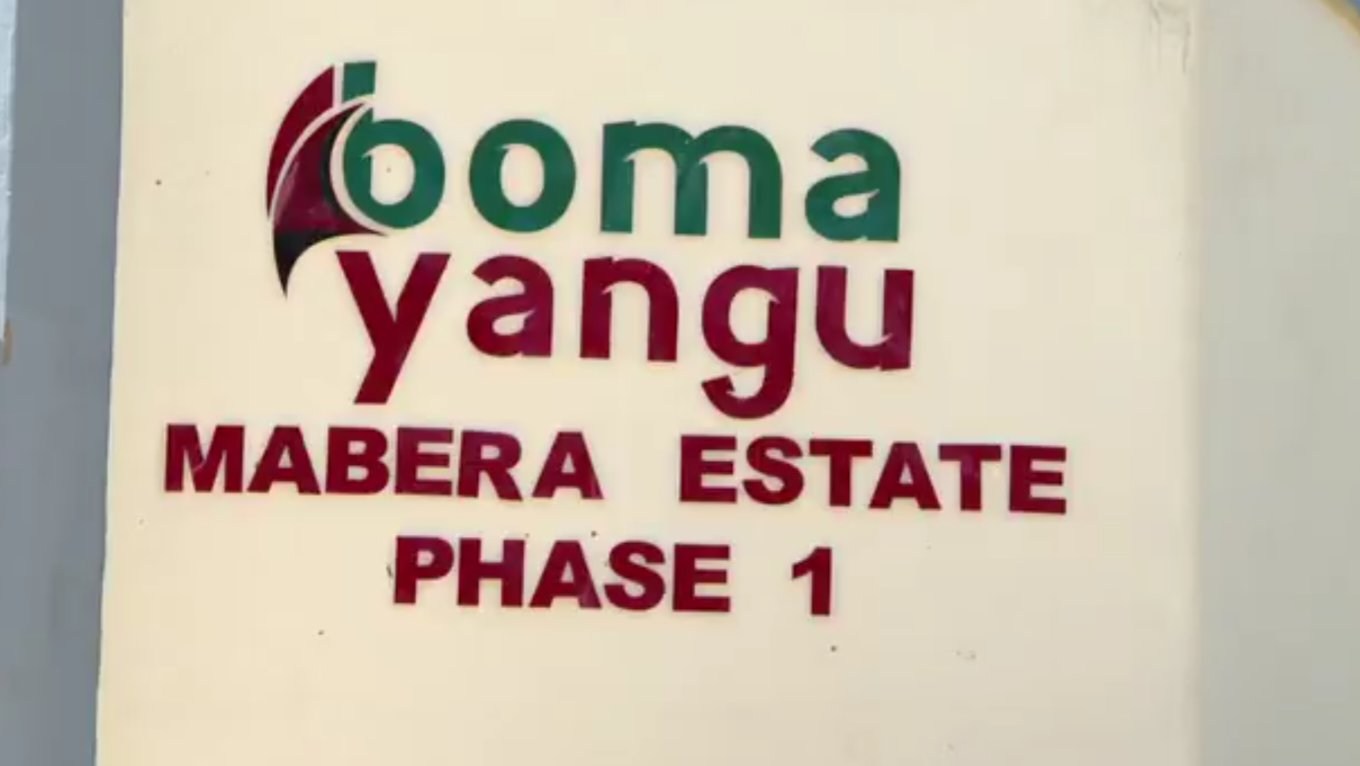

President William Ruto visited Migori County on Monday to officially commission the Mabera Phase 1 Affordable Housing Project, a development that forms a core part of the national government's urban renewal strategy. The President also laid the foundation stone for the Mabera Modern Market, an initiative intended to provide a structured environment for local traders and small-scale businesses.
The Mabera housing site, which is branded under the Boma Yangu initiative, features several multi-story blocks designed to increase the local housing stock. The completed first phase consists of modern residential units that include essential utilities and paved access roads. During the event, the President inspected the newly finished blocks, which are finished in a distinct grey and yellow color scheme, typical of recent state-led housing designs.
This project in Migori is part of a wider national rollout that aims to address the housing deficit in Kenya's secondary cities and rural counties. By moving beyond the capital, the government is attempting to decentralize development and create construction-related employment opportunities within the Lake Region Economic Bloc. The Mabera site is expected to house hundreds of residents, providing them with secure tenure in a planned environment.
Adjacent to the residential development, the new Mabera Modern Market is intended to replace informal trading structures with a permanent, multi-level facility. The market will include dedicated stalls for different categories of goods, improved sanitation facilities, and storage areas to reduce post-harvest losses for local farmers. Construction on the market is expected to commence immediately following the laying of the foundation stone.
Local leaders from Migori accompanied the President during the tour, noting that the twin projects would provide a significant lift to the local economy. The construction phase of the Mabera housing project has already engaged numerous local artisans and suppliers, which is a key objective of the Affordable Housing Program’s labor-intensive model.
The government continues to emphasize that these projects are funded through the Affordable Housing Levy, which was established to provide a sustainable financing pool for such infrastructure. The Mabera Phase 1 units are now expected to undergo the allocation process, where registered citizens can apply for ownership through the Boma Yangu portal.
As the second phase of the housing project looms, the focus in Migori shifts to the completion of the market facility. The integration of residential zones with commercial markets is a deliberate planning choice intended to create self-sustaining urban hubs. This approach reduces transport costs for residents and ensures that the new housing estates remain vibrant economic centers.
Comments (0)
Leave a Comment
No comments yet. Be the first to share your thoughts!