
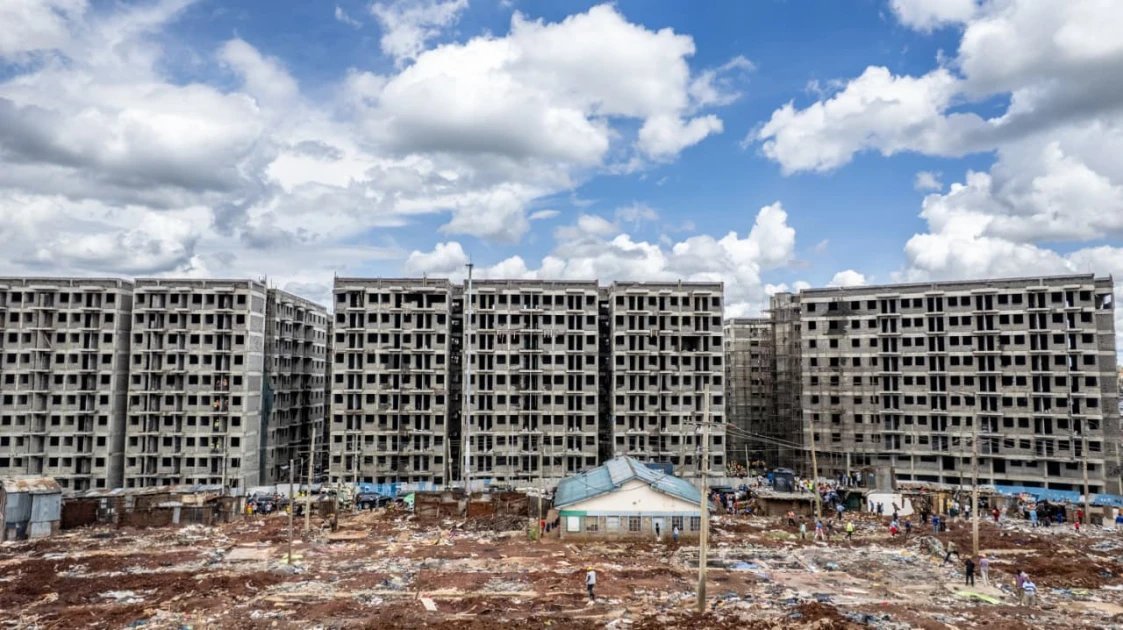

The government has moved to reassure Kenyans that homes bought under the Affordable Housing Programme are secure. Officials dismissed claims that buyers risk losing their investments if a new government comes into power after the next election.
President William Ruto highlighted progress in the initiative. He said the Affordable Housing Fund has generated investments of $9.3 billion, approximately Ksh1.2 trillion. The statement came as authorities seek to build confidence among potential buyers and stakeholders in the sector.
This reassurance targets concerns raised in recent weeks. Some political voices have questioned the long-term security of properties acquired through the programme. The State Department for Housing and Urban Development stepped in to clarify ownership terms.
Ruto made the remarks while inspecting a 955-unit Starehe affordable housing project in Nyahururu town, Laikipia West constituency. The visit underscored ongoing construction efforts across different counties.
The programme forms a central part of broader housing efforts. It relies on contributions from the Affordable Housing Levy, which deducts 1.5 percent from employees' gross pay matched by employers. Funds support construction of units aimed at low and middle-income earners.
Construction activity under the scheme has picked up in various locations. Projects range from urban developments to those in underserved areas. Engineers and contractors involved continue to face demands for timely delivery and quality standards in line with approved designs.
Investors and buyers have expressed worries about political transitions. The government emphasised that once transferred, titles remain with owners regardless of changes in administration. This aims to separate programme continuity from electoral cycles.
The scale of investment cited by the president reflects contributions and commitments mobilised so far. It positions the housing drive as one of the larger ongoing infrastructure efforts in the country. Exact breakdowns of the figure include levy collections and other domestic sources.
For the construction industry, the programme has created steady demand for materials, labour and project management services. Firms involved in delivering these units monitor policy signals closely to plan their pipelines.
Officials continue to push for more uptake. They point to completed and ongoing projects as evidence of delivery. Buyers receive assurances on legal protections built into the purchase agreements.
The move to calm investors comes amid broader discussions on housing policy. It seeks to maintain momentum in a sector that has seen both achievements and public debate over implementation.
As the programme advances, focus remains on delivery timelines and compliance with building regulations. The reassurance forms part of efforts to sustain participation from citizens and private partners.
Comments (0)
Leave a Comment
No comments yet. Be the first to share your thoughts!