
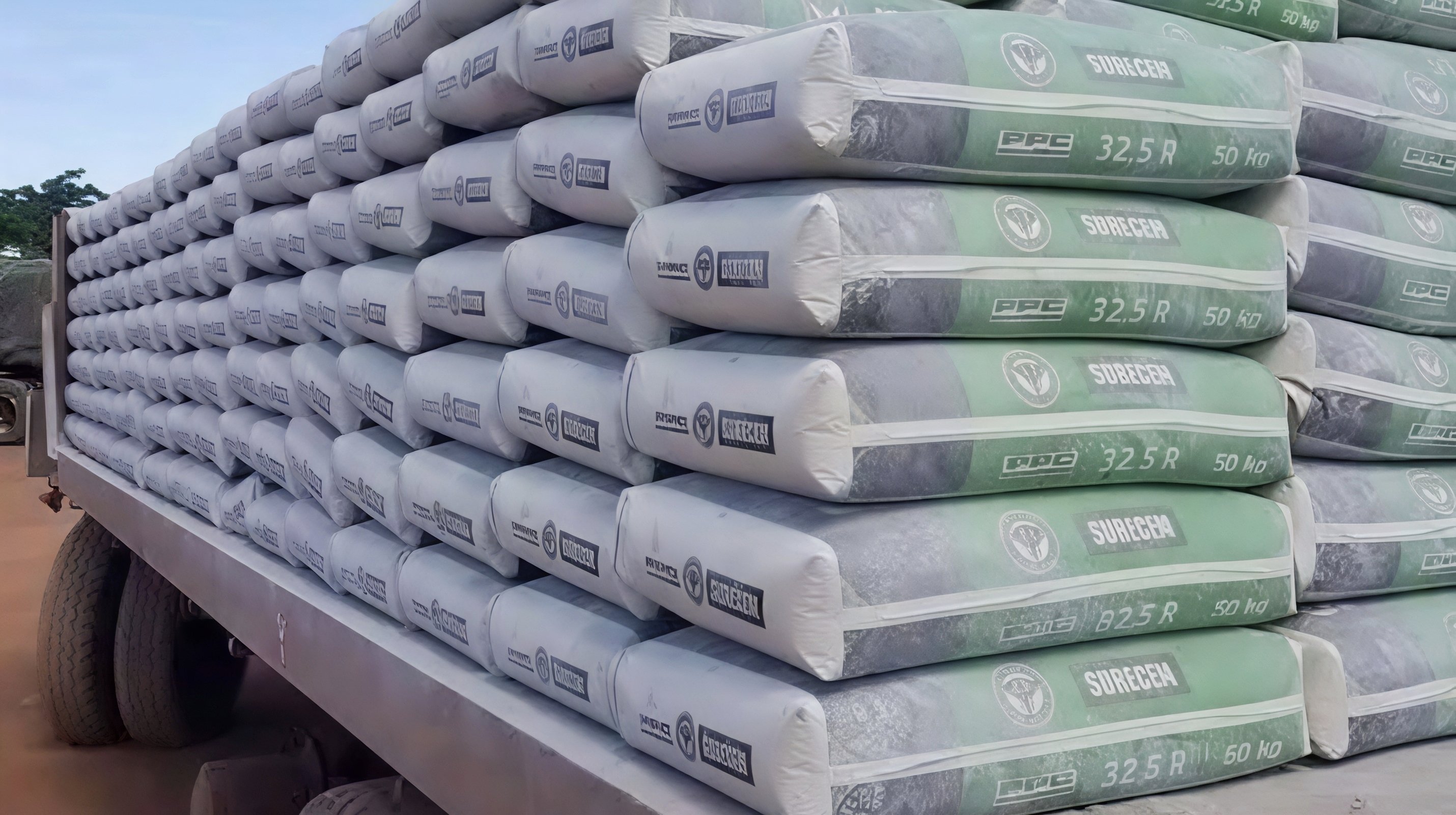

The Democratic Republic of Congo has extended temporary restrictions on imports of grey cement, clinker and lime in selected regions, maintaining a policy designed to direct demand toward domestic manufacturers. The measures were renewed through two ministerial orders signed on July 29, 2026, by Foreign Trade Minister Julien Paluku Kahongya.
The restrictions apply to grey cement and clinker imports into the country's western and southeastern regions, as well as lime imports specifically into the southeast. Officials stressed the measures do not amount to a blanket import ban, with exemptions remaining available whenever local supply cannot meet demand.
Long transport distances and high logistics costs continue to make cement difficult to source in some provinces, which is why the exemption mechanism has been preserved alongside the renewed restrictions. The continued curbs are expected to channel more demand toward local manufacturers, though their impact will depend on whether those producers can supply sufficient volumes at competitive prices while maintaining product quality.
The exemption process has already shaped industrial supply decisions. In 2024, Kamoto Copper Company sought authorisation to import hydrated lime from Zambia to meet its industrial needs, but the ministry instructed the firm to first source part of its requirements from Congolese producers before turning to imports.
Kinshasa first introduced the import restrictions in July 2024 to protect domestic cement production, though the policy has drawn scrutiny over enforcement. In October 2025, Paluku called for an investigation into ongoing illegal cement imports from Nigeria, pointing to persistent gaps in how the restrictions are policed.
Domestic producers have responded by expanding capacity. Cimenterie Kongo, a joint venture between Rawji Group and Pakistan's Lucky Cement, has announced plans to invest more than $300 million to more than double its production capacity to 3 million tonnes annually by 2027, up from its current 1.4 million tonnes.
Congo's cement consumption has been rising quickly, reaching 2.55 million tonnes in 2023 according to the Central Bank of the Congo, while domestic producers supplied only around 2.3 million tonnes, leaving a gap historically filled by imports. Other manufacturers are scaling up alongside Cimenterie Kongo, including China's WIH Cement, which plans to expand to 2.2 million tonnes annually by 2027, and the Avic-Conch consortium, which has partnered with the government to restart the National Cement Plant in Kimpese.
The effectiveness of the renewed restrictions will ultimately hinge on how quickly and transparently exemption requests are processed, alongside whether expanding domestic capacity can keep pace with the country's rapidly growing construction demand.
Comments (0)
Leave a Comment
No comments yet. Be the first to share your thoughts!