
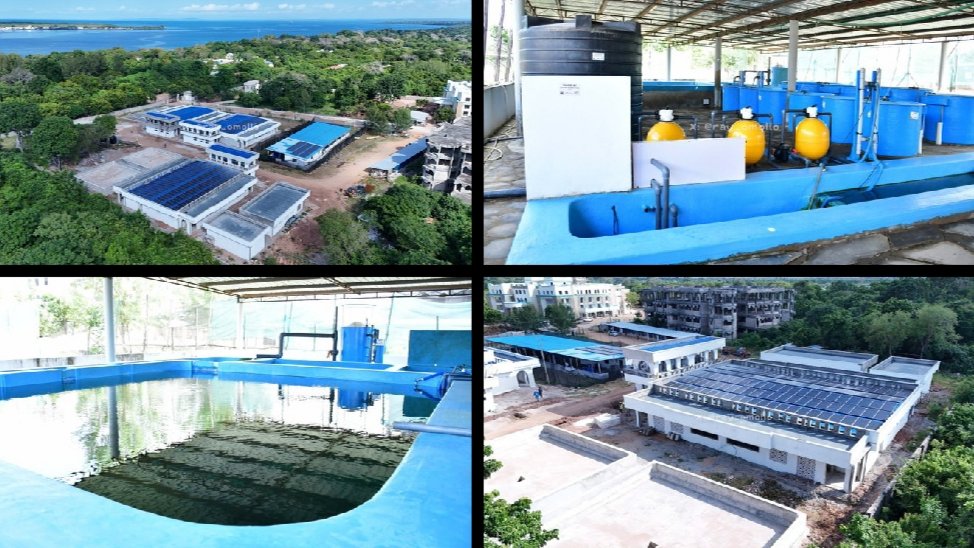

The government is expanding aquaculture production along the Kenyan coast through increased supply of quality prawn fingerlings. Principal Secretary for Internal Security and National Administration Dr Raymond Omollo highlighted the work of the Kenya Marine and Fisheries Research Institute at the National Mariculture Resource and Training Centre hatchery in Shimoni, Kwale County.
Thousands of prawn larvae have already been distributed to farmer groups in Kwale and Kilifi counties. Plans are under way to reach more aquaculture communities across the Coast region. The initiative addresses a longstanding shortage of quality seed stock and offers a sustainable alternative to harvesting from fragile ocean ecosystems.
By providing reliable fingerlings, the programme supports household incomes, diversifies livelihoods and helps meet rising demand for prawns from local consumers and the hospitality sector. Quality seed is a critical constraint in mariculture. Many small-scale farmers previously relied on wild collection, which is inconsistent and places pressure on natural stocks.
The hatchery at Shimoni forms part of broader efforts to develop the Blue Economy. Mariculture is seen as a way to increase fish and shellfish production without further stressing wild fisheries. Training and extension support accompanying the fingerling distribution help farmers improve survival rates and pond management.
A secure maritime environment is described as essential for the success of these investments. The State Department for Internal Security and National Administration supports efforts that protect coastal communities, safeguard marine resources and create conditions for research and private investment in aquaculture.
Coastal counties have significant potential for pond and cage-based prawn farming. Reliable access to seed, feed and technical advice determines whether smallholder operations can move from subsistence to commercial scale. The current distribution is an early step in building that supply chain.
Demand for prawns in hotels, restaurants and urban markets continues to grow. Local production can reduce reliance on imports and create employment in hatcheries, feed supply, pond construction and processing. Linking research institutions with farmer groups shortens the path from laboratory to livelihood.
The programme also contributes to food security by adding a high-value protein source to domestic supply. Sustainable mariculture practices, when properly managed, can operate alongside conservation goals rather than against them. Monitoring of water quality, disease and environmental impact remains necessary as production expands.
Officials present the Shimoni hatchery as a practical example of turning research capacity into tangible support for coastal communities. Continued scaling of fingerling production, combined with security of the marine space, is expected to strengthen the contribution of aquaculture to the Blue Economy.
Comments (0)
Leave a Comment
No comments yet. Be the first to share your thoughts!