
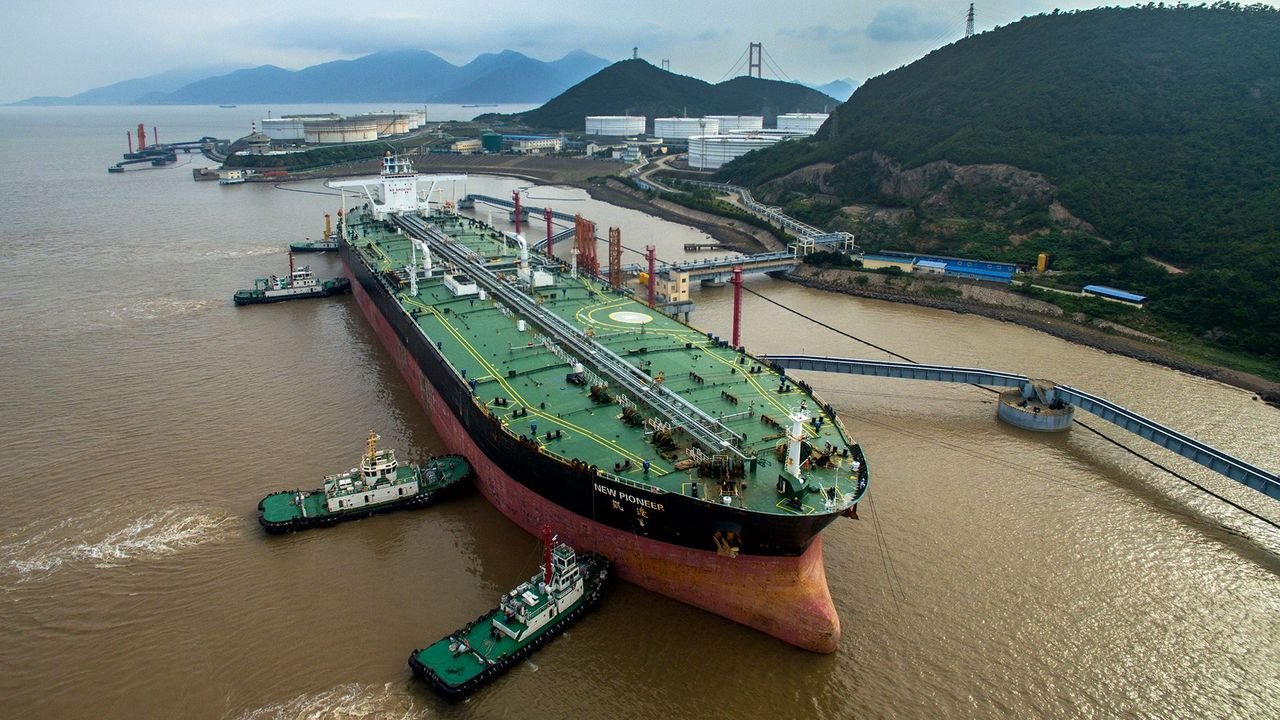

A drone strike that damaged two gas tankers in Egyptian waters has renewed energy security concerns around the Suez Canal and the Sumed pipeline, a route that has become vital for Saudi Arabian oil exports since the outbreak of the Iran war. The attack struck vessels at Egypt's port of Damietta on Wednesday, July 29, 2026.
No party has claimed responsibility for the strike, and no group has publicly threatened the Suez Canal itself. Even so, the incident has added to market unease, given how central the canal and pipeline have become to global oil flows since fighting closed off safer routes elsewhere in the region.
Saul Kavonic, head of energy research at MST Marquee, said passage through the Red Sea, even via the longer Mediterranean route, could now be put at risk, threatening up to five million barrels a day of oil supply currently able to bypass the Strait of Hormuz. Hardly any tankers are currently passing through Hormuz, previously the route for about a fifth of global oil and liquefied natural gas supply.
Saudi Arabia rerouted most of its oil to the Red Sea and its Yanbu terminal after the war began, but Houthi threats and attacks over the past week have pushed many tankers away from that route as well. A growing volume of Saudi oil has instead moved north toward Suez and the Sumed pipeline, according to data from market intelligence firm Kpler.
Crude loadings from the Sumed pipeline, which crosses Egypt from the Red Sea to the Mediterranean port of Sidi Kerir, climbed to 28.79 million barrels in July from 19.52 million in April, before the Houthis' July 20 threat to block Saudi oil from exiting via the Bab el-Mandeb strait. Around 30 ships had clustered near the Port Said anchorage at the canal's Mediterranean end by Thursday, up from roughly 20 earlier in the week, according to MarineTraffic ship-tracking data.
Crude is still flowing south through Bab el-Mandeb, though at roughly half the volume seen at the start of the month, with around 43 percent of Yanbu loadings heading south compared with 81 percent in June. An increasing number of tankers are also travelling with their trackers switched off, according to George Morris of energy analytics firm Vortexa.
Aly Blakeway, head of Atlantic LNG at S&P Global Energy, said the market is not currently pricing in disruption to the canal itself, and oil prices fell Thursday as traders instead focused on Iranian-Omani talks over Hormuz. Even so, Corey Ranslem, chief executive of maritime security group Dryad Global, warned that any attack within the canal region would substantially raise war risk insurance premiums and change security assessments for the wider area.
Martin Senior, head of LNG pricing at Argus, said insurers may already be pushing for higher additional war risk premiums for Suez following the Damietta attack, even though Iran has made no specific threats against the canal. Matthew Wright, principal freight analyst at Kpler, said any disruption to Suez would have an almost immediate inflationary effect, since longer voyages and higher freight costs typically pass through to consumers quickly.
Moving large volumes through Suez carries its own logistical constraints. Very Large Crude Carriers cannot fully transit the canal while laden, forcing them to offload part of their cargo through the Sumed pipeline before reloading in the Mediterranean. Last week, 1.4 million barrels a day were lifted from Sidi Kerir, against the pipeline's historical weekly peak of 2.1 million barrels and its total capacity of 2.5 million barrels a day.
Comments (0)
Leave a Comment
No comments yet. Be the first to share your thoughts!