
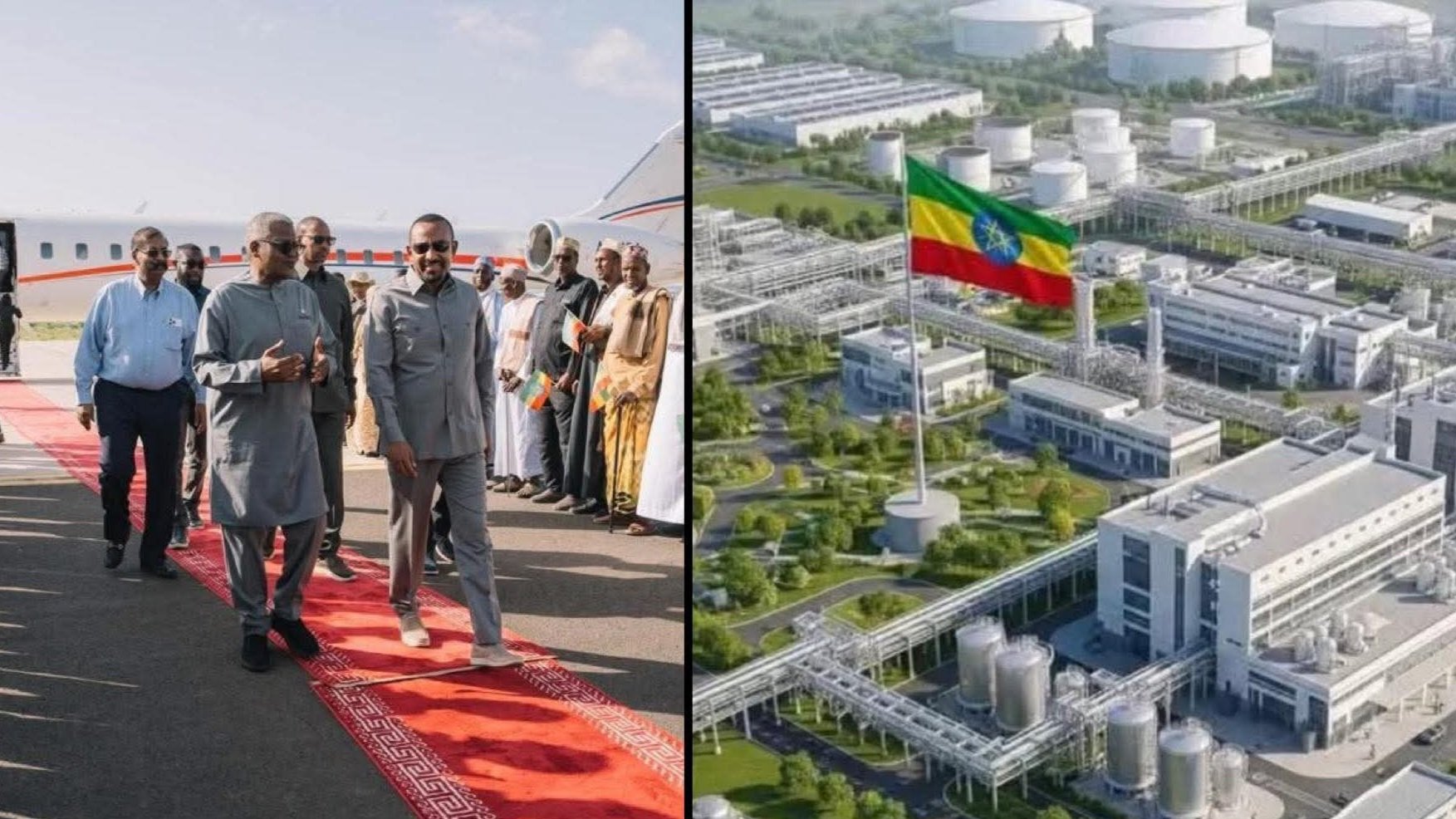

Nigerian industrialist Aliko Dangote has increased the planned investment for an ongoing fertilizer production complex in eastern Ethiopia to more than $4 billion, substantially widening the industrial scope of the venture.
The announcement followed a high-profile site visit to Gode, located in the southeastern Somali Region, where Ethiopian Prime Minister Abiy Ahmed hosted the Dangote Group leadership.
The capital injection updates a previous spending commitment of $2.5 billion established during a shareholders' agreement signed in August 2025.
Construction on the primary production complex formally commenced in October 2025 under a joint-venture model.
The equity structure of the venture allocates a 60 percent ownership stake to Dangote Industries Limited (DIL), while the state-backed sovereign wealth fund, Ethiopian Investment Holdings (EIH), controls the remaining 40 percent.
The revised financial commitment reflects major additions to the original factory blueprint, including dedicated power and heavy transport logistics systems.
Key additions to the project scope include a 110-kilometre natural gas pipeline, a 120-megawatt (MW) captive power plant, a polypropylene packaging manufacturing facility, and a secondary two-million-tonne industrial blending facility.
The pipeline will run directly from the Calub gas field in the Ogaden Basin to the industrial complex, ensuring direct feedstock access.
To secure long-term raw material input, the firm finalized a 25-year supply contract with China's GCL Group, valued at approximately $4.2 billion.
The manufacturing plant is designed to yield an estimated three million metric tonnes of urea annually upon completion, positioned to become one of the largest single-site urea operations on the continent.
The inclusion of the secondary blending plant allows for the local formulation of specialized Nitrogen, Phosphorus, and Potassium (NPK) fertilizers to address varied regional soil requirements.
Ethiopian authorities noted the state currently lacks primary domestic manufacturing facilities for inorganic agricultural inputs, relying entirely on foreign supply networks that drain foreign exchange reserves.
Prime Minister Abiy Ahmed stated during the tour that the infrastructure represents a critical pillar for regional agro-industrial growth, lowering input costs for local farmers while generating thousands of industrial jobs.
According to corporate project timelines, the Gode manufacturing complex is anticipated to achieve operational status between 2027 and 2029.
The output is intended to fulfill domestic farming demands and supply adjacent agricultural markets throughout East Africa.
Dangote confirmed that the strategic expansion positions Ethiopia as the second-largest destination for corporate capital allocations within the wider multinational group.
Comments (0)
Leave a Comment
No comments yet. Be the first to share your thoughts!