
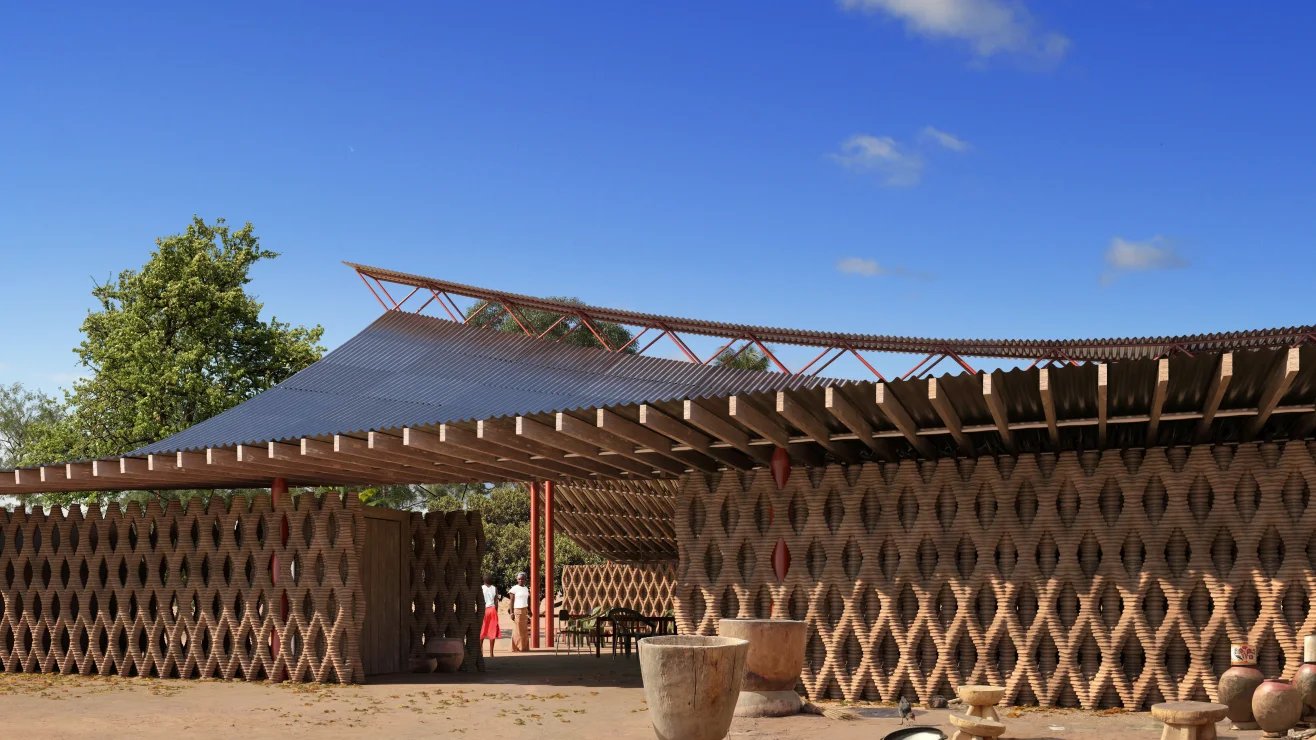

Europe has drawn attention for projects printing houses with local raw earth stabilized by natural binders. Machines extrude the material layer by layer to form low-carbon walls. Observers in the technology sector describe the process as disruptive.
For Sirma, a Kenyan civil engineer and founder of Modular Africa, the development feels familiar. Traditional African builders long worked with the same core logic. They harvested soil on site, mixed it with organic materials for stability, and raised structures that interacted with local climate conditions.
These homes relied on breathing walls and thermal mass rather than imported cement. The approach avoided the energy costs tied to Portland cement production and the transport of concrete blocks. Generations engineered with the land instead of against it.
The gap between past practice and current European examples lies mainly in automation. Printers bring speed and precision that manual methods could not match at scale. Yet the material intelligence remains rooted in place-specific knowledge.
Sirma frames the moment as a high-tech homecoming. Deploying additive manufacturing or stabilized earth systems in Africa today does not mean adopting a foreign future, she writes. It means refining capabilities ancestors already possessed.
Kenya has seen its own experiments with construction 3D printing. Companies have printed walls and small structures using concrete-like mixes, aiming to cut build times and costs amid a persistent housing shortfall. These efforts sit alongside broader interest in modular and industrialized methods.
Earth-based printing offers potential advantages in carbon reduction. Traditional concrete production accounts for substantial emissions globally. Local soil mixtures, when properly stabilized, can lower that footprint while using materials already present.
Challenges remain. Durability in varying weather, structural standards, and integration with roofs and foundations need careful engineering. Commenters on Sirma’s post raised questions about roofs, foundations, and whether older earthen buildings already performed well without modern intervention.
Others pointed to compressed earth blocks as a lower-tech alternative already in use in parts of Africa. Such methods create strong, insulated walls without heavy machinery and can generate local jobs.
Sirma’s perspective urges restraint in discarding architectural identity. True progress, she suggests, blends ancestral understanding of materials and climate with new tools for efficiency.
Across the continent, builders face pressure to deliver more housing faster while managing costs and environmental impact. Cement imports strain foreign exchange in many markets. Local earth offers an abundant alternative if performance questions can be resolved at scale.
European projects often highlight sustainability metrics and design flexibility. African contexts add layers of material availability, labor skills, and cultural continuity. The conversation Sirma joins asks whether the world is rediscovering what some regions never fully abandoned.
Additive manufacturing still represents a small share of overall construction output. Its growth will depend on equipment costs, regulatory approval, and proven performance over time. For now, the visual parallel between printed earth walls and historic African compounds invites reflection on continuity rather than rupture.
Sirma ends on a note of quiet confidence. Africa may not be catching up. The rest of the world could simply be catching on to principles long practiced here.
Comments (1)
Leave a Comment
Steel Toe
Jul 03