
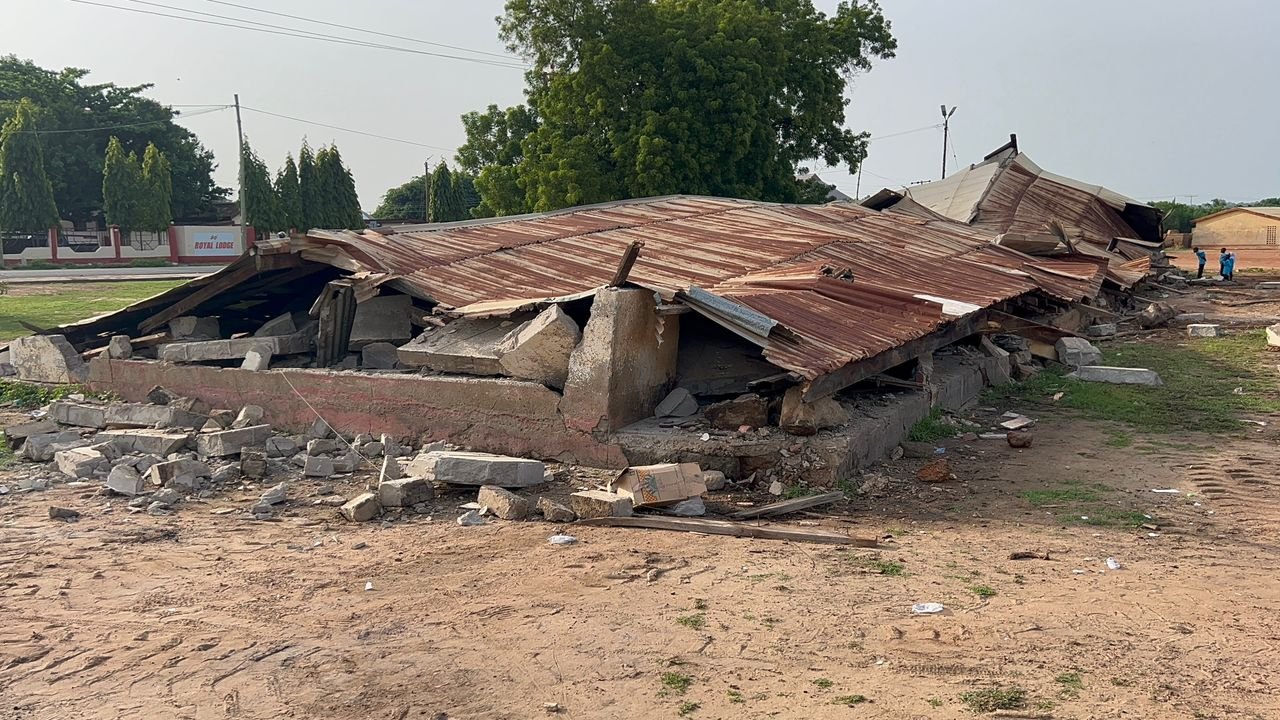

The Member of Parliament for Wa Central in Ghana's Upper West Region, Dr Abdul-Rashid Hassan Pelpuo, has defended the demolition of the 70-year-old Tendamba Primary School, saying declining enrolment and deteriorating infrastructure justified the decision.
The school, located in Wa, the regional capital of Ghana's Upper West Region, was demolished on June 13, 2026, following months of public opposition and legal action challenging the move. The site is set to become the Wa Municipal segment of a proposed 24-hour economy market, part of a national initiative championed by the Ghanaian government.
Speaking to Ghana's Citi News, Pelpuo said the school's buildings had aged significantly and needed either extensive renovation or a full rebuild, while pupil numbers had also fallen over the years.
"Enrolment was reducing, and the buildings were so old and needed to be worked on, either to break down and rebuild them or to do major renovation works. They decided to break it down and rebuild," he said.
The primary school has been relocated to the existing Tendamba Junior Secondary School site within the same Wa Municipality, where both schools now operate from the same location under the shared Tendamba name.
Pelpuo said the new facility gives pupils improved classrooms and a more attractive learning environment, while the relocation has freed up the original site for the proposed market development in the Ghanaian town.
He acknowledged public concern over demolishing a school with decades of history in the local Wa community, describing the decision as a difficult but necessary compromise.
"It touches the heart of everybody when they start talking about, 'This is an old school and you are breaking it to build a market.' It is a sacrifice we had to make," he said.
Pelpuo maintained that the school has not been lost, only rebuilt and relocated, and that it retains its original name at the new site.
"Painfully, the school had to be rebuilt and still given the same name," he added.
The 24-hour economy market forms part of a wider push by Ghana's government to expand round-the-clock commercial activity across the country's regional capitals, with municipal authorities identifying available urban land for new trading infrastructure.
School relocations tied to infrastructure and market development projects have drawn public scrutiny in several Ghanaian municipalities in recent years, particularly where older community institutions are involved.
Comments (0)
Leave a Comment
No comments yet. Be the first to share your thoughts!