

A version of this article appeared on Nation.Africa.
Kenya has left its ambitious Sh3.3 billion security wall along the porous border with Somalia incomplete, a decade after the state first unveiled the plan to secure the country from external terror threats.
The massive infrastructure project, which aimed to seal a 700-kilometre stretch, has completely stalled, but lessons from the United States (US) frontier offer new perspective.
First proposed in 2015 following devastating terror attacks, the project sought to establish a concrete barrier to deter al-Shabaab militants.
The initial engineering design involved a two-foot-tall concrete foundation fitted with closed-circuit television cameras, although the strategy later shifted to a double wire fence.
National Youth Service (NYS) personnel moved heavy construction machinery to northern border towns like Mandera, when the state fast-tracked early development phases.
Progress quickly decelerated due to intense local resistance, funding deficits, and complex diplomatic friction between Nairobi and Mogadishu.
Security experts now question the efficacy of physical barriers, since corruption and poor management heavily compromise their ultimate performance.
Reports indicate that only a tiny fraction of the extensive border fence has been successfully erected, while the remaining vast corridor remains entirely open.
The Kenya Defence Forces (KDF) previously maintained a strong presence along the frontier to protect construction crews, but persistent security threats halted physical operations entirely.
Local communities argue that the physical barrier disrupts historical pastoralist routes, which are vital for cross-border trade and ancestral connections.
Independent assessments suggest that border security relies heavily on human capital, because walls are only as effective as the guards, who monitor them.
The financial strain of maintaining isolated outposts in harsh desert terrain has further complicated prolonged engineering interventions along the remote border.
Contractors faced severe logistics hurdles while transporting structural materials over hundreds of kilometres of underdeveloped infrastructure.
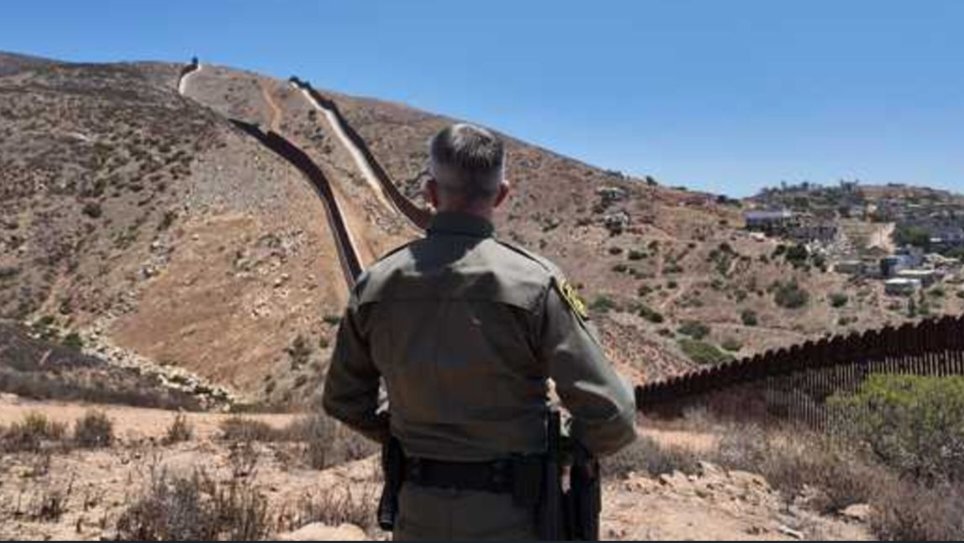
While Kenya struggles to fund its border project, the US continues to heavily reinforce its controversial southwestern barrier with Mexico.
The American government has poured massive resources into high-tech detection systems, when physical concrete walls proved insufficient on their own.
The comparison shows that electronic surveillance paired with rapid-response infrastructure yields much better results than static brick-and-mortar installations.
Analysts emphasize that modern border protection requires a sophisticated blend of intelligence sharing and next-generation motion sensors, if a state hopes to achieve genuine security.
The stalled Kenyan project highlights how multi-billion-shilling infrastructure can become a liability, if the state lacks a sustainable long-term operational framework.
Cross-border communities on both sides continue to bypass the unfinished sections daily, which underscores the extreme difficulty of regulating such fluid geographic zones.
President Ruto has previously advocated for enhanced regional integration, which could shift the official focus away from expensive physical isolation projects.
For now, the Sh3.3 billion infrastructure project remains a stark reminder of the massive gap between ambitious state security blueprints and operational realities.
Government offices have kept quiet regarding any immediate plans to revive the contract, but the physical fence remains completely abandoned.
Engineers originally projected that the border barrier would take less than a year to complete, when works officially commenced in Lamu county.
The shifting strategy from heavy concrete structures to lighter wire fences did little to save the dying project from eventual collapse.
Geopolitical experts suggest that solving regional instability requires diplomatic engagement, although physical barriers remain popular as reactive political statements.
As Kenya looks at global precedents, the financial and social costs of border walls continue to heavily outweigh their tactical benefits.
Comments (0)
Leave a Comment
No comments yet. Be the first to share your thoughts!