
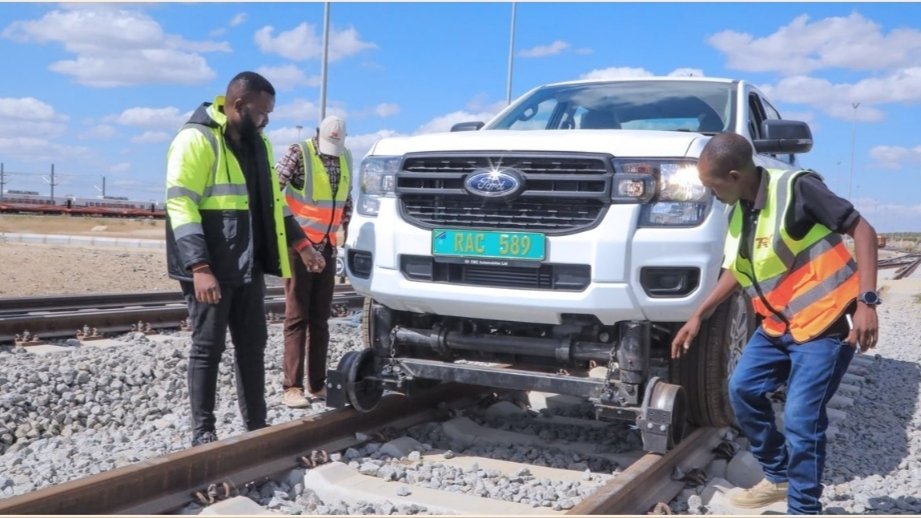

Tanzania has introduced a fleet of laser equipped Ford Ranger vehicles to strengthen security and monitoring along the Standard Gauge Railway (SGR) corridor. The move is part of broader efforts to protect railway infrastructure, improve operational safety and reduce cases of vandalism and unauthorized access along the route.
The specially fitted vehicles are expected to support patrol teams responsible for monitoring the railway line connecting key economic regions in the country. Officials say the technology installed in the vehicles will help security officers detect obstacles, suspicious movements, and potential damage near the tracks, especially during night operations and in remote areas.
The Standard Gauge Railway remains one of Tanzania’s largest transport investments in recent years. The railway is designed to improve cargo and passenger transport, lower travel time, and support trade between the port of Dar es Salaam and inland regions. As more sections become operational, authorities have increased focus on protecting the infrastructure from theft, sabotage and accidents.
According to transport officials, the laser systems mounted on the Ford Rangers can scan sections of the railway corridor and assist in identifying unusual activity at a distance. The equipment is also expected to improve surveillance in areas where visibility is limited due to weather conditions or terrain.
The introduction of the patrol vehicles follows reports of rising concerns over vandalism targeting railway equipment and communication cables in some transport corridors across East Africa. Such incidents often lead to service disruptions, costly repaire and safety risks for passengers and workers.
Authorities say the vehicles will operate alongside existing railway security teams and digital monitoring systems already installed along parts of the SGR network. The aim is to create a faster response system capable of detecting and addressing threats before they interfere with railway operations.
The Ford Rangers have also been modified to handle rough terrain commonly found along long stretches of railway infrastructure. Security teams are expected to use the vehicles to access remote locations that are difficult to reach using ordinary patrol units. This is expected to improve inspection efficiency and reduce response times during emergencies.
Tanzania’s railway modernization project has attracted regional attention due to its role in improving transport links within East and Central Africa. The government has repeatedly stated that maintaining the safety and reliability of the railway is necessary for attracting more cargo business and encouraging greater use of rail transport.
Rail transport experts note that the use of advanced monitoring equipment is becoming more common as countries invest heavily in modern railway systems. Technologies such as laser scanning, drones, and smart sensors are increasingly being used to improve maintenance, detect faults early, and strengthen infrastructure security.
Officials involved in the project say protecting the SGR is not only about safeguarding trains and tracks, but also ensuring the long-term economic benefits linked to the railway. The SGR is expected to support industries, agriculture, tourist and regional trade by making transport more reliable and affordable.
The deployment of the laser equipped vehicles is also expected to support coordination between railway authorities and security agencies. Faster communication and better monitoring tools may help reduce delays in responding to incidents occurring along the rail corridor.
As Tanzania continues expanding its railway network, authorities are likely to invest further in technology based safety measures. The latest addition of specialized patrol vehicles reflects a growing focus on combining transport development with modern infrastructure protection systems.
Observers say the success of such measures will depend on regular maintenance of the equipment, proper training of personnel and close cooperation between communities living near the railway and security teams responsible for protecting the infrastructure.