
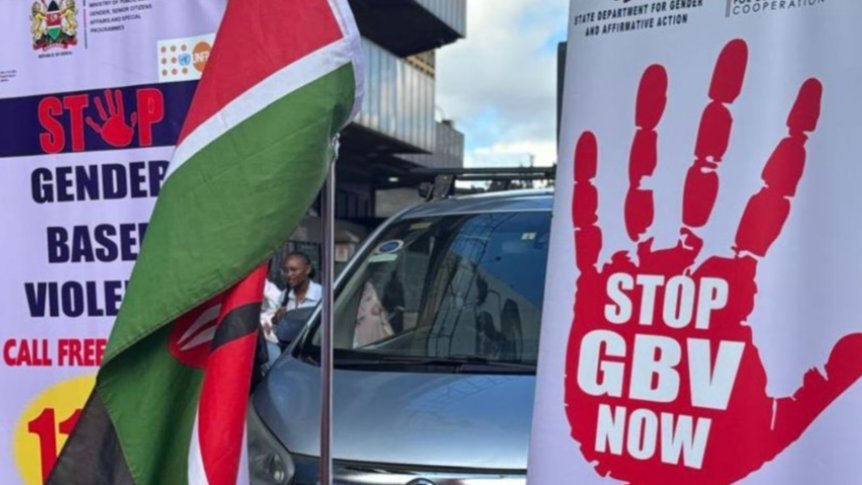

The Kenyan Cabinet has approved a new legislative proposal that will require perpetrators of sexual and gender-based violence (SGBV) to pay compensation to their victims. This proposed law represents a shift in how the country handles domestic abuse, as it couples prison sentences with mandatory financial restitution.
The Cabinet adopted the Protection Against Domestic Violence (Amendment) Bill, 2026, during a meeting last week. Under these provisions, convicted offenders will no longer only serve prison terms, but they will also face orders to provide financial reparations directly to the survivors of their abuse.
This amendment comes as Kenya attempts to modernise its judicial response to gender-based violence (GBV) and femicide. By introducing double punishment, the legislation aims to provide tangible support to survivors, who often struggle with medical bills, therapy costs, and lost income resulting from their injuries.
In a bid to ensure that cases are prosecuted fully, the Bill criminalises any form of external interference. It outlaws the obstruction of justice, coercion of victims, and concealment of evidence, which have previously allowed many perpetrators to escape formal legal accountability.
Furthermore, the proposed law explicitly bans the use of informal, community-led settlements to resolve domestic abuse cases. Traditional dispute mechanisms, such as kangaroo courts and the Somali Maslaha system, will be illegal, as they frequently bury serious offenses and protect offenders at the expense of victims.
To support survivors, the Bill mandates that national and county governments must coordinate their efforts. This collaborative framework will focus on improving the standard of victim rescue shelters, and establishing more efficient referral pathways so that survivors receive immediate and structured assistance.
Additionally, the legislation will formally recognise and standardise GBV recovery centres across the country. By bringing safe houses under a unified legal standard, the state aims to guarantee that emergency housing and psychological services meet minimum safety and care requirements.
These reforms stem directly from the recommendations made by the Presidential Technical Working Group on GBV, which studied systemic failures in the justice system. The working group submitted its final report to President Ruto earlier this year, urging immediate legislative interventions to curb rising femicide rates.
The Cabinet has fully endorsed the group's report, and the adoption of this amendment Bill is the primary outcome of those findings. The administration hopes that the threat of heavy financial penalties, alongside prison sentences, will act as a stronger deterrent against domestic violence.
Advocates for women's rights have welcomed the move, noting that many survivors are forced to live in poverty after escaping abusive relationships. Financial compensation from offenders could help these individuals rebuild their lives, although the practicalities of enforcing such payments remain a challenge for the courts.
Previously, survivors had to file separate civil lawsuits to seek monetary damages from their abusers, which was a lengthy and expensive process. Under the new framework, the criminal court will have the authority to award compensation during the sentencing phase of the trial.
The Bill must now pass through the National Assembly and the Senate, but it is expected to face minimal resistance. Lawmakers will debate the exact mechanics of the compensation fund, which must be clearly defined.
Comments (0)
Leave a Comment
No comments yet. Be the first to share your thoughts!