
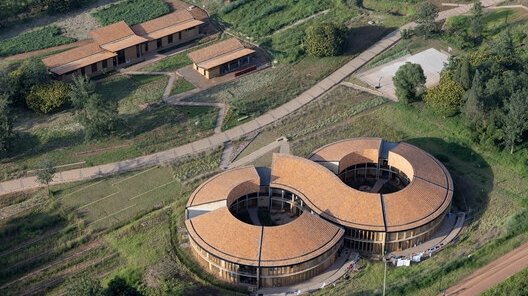

The Pan-African Biennale (PAB) now has names attached to it.
On May 28, 2026, the organisers released the official selection of participants for the inaugural edition, opening September 7 to 11 at the Kenyatta International Convention Centre in Nairobi. The list spans architects, studios, research collectives and material practitioners from across the continent, with contributions confirmed from more than 30 African countries.
The geographic reach is deliberately wide. Confirmed participants include Djamel Klouche from Algeria, Banga Coletivo from Angola, and the Benin-based team of Larry Tchogninou, Olufemi Hinson Yovo and Armel Sagbohan. Other selected practices include Moralo Designs, Association La Voûte Nubienne, Remesha Design Lab, Ramos Castellano Arquitectos, Barla Barla Architectes and Afrostudio. Practices working in heritage conservation, vernacular construction and environmental research include Megawra BEC, Hive Earth, Raas Architects, MASS Design Group and Design Without Borders. Practitioners including Nu Goteh, Aboubakar Fofana, Daar Studio and Lemon Pebble extend the programme further into craft, design and spatial storytelling.
Country representation spans Comoros, Djibouti, Equatorial Guinea, Eritrea, Eswatini, Gabon, Gambia, Guinea, Guinea-Bissau, Ivory Coast, Lesotho, Libya, Madagascar, Malawi, Mauritania, Mauritius, Morocco, Namibia, Nigeria, Senegal, Seychelles, South Sudan, Sudan, São Tomé and Príncipe, Togo, Tunisia, Zambia and Zimbabwe, among others. Additional participants, keynote speakers and contributors are still to be announced.
The exhibition is structured around three curatorial themes. Land Under Pressure addresses climate change and environmental transformation across African territories. Inherited Knowledge draws on vernacular construction intelligence and traditional building practice as a body of knowledge the profession has long undervalued. Worlds to Come opens toward African futures, asking what architecture produced from within the continent, rather than for it, might look like.
Biennale founder and artistic director Omar Degan has described the project as establishing a new framework rather than seeking entry into existing ones. His position is that Africa is the author of its own spatial knowledge and architectural discourse, not a subject to be incorporated into a programme built elsewhere.
The biennale is registered in Kigali and is intended as a recurring continental event, rotating between African cities every two years. Nairobi is the first. The programme will combine exhibitions, public events, publications and archival production across the five-day opening edition.
Comments (0)
Leave a Comment
No comments yet. Be the first to share your thoughts!