

For decades, the world's most influential architecture biennales have taken place in Venice, São Paulo and Chicago. African architects have participated in them, occasionally curated them, and sometimes dominated the conversation at them. But the events themselves have always been held elsewhere, on terms set by others, through institutions built without Africa at the centre.
That changes on September 1, 2026.
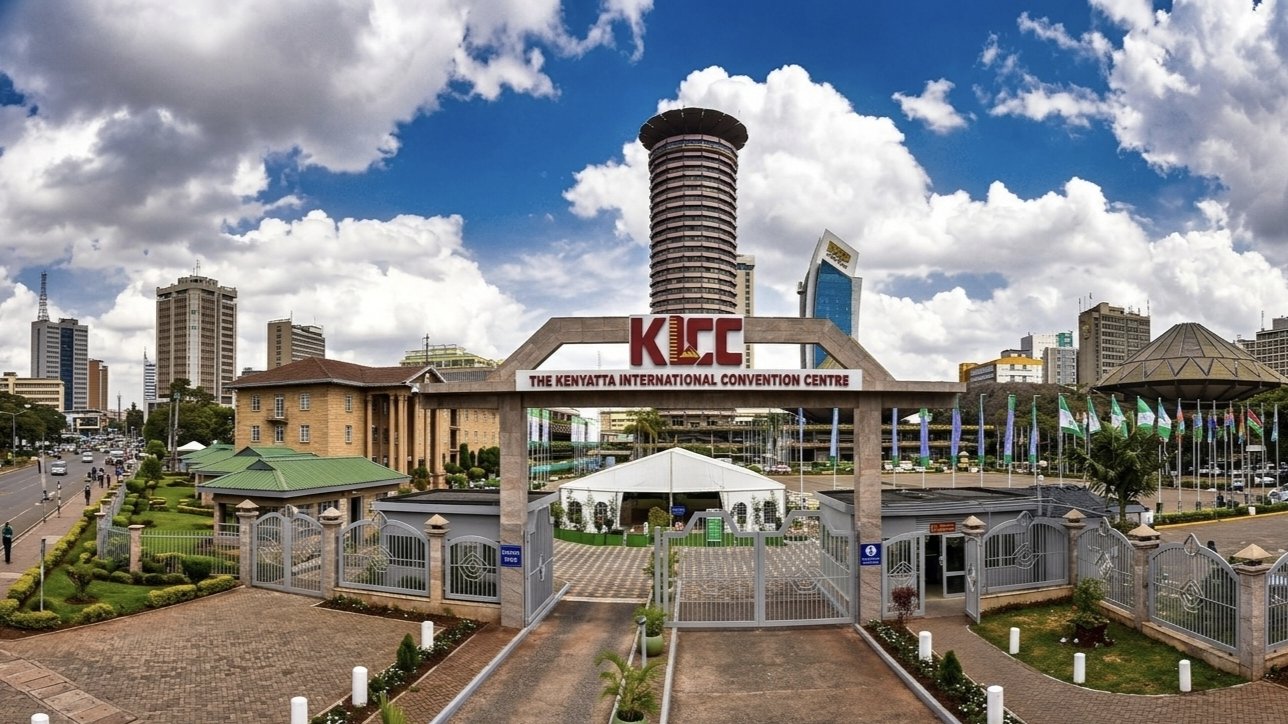
The inaugural Pan-African Architecture Biennale opens at the Kenyatta International Convention Centre in Nairobi, becoming the first continent-wide architecture biennale ever held on African soil. The event is organised by the Architectural Association of Kenya, led by its president George A. Ndege, and curated by Somali-Italian architect Omar Degan. It will feature contributions from studios representing all 54 African nations alongside participants from the African diaspora.
The choice of venue is not incidental. The KICC was inaugurated in 1973, a decade after Kenya gained independence. Designed by architect Karl Henrik Nøstvik in collaboration with Kenyan architect David Mutiso, it combined indigenous Kenyan architectural forms with a modernist structural language. Its cylindrical tower and terraced podium drew on the conical thatched homes of rural Kenya. It has long been associated with pan-African solidarity and post-colonial ambition. Hosting the first Pan-African Architecture Biennale, there is a deliberate act of continuity.
Degan is 35 years old, born in Italy to Somali parents, and has spent much of his career working in what he describes as fragile contexts, including post-conflict reconstruction in Somalia, slum upgrading in Buenos Aires and community infrastructure in Hong Kong. In 2022, he was selected as a Leaders Africa fellow by the Obama Foundation. His practice, DO Architecture Group, operates between Mogadishu, Italy and the United States.
The biennale's theme is Shifting the Center: From Fragility to Resilience. The framing is deliberate. Africa is consistently described in international media and development discourse through its deficits, its conflicts and its instability. Degan's position is that this reading is both incomplete and counterproductive. The fragility that defines many African contexts has also produced distinct spatial knowledge, climate-adaptive design, communal building practices and material ingenuity that the rest of the world is only beginning to catch up with. The biennale intends to put that knowledge at the front of the room rather than the margins.
The event will not replicate the Western biennale model. Degan has been explicit about that. The concern is that African participation in events like the Venice Architecture Biennale, even when substantial, still operates under terms set by European institutions. The 2023 Venice Biennale, curated by Scottish-Ghanaian architect Lesley Lokko, placed Africa at the centre of the programme and earned global attention. But it was still Venice. The Pan-African Architecture Biennale is something different: an African event, on African soil, organised by an African institution, moderated by African voices, under African terms.
One of its stated priorities is access. African architects routinely face visa difficulties when trying to attend international events in Europe. By hosting in Nairobi, a city with strong regional connectivity and existing infrastructure for continental diplomacy, the AAK and its partners have ensured physical access for participants across the continent in a way that Venice or Chicago cannot.
The opening week programme will include exhibitions, installations, keynote dialogues and public events across the city and satellite locations. A full schedule is expected to be published ahead of the September opening. The biennale is planned as a biennial event, rotating between African cities every two years.
Kenya's position as host carries its own significance. Nairobi is one of the fastest-growing cities on the continent, a regional hub for finance, technology and East African cooperation and one of the cities most actively grappling with questions of urban density, informal settlement design, climate adaptation and housing delivery. The conversation the biennale is opening could not have a more fitting backdrop.
For the AAK, whose leadership and organisation made this possible, and for Kenya's wider construction and architecture community, September 1 is a date worth marking.
Comments (0)
Leave a Comment
No comments yet. Be the first to share your thoughts!