
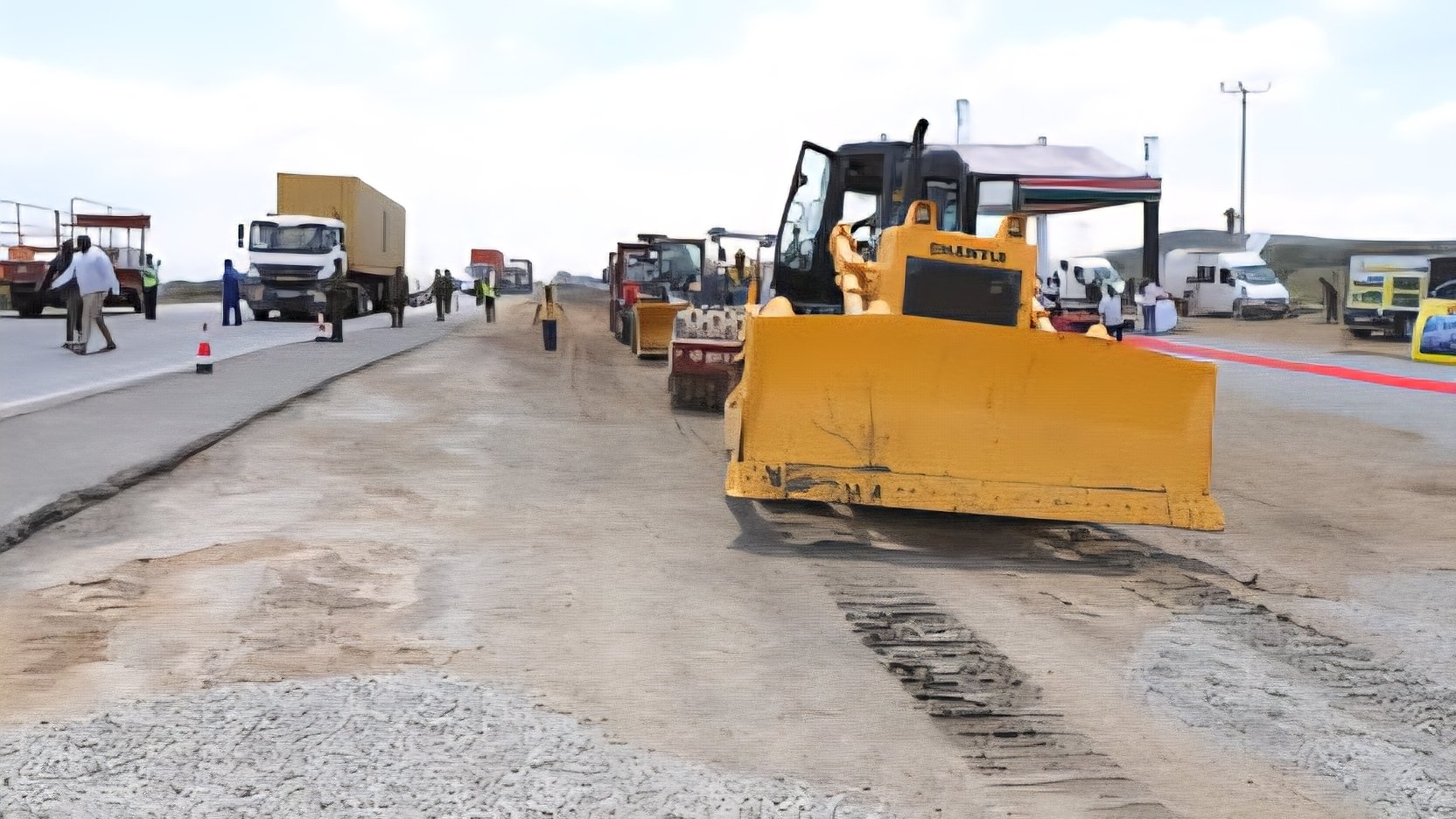

The Kenya National Highways Authority (KeNHA) has issued a formal notice to traders and developers operating along the Meru–Ena highway, demanding the immediate vacation of road reserves within the next 30 days.
This directive, issued on Monday evening, targets individuals who have set up businesses, permanent structures, or temporary stalls on land designated for road expansion and maintenance. The authority warned that failure to comply will result in forceful evictions and the demolition of structures at the owners' expense.
According to a report by Rene Otinga, the move is part of a broader effort to reclaim public land and ensure that transport corridors remain free of obstructions. Encroachment has long been cited as a primary hurdle in the implementation of road safety measures and routine maintenance works across the country.
The Meru–Ena stretch is a critical artery for the transport of agricultural produce and consumer goods in the region. KeNHA officials noted that the presence of unauthorized structures near the carriage way poses a significant risk to both motorists and the traders themselves.
"All those who have encroached on the road reserve along the Meru–Ena (B6) road are hereby notified to remove their structures and vacate the reserve within thirty days," the notice read.
The authority emphasized that once the window expires, no further warnings will be issued. The planned clearance will pave the way for upcoming road improvement projects intended to ease congestion and reduce the frequency of accidents in high-traffic market centers along the route.
This enforcement action follows similar exercises conducted by the authority on other major highways, including the A8 and the Nairobi-Nakuru corridor. In those instances, the government maintained that road reserves must remain clear to facilitate drainage works and the installation of signage.
In Meru, the impact is expected to be felt most in small trading hubs where kiosks and hardware stores have slowly crept toward the tarmac over the last decade. Local leaders have occasionally pushed for more time for these businesses to relocate, but KeNHA remains firm on the 30-day timeline.
The Kenya National Highways Authority is empowered by the Kenya Roads Act to manage, develop, and maintain national trunk roads. Under this mandate, the agency has the legal backing to remove any unauthorized occupation of its land.
For the traders, the notice marks a period of uncertainty. While some acknowledge that they are operating on public land, many argue that the 30-day period is insufficient to find alternative sites and move their stock.
However, the authority has countered that the safety of the traveling public and the integrity of the national infrastructure must take precedence. The clearing of these reserves is also seen as a prerequisite for any future dualing or widening projects that the Ministry of Roads might commission.
As the deadline approaches, the authority is expected to deploy surveyors to mark the exact boundaries of the road reserve. This will ensure that only those truly encroaching are affected, although the agency has urged all residents to verify their boundary lines against official maps.
This latest directive aligns with the broader infrastructure goals of the current administration. President Ruto has previously emphasized that the modernization of Kenya's road network requires strict adherence to planning laws to avoid the high costs associated with compensation for illegal settlers.
Comments (0)
Leave a Comment
No comments yet. Be the first to share your thoughts!