

A version of this article appeared on Nation.Africa.
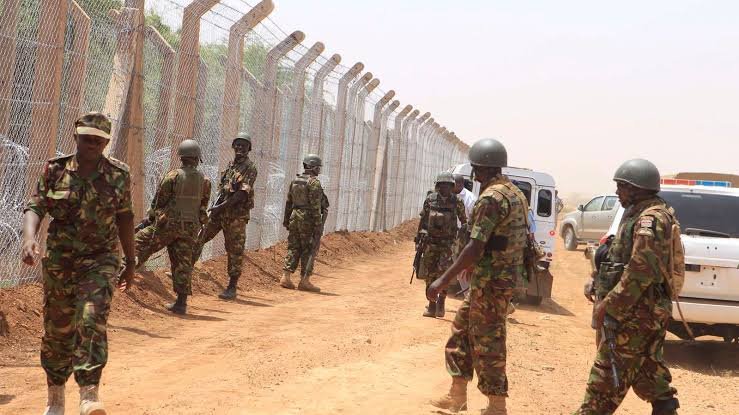
Persistent security threats along the frontier have forced the Kenyan government to suspend plans to reopen official border crossings with Somalia, disrupting a phased infrastructure program intended to restore legal trade and movement.
The decision underscores the volatile security situation in the region, where a recent surge in insurgent activity has made immediate border normalization untenable for immigration authorities.
President William Ruto, who previously advocated for regularizing transit points, had targeted a phased resumption of operations at key land stations, including the critical Mandera border post.
The strategy aimed to leverage Somalia's integration into regional frameworks to establish controlled entry points, allowing multi-agency security teams to manage customs and screening infrastructure.
Initial bilateral frameworks, which were established to reopen the land border after more than a decade of official closure, have repeatedly faced delays.
An agreement to execute a structured, multi-stage reopening was upended after a wave of attacks near the border resulted in the deaths of five civilians and eight police officers.
The fatalities, attributed to the Al-Qaeda-affiliated militant group Al-Shabaab, forced an immediate policy reversal from Nairobi.
The suspension affects critical logistics and border management plans, which required upgrading monitoring installations, expanding police deployments, and synchronizing immigration protocols.
Cross-border transit remains restricted to maritime and air routes, forcing traders to bypass direct overland paths due to poor infrastructure and active banditry risks.
Somalia recently joined the East African Community (EAC) passport system, following its admission into the regional bloc.
Local commercial stakeholders on both sides of the boundary have expressed frustration over the ongoing closures, noting that business communities remain cut off from neighboring markets.
Advocates for border normalization argue that legalizing the crossings would improve security coordination between the two nations, which historically suffered from weak inter-agency communication.
National security officials maintain that full normalization cannot proceed until border patrol infrastructure is sufficiently reinforced to prevent militant infiltration.
The government has committed to doubling police numbers along the frontier, but operational logistics continue to delay the deployment of the necessary multi-agency enforcement units.
Comments (0)
Leave a Comment
No comments yet. Be the first to share your thoughts!