

A version of this article appeared on The Conversation.
Researchers have tested a house built to fight three major childhood killers at their source. In a three-year trial across rural southern Tanzania, children in the new homes recorded markedly fewer infections.
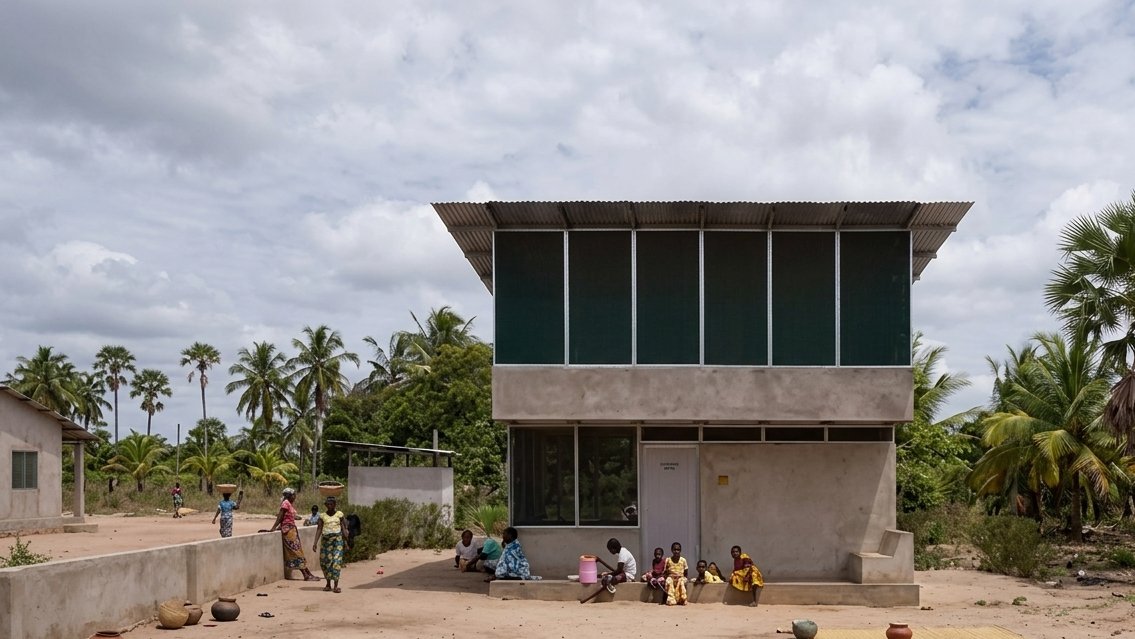
The design, named the Star home, emerged from collaboration among architects, engineers, public health specialists and other experts. Danish architect Jakob Knudsen led the conceptual work.
Results published in Nature Medicine showed striking differences. Children living in Star homes experienced 44 percent less clinical malaria, 30 percent less diarrhoea and 18 percent less pneumonia compared with those in traditional mud and thatched houses.
The health gains extended further. Protected from repeated illness, the children in the new houses grew taller on average.
Transmission of these diseases often happens inside or around the home. Mosquitoes bite indoors at night. Contaminated water and poor hygiene spread diarrhoea. Overcrowding and smoke contribute to pneumonia. The Star home targets these pathways directly.
Key features set the design apart. Bedrooms sit on the upper floor of double-storey structures, away from ground-level mosquito concentrations. Walls made of shade net allow strong cross-ventilation that cools interiors and discourages insect entry.
Mosquito screens cover doors and windows. Self-closing doors limit unwanted visitors. The package also includes clean water harvesting, improved pit latrines and better cooking stoves that reduce indoor smoke.
Construction economics favour the approach. The Star home costs 24 percent less in materials than a conventional single-storey cement-block house. It uses 73 percent less concrete and produces 57 percent less embodied carbon.
Over a 50-year lifespan, analysis points to a fourfold return on investment when health benefits, water savings, cooling and energy reductions enter the equation. Passive cooling keeps the house comfortable without air conditioning.
The trial involved 110 Star homes and 513 traditional houses. Researchers followed children under 13 years old with weekly health checks. Random allocation strengthened the findings.
Africa faces rapid population growth. Hundreds of millions of new homes will rise in coming decades. The Star home trial arrives at a moment when rural housing improvements already show momentum.
Kenya and other East African countries share similar disease burdens and construction challenges. Cement-block homes dominate new builds in many areas, often at high material and environmental cost.
The design demonstrates that modest changes in layout, materials and services can deliver outsized health returns. Shade net walls replace solid barriers. Upper-floor sleeping separates people from vectors. Integrated water and sanitation features close hygiene gaps.
Challenges remain for wider rollout. Local adaptation, supply chains for screens and nets, and skills for double-storey construction will need attention. Land tenure security matters too, as it affects access to finance for upgrades.
Governments could support progress through clearer ownership rights, reduced taxes on screening materials and technical guidance. The researchers urge architects and builders to work closely with communities on further innovations.
This work sits at the intersection of construction and public health. It shows housing as infrastructure that does more than provide shelter. In regions where children spend most time at home, the right design becomes preventive medicine.
The Star home does not solve every problem. It offers one tested model amid urgent need for better rural housing across the continent.
Comments (0)
Leave a Comment
No comments yet. Be the first to share your thoughts!