
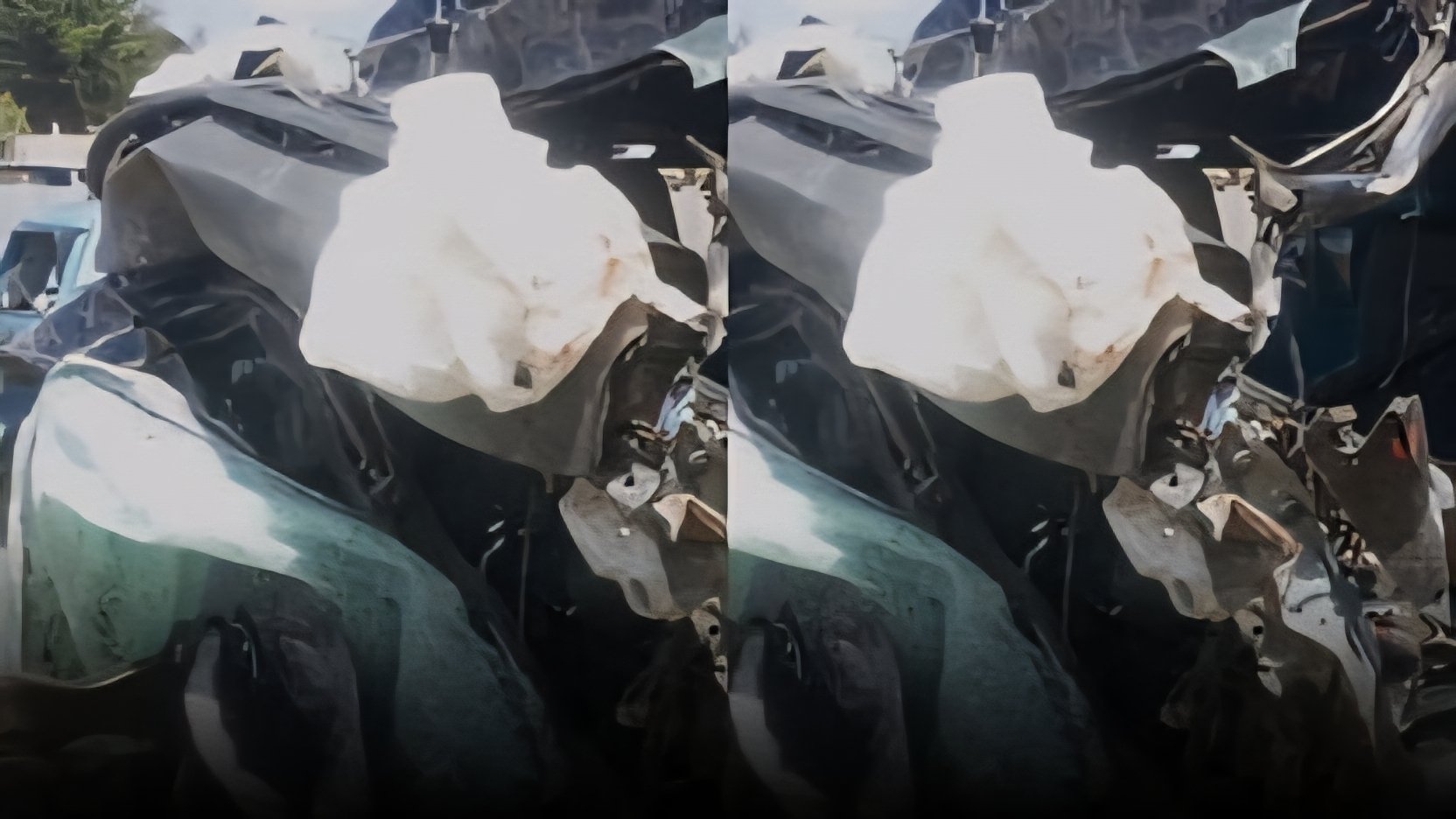

A fatal road accident at the Mau Summit section of the Nakuru-Eldoret highway has resulted in the deaths of three people, adding to the grim statistics of one of Kenya’s most dangerous transport arteries. The morning collision, which occurred near the notorious Twin Bridge area, involved a high-impact crash that left several other passengers with varying degrees of injuries.
Emergency response teams arrived at the scene shortly after the incident to find the wreckage of the involved vehicles obstructing a portion of the single-carriageway. Preliminary reports from local police indicate that the victims died on impact, while those injured were rushed to the Molo Sub-County Hospital for medical stabilization. The wreckage was subsequently towed to the Mau Summit Police Station as investigators began the process of determining the exact cause of the crash.
Traffic along the Northern Corridor was heavily disrupted for several hours as recovery teams worked to clear the debris. The Nakuru-Eldoret stretch is a vital link for transit cargo moving between the Port of Mombasa and landlocked neighbors like Uganda and South Sudan. However, its current configuration as a single-carriageway has long been criticized for being unable to safely accommodate the high volume of heavy-duty trucks and public service vehicles that frequent the route.
This latest tragedy comes at a time when the government is under renewed pressure to expedite the Rironi-Mau Summit road project. The planned upgrade, which involves dualling the 175-kilometer stretch, has faced several years of delays due to financing reviews and administrative shifts. While the state has recently signaled a commitment to move forward with the project under a public-private partnership model, the actual ground-breaking for major sectional expansions remains a point of contention for the residents and motorists.
Safety experts and the Motorists Association of Kenya have consistently pointed to the highway's design as a contributing factor to the frequent head-on collisions. The lack of physical separation between opposing lanes of traffic, combined with steep gradients and sharp bends, often forces drivers into risky overtaking maneuvers. In areas like Mau Summit and the nearby Salgaa descent, these factors create a volatile environment where small errors in judgment lead to high-fatality incidents.
Local leaders in Nakuru County have reiterated their calls for the Ministry of Roads and Transport to prioritize blackspot interventions while the larger dualling project remains in the procurement phase. Suggested immediate measures include the installation of additional speed bumps, clearer signage, and the construction of more truck lay-bys to reduce driver fatigue. For now, the Mau Summit area remains a site of mourning as families begin the difficult task of identifying their kin.
The police have urged motorists to exercise extreme caution, particularly during early morning and late-night hours when visibility is reduced, and heavy-duty transit traffic is at its peak. As the investigation into this specific collision continues, the incident serves as a stark reminder of the infrastructure gaps that continue to plague Kenya’s primary transit corridor.
Comments (0)
Leave a Comment
No comments yet. Be the first to share your thoughts!