

A version of this article appeared on The Civil Engineering Hub.
To the untrained eye, a vertical gap running through the middle of a large building often looks like a mistake or a sign of poor workmanship. In professional engineering circles, however, these separations are essential components designed to accommodate the reality that every building moves.
While a finished structure appears rigid and permanent, it constantly responds to its environment. Factors such as temperature fluctuations, moisture changes, and material shrinkage cause buildings to expand and contract over time. Without a way to release the resulting internal stress, a structure will eventually fail.
When a long building is constructed as a single, continuous block, it lacks the flexibility to handle these shifts. Engineers note that as stress accumulates within the material, the structure begins to react in ways that can compromise both its aesthetics and its safety.
The physical evidence of missing or poorly designed expansion joints often appears as deep cracks in walls and slabs. In more severe cases, building sections can push against one another, leading to the distortion of finishes or the complete separation of joints where different wings of a structure meet.
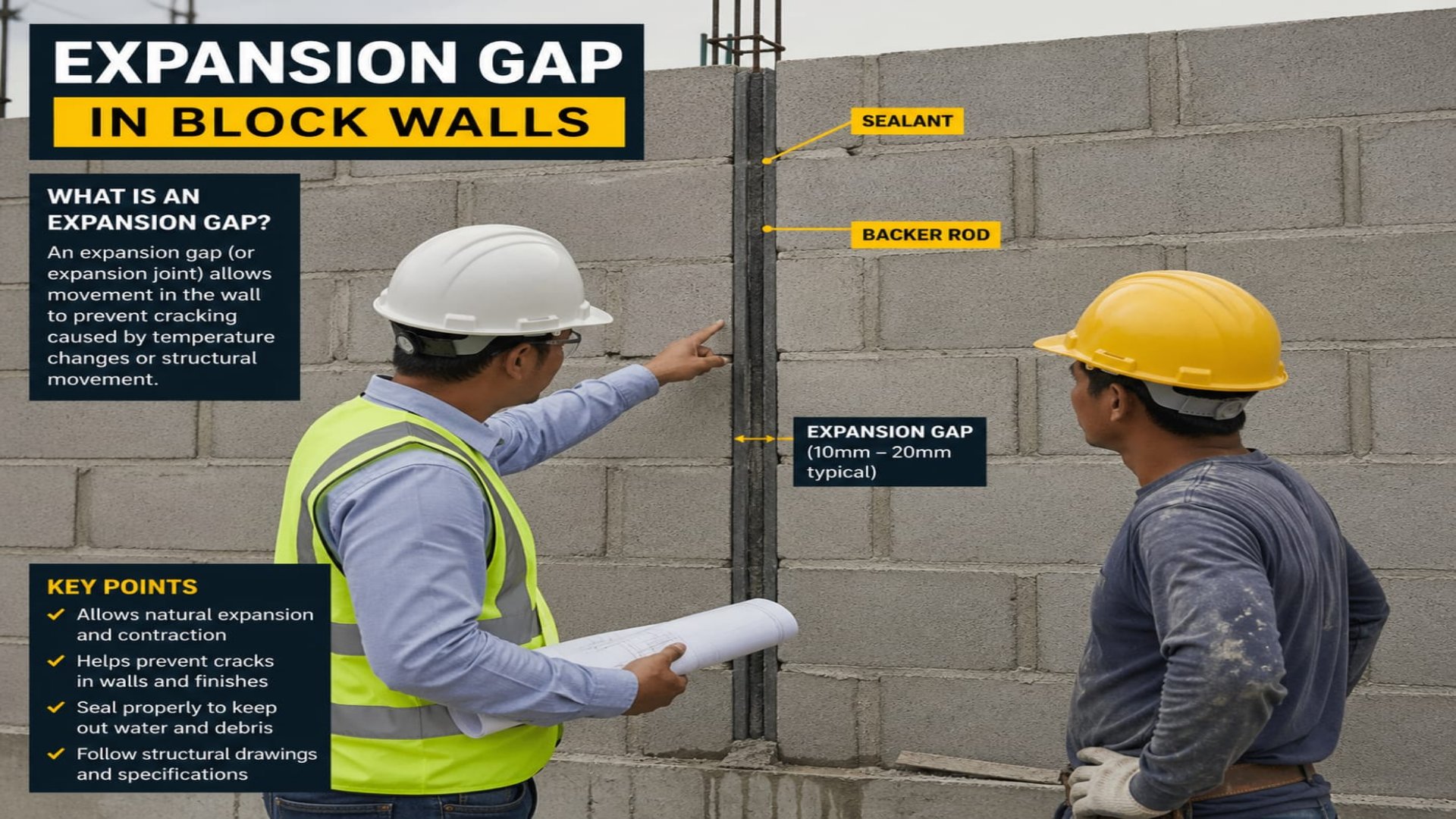
Engineers introduce these gaps to allow separate sections of a building to behave independently. By dividing a long block into smaller segments, the structure can move slightly without transferring stress to the rest of the frame. This controlled separation prevents the uncontrolled damage that typically follows thermal expansion or minor soil settlement.
These gaps are particularly critical in specific types of construction. Long residential blocks, large commercial complexes, and buildings with irregular layouts are all subject to higher levels of internal tension. Structures located in regions with significant temperature variations also require careful joint placement to manage daily expansion cycles.
Good engineering requires a focus on more than just carrying heavy loads. It must also account for the predictable movement of materials like concrete and steel over their service lives. Designing for movement is as important as designing for stability, as it ensures the long-term durability of the investment.
Ultimately, the small gaps seen in modern masonry and concrete work are not signs of unfinished construction. They are intentional engineering features that protect the building for decades, ensuring that natural movement does not turn into a structural disaster.
Comments (0)
Leave a Comment
No comments yet. Be the first to share your thoughts!