

Regional climate monitors warn that the Greater Horn of Africa faces an unusually wet end to the year. The Intergovernmental Authority on Development Climate Prediction and Applications Centre (ICPAC) released its seasonal weather outlook on August 19, 2026, indicating elevated rainfall levels across several member states.
Meteorologists attribute the heavy precipitation forecast to strengthening El Niño (EN) conditions in the Pacific Ocean. The forecast covers the October to December (OND) 2026 rainfall season, which serves as a primary agricultural and hydrological period for Eastern Africa.
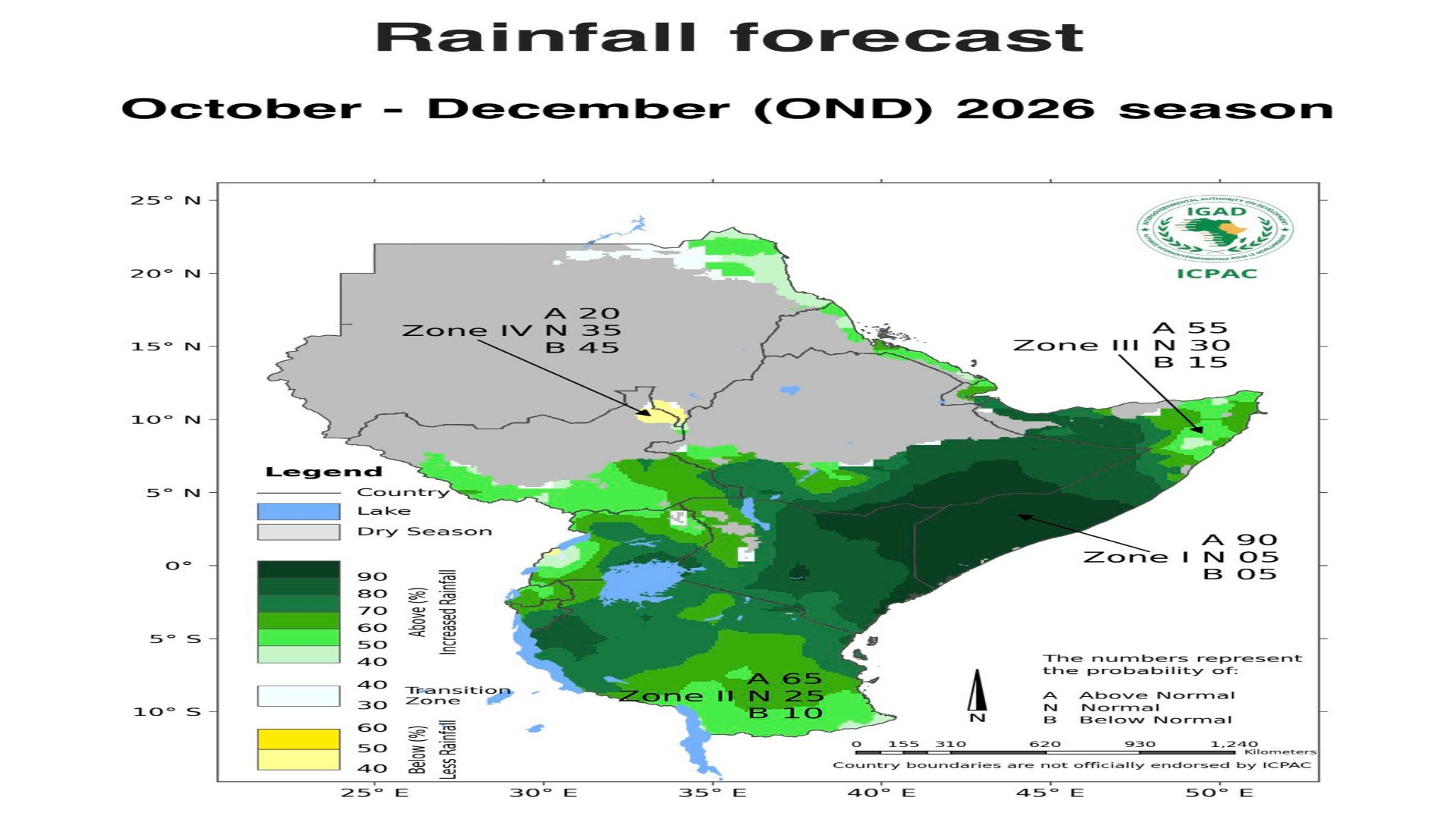
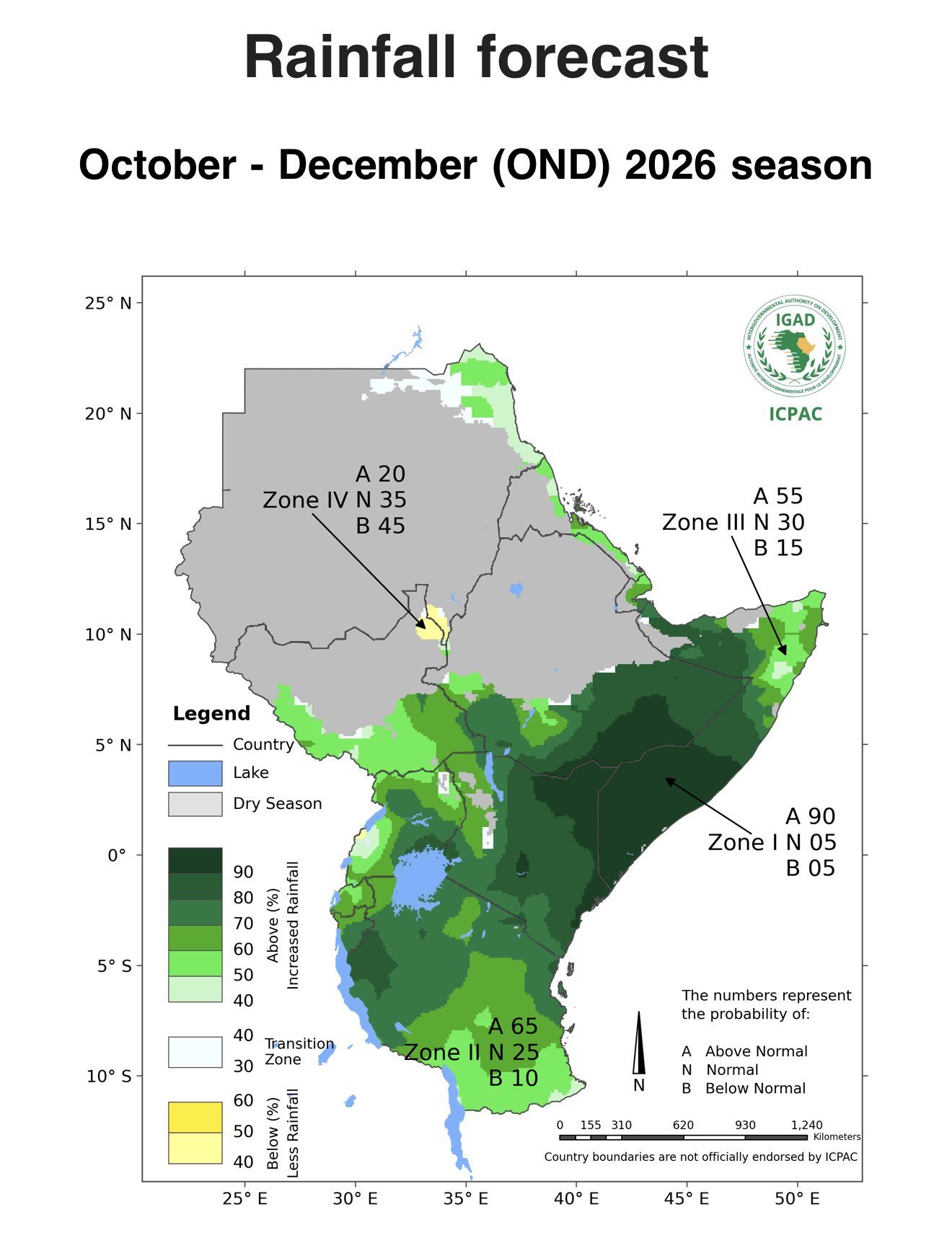
According to data published by ICPAC, vast areas within the equatorial and southern zones of the region show high probabilities of above-normal rainfall. Probability mapping indicates up to a ninety percent chance of above-average precipitation in core zones, which encompasses parts of Kenya, Uganda, southern Ethiopia, and Somalia.
Regional infrastructure and urban drainage systems frequently face operational strains during periods of intense rainfall. Heavy downpours often impact ongoing civil engineering works, earthworks, and transport networks across major urban corridors, when flooding occurs.
Authorities and development planners rely on early seasonal predictions to prepare emergency responses, manage reservoir levels, and adjust civil construction timelines before the onset of heavy rains.
The forecast map delineates distinct zones, indicating varying probabilities for above, normal, or below-normal rainfall across member nations. While central areas expect wet conditions, isolated northern patches show higher chances of drier trends.
Engineers and project managers across the country typically implement siltation controls, drainage clearing, and site stabilization strategies when facing high-probability rainfall alerts. Transport agencies also monitor critical road networks to prevent washouts on vulnerable unpaved connections and low-lying bridge approaches.
The October to December period remains one of the two major rainy seasons for the region. Public agencies, agricultural sector players, and disaster management teams maintain active monitoring as the season approaches, ensuring early warning systems function properly across vulnerable rural and urban communities.
Comments (0)
Leave a Comment
No comments yet. Be the first to share your thoughts!