
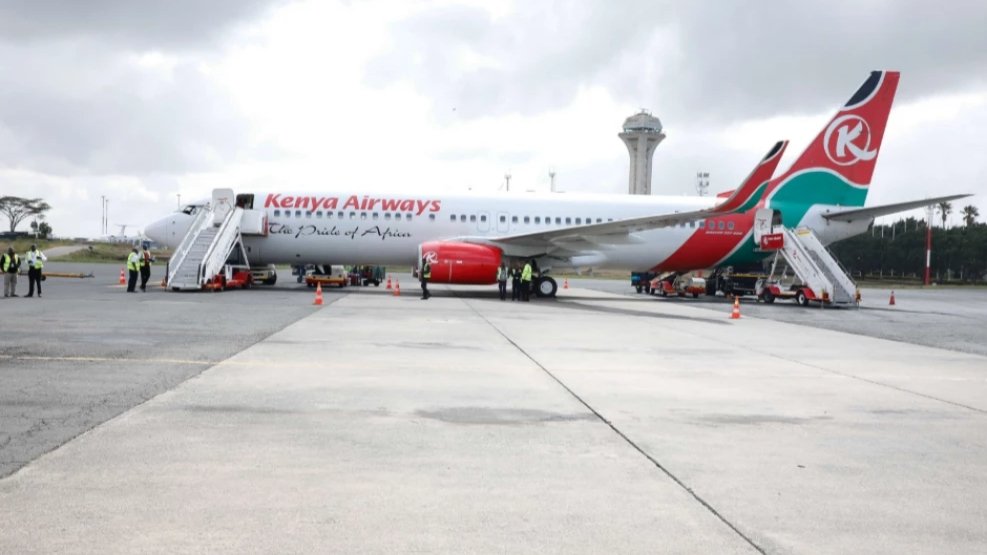

Kenya Airways has diverted several flights to Moi International Airport in Mombasa and warned passengers to expect delays at Jomo Kenyatta International Airport after low visibility from weather conditions disrupted normal operations. The national carrier issued the customer update on April 10, 2026, covering both departures and arrivals at its main Nairobi hub.
In the notice, the airline explained that some aircraft had been rerouted to the coastal airport as a precautionary measure to protect the safety of passengers and crew. It described the decision as standard procedure when visibility drops at JKIA, also referred to as NBO in aviation codes. The update stressed that safety remained the overriding priority at all times.
The message opened with a straightforward alert to travellers. Customers should prepare for some delays on both departing and arriving flights because of the weather affecting the Nairobi facility. It then detailed the specific action taken: certain flights had been redirected to Moi International Airport in Mombasa. The airline presented this move as the safest option available under the circumstances.
Kenya Airways went on to apologise directly for the disruption. It asked passengers for patience while ground and flight teams monitored developments and made necessary adjustments to the schedule. The carrier said it would continue tweaking routes and timings as soon as conditions improved. The statement closed with a second expression of regret, thanking customers for their understanding during the situation.
Jomo Kenyatta International Airport serves as Kenya’s busiest and most important aviation gateway, handling the bulk of international and domestic traffic from its base in Nairobi. Moi International Airport, located on the coast in Mombasa, frequently steps in as an alternative landing point when weather closes in on JKIA. Diverting planes there allows flights to keep moving rather than face outright cancellation, though it can add time and require onward arrangements for passengers.
The airline operates an extensive network that reaches across Africa, Europe and Asia. Any interruption at the primary hub in Nairobi tends to ripple through connecting services, which is why the carrier moved quickly to inform customers through its usual channels. No specific flight numbers or routes were listed in the April 10 update, leaving individual travellers to check their own bookings for the latest status.
Low visibility events occur from time to time at major airports around the world, often triggered by morning mist, haze or heavier weather systems. In Nairobi, such conditions occasionally force pilots and air traffic controllers to follow strict minimum requirements set by aviation regulations. Kenya Airways’ response followed established industry practice, prioritising clear communication alongside operational safety.
Passengers already at the airport or en route likely received alerts via display boards, mobile apps or direct contact from the airline. The Mombasa diversion point offers road links to the city centre and surrounding areas, giving affected travellers options to continue their journeys once on the ground. As the day progressed, the airline indicated it would keep updating its network based on real-time weather reports.
The customer statement brought together all essential details in one place, helping reduce confusion for those caught up in the changes. No reports have emerged of injuries or more serious incidents linked to the visibility drop. The quick notice reflected the carrier’s focus on keeping travellers informed while its teams worked through the temporary constraints.
Airport infrastructure in Kenya has undergone upgrades in recent years to cope with growing passenger numbers, yet weather remains a factor outside anyone’s control. Kenya Airways continued managing its broader operations throughout the period of reduced visibility at JKIA. Customers needing more information were directed to the airline’s official channels for the most current details on their specific flights.