
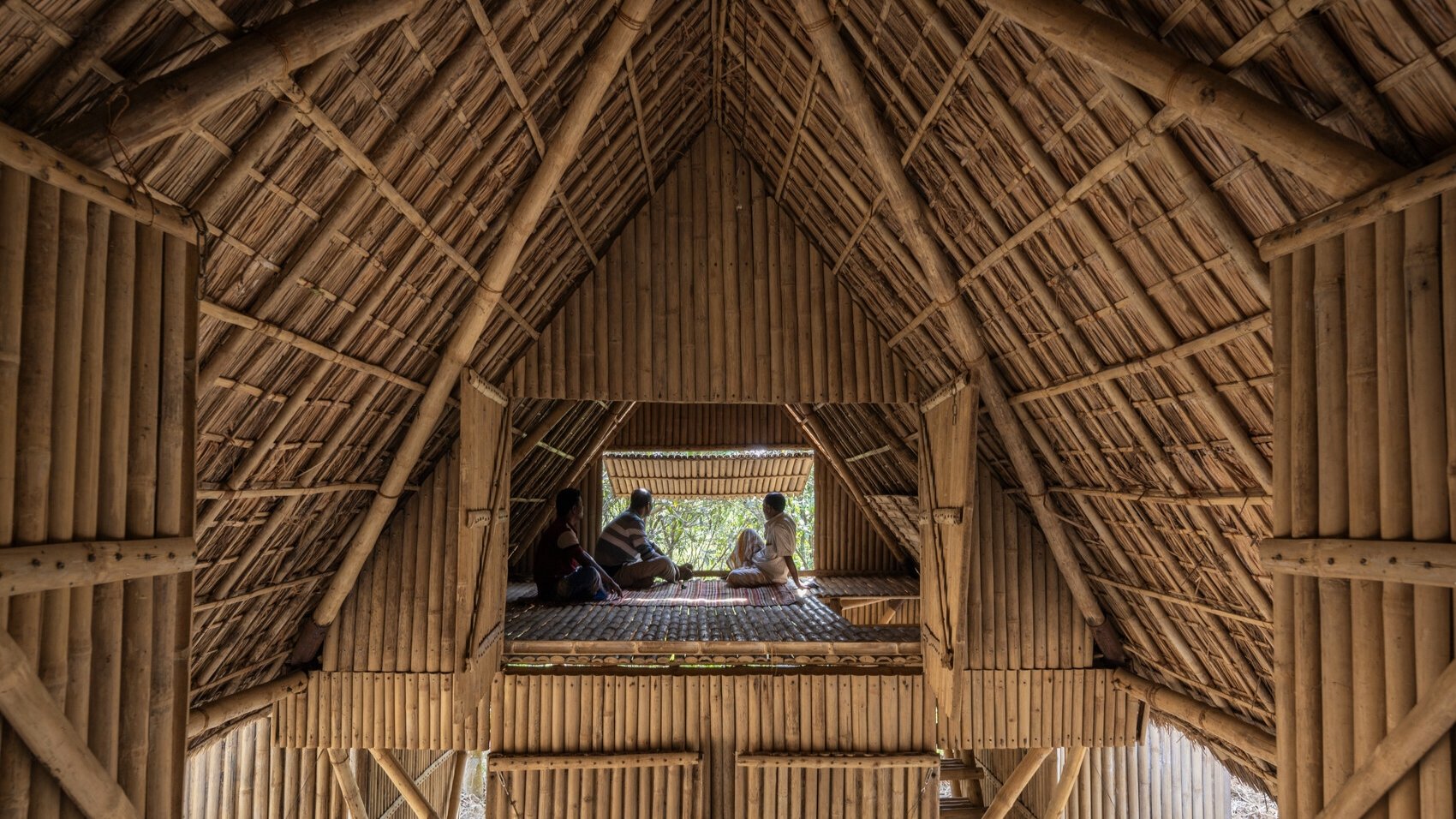

Across Bangladesh, Togo, Egypt, Indonesia, India, Haiti, and Bali, a growing number of contemporary architects are returning to local building knowledge, not as a stylistic gesture, but as a direct response to the conditions their buildings must actually survive.
Earth walls, bamboo structures, shaded thresholds, and community-led construction are being treated not as historical references but as working tools. The questions driving this shift are practical ones: how to cool a building without mechanical systems, how to build using materials that exist nearby, how to design structures that communities can repair themselves without specialist contractors.
Vernacular architecture has always answered these questions. In Togo, the Batammariba people construct two-storey earthen houses with thick walls of earth, straw, and cow dung, sealed with a natural waterproofing varnish derived from the nere fruit. The design manages the harsh dry season and the harmattan wind without any imported technology. In Bangladesh, bamboo has long served as the primary structural material in flood-prone areas, both for its availability and its ability to flex without fracturing during floods and cyclones.
What is changing is that formal architecture practices are now working with these traditions at scale, applying them in ways that combine local knowledge with updated structural thinking.
Marina Tabassum's Khudi Bari project in Bangladesh offers one example: a bamboo and timber structure designed to be dismantled and relocated before floodwaters rise, giving communities in flood-prone areas housing that moves with the landscape rather than against it.
The Sahel and Sub-Saharan Africa have produced similar thinking. Francis Kéré's work in Burkina Faso has demonstrated that compressed earth, raised roof structures, and community construction processes can produce schools and public buildings that outperform imported concrete in terms of thermal comfort and long-term maintenance.
Climate pressure is accelerating this shift. As conventional construction materials become more expensive to import and the environments buildings must cope with become more extreme, the logic of building with what is available, in ways that local people understand and can maintain, becomes harder to dismiss.
The conditions making this knowledge necessary, as ArchDaily's analysis put it, are not coming. They are already here.
Comments (0)
Leave a Comment
No comments yet. Be the first to share your thoughts!