
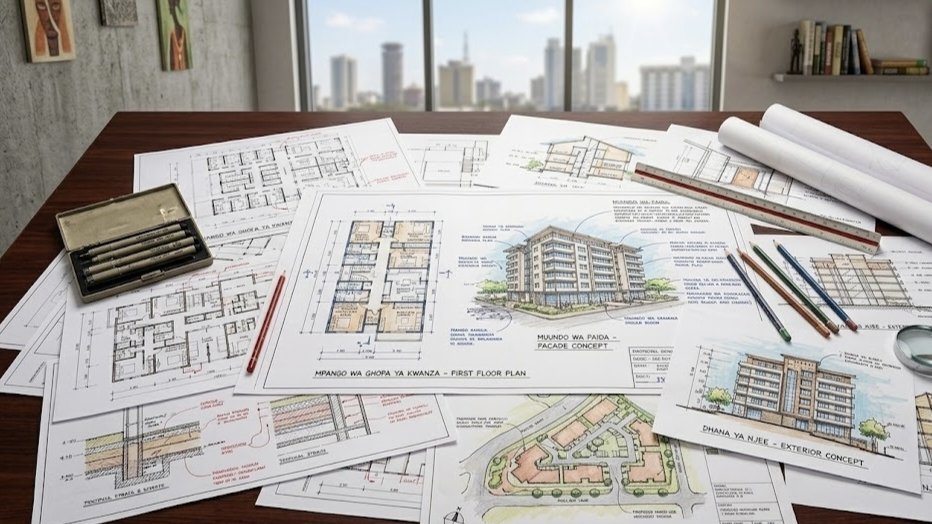

A professional discussion circulating within architecture and construction circles has drawn renewed attention to a long-standing issue in Kenya’s built environment sector: the gap between architectural design intent and what is ultimately delivered on site.
The conversation centres on how architectural ideas, particularly those developed with cultural, environmental, or conceptual depth, often undergo significant interpretation once construction begins. While design teams typically invest time in developing drawings and documentation, the translation of those details into physical structures remains inconsistent across projects.
In many cases, the divergence is not attributed to the design itself but to how documentation is understood and applied during execution. Construction teams frequently rely on experience-based decision-making when drawings are unclear, incomplete in interpretation, or not followed in detail, which can lead to deviations from the original design intent.
The issue becomes more pronounced in projects where architectural expression is closely tied to conceptual or cultural elements. In such cases, even small on-site adjustments can dilute the intended meaning of the design, shifting the outcome away from what was originally envisioned at the design stage.
The discussion also highlights a recurring tension within the construction process: the balance between design intent and practical execution. While architects and designers focus on documentation and coordination, contractors and site teams often operate under time, cost, and resource pressures that shape how strictly drawings are followed.
This dynamic has long been recognised as a source of inconsistency in the built environment, where the final structure may not fully reflect the coordinated input of the design team. The result is a built form that sometimes departs from both the technical detail and conceptual narrative of the original design.
The debate further reflects broader concerns about how architectural communication is managed across project stages, particularly where multiple stakeholders interpret the same drawings differently. In such environments, the clarity of documentation and the discipline of execution become critical to achieving alignment between design and delivery.
As the conversation continues, it underscores a persistent reality in construction: the success of a project is not determined by design alone, but by how effectively that design is understood, preserved, and implemented throughout the building process.
Comments (0)
Leave a Comment
No comments yet. Be the first to share your thoughts!