
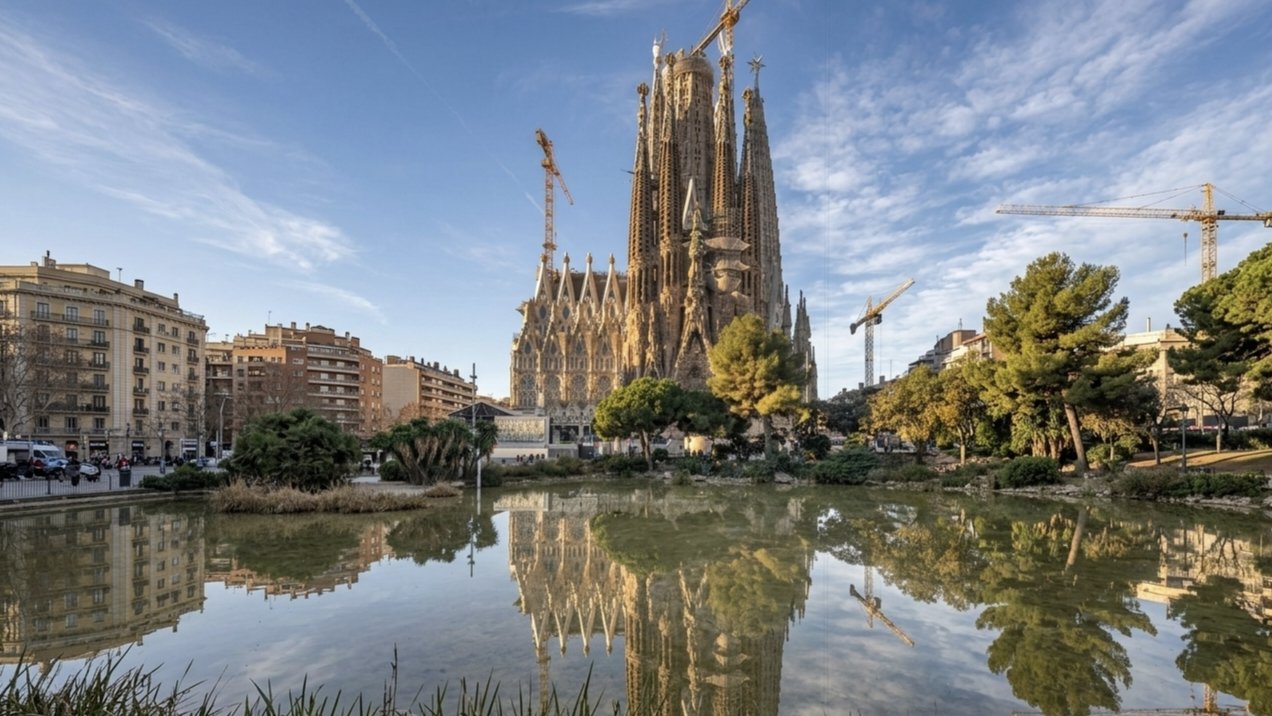

On the morning of February 20, 2026, at 11 o'clock, the final section of a cross was winched into position above Barcelona. The building beneath it had been under construction for 144 years.
The Tower of Jesus Christ, the central and tallest spire of the Sagrada Familia basilica, reached its full height of 172.5 metres with that installation, making it the tallest church building in the world. It surpasses the Ulm Minster in Germany, which had held that record since the 19th century.
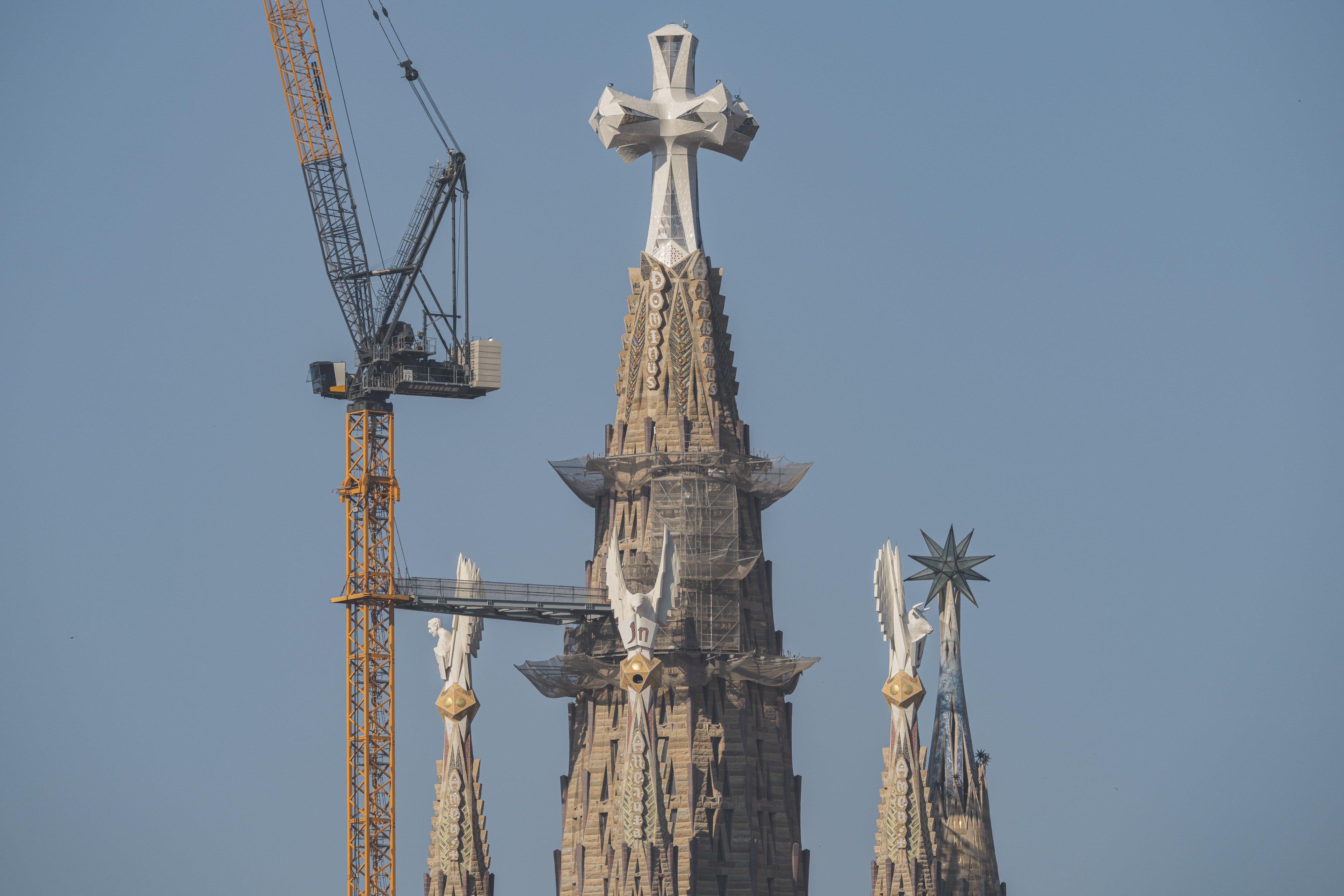
The cross itself stands 17 metres high and 13.5 metres wide. Each of its four arms weighs approximately 12.8 tonnes. It is clad in white glazed ceramic and glass, materials chosen for their brightness and resistance to weather, and at its highest point will eventually house a sculpture of the Agnus Dei by Italian artist Andrea Mastrovito.
The foundation stone of the Sagrada Familia was laid on March 19, 1882. Antoni Gaudí took over as chief architect the following year, transforming what had begun as a conventional neo-Gothic project into something that defied every category available to describe it.
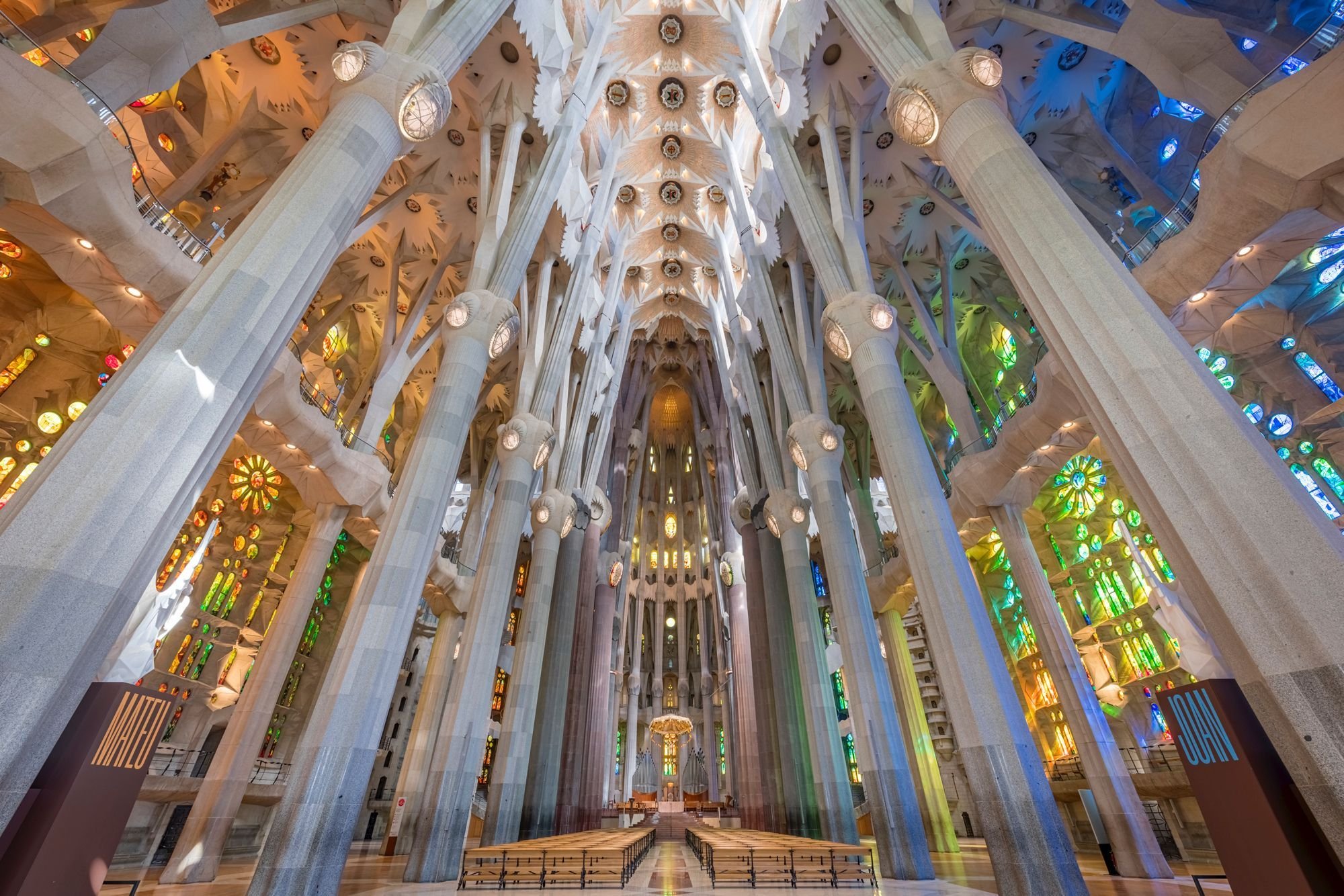
The interior
He used hyperboloids, paraboloids and helicoids to solve structural problems that conventional architecture had not yet confronted. He embedded Christian symbolism into every surface, every angle, every facade. He worked on the building for over four decades and died in 1926, struck by a tram in Barcelona, before a single tower was complete. The only structure he saw finished during his lifetime was the Tower of Barnabas, completed on November 30, 1925, just months before his death.
What followed was one of the most unusual construction narratives in recorded history. His workshop was set on fire during the Spanish Civil War in 1936, destroying many of his original drawings and plaster models. The architects who came after him worked from reconstructed plans, photographs and fragments, attempting to honour a vision no one could fully verify.
Construction continued through dictatorship, through economic crises, through a global pandemic. It was funded entirely by donations and visitor revenue. No public money. No single patron. Over four million visitors came through its doors in 2024 alone.
The height of 172.5 metres was not accidental. Gaudí deliberately kept the tower slightly below the summit of Montjuïc hill, which rises to 177.7 metres. His reasoning was theological. He believed that no human structure should stand taller than a work of God. That constraint, built into the design nearly a century and a half ago, is now a fixed fact of Barcelona's skyline.
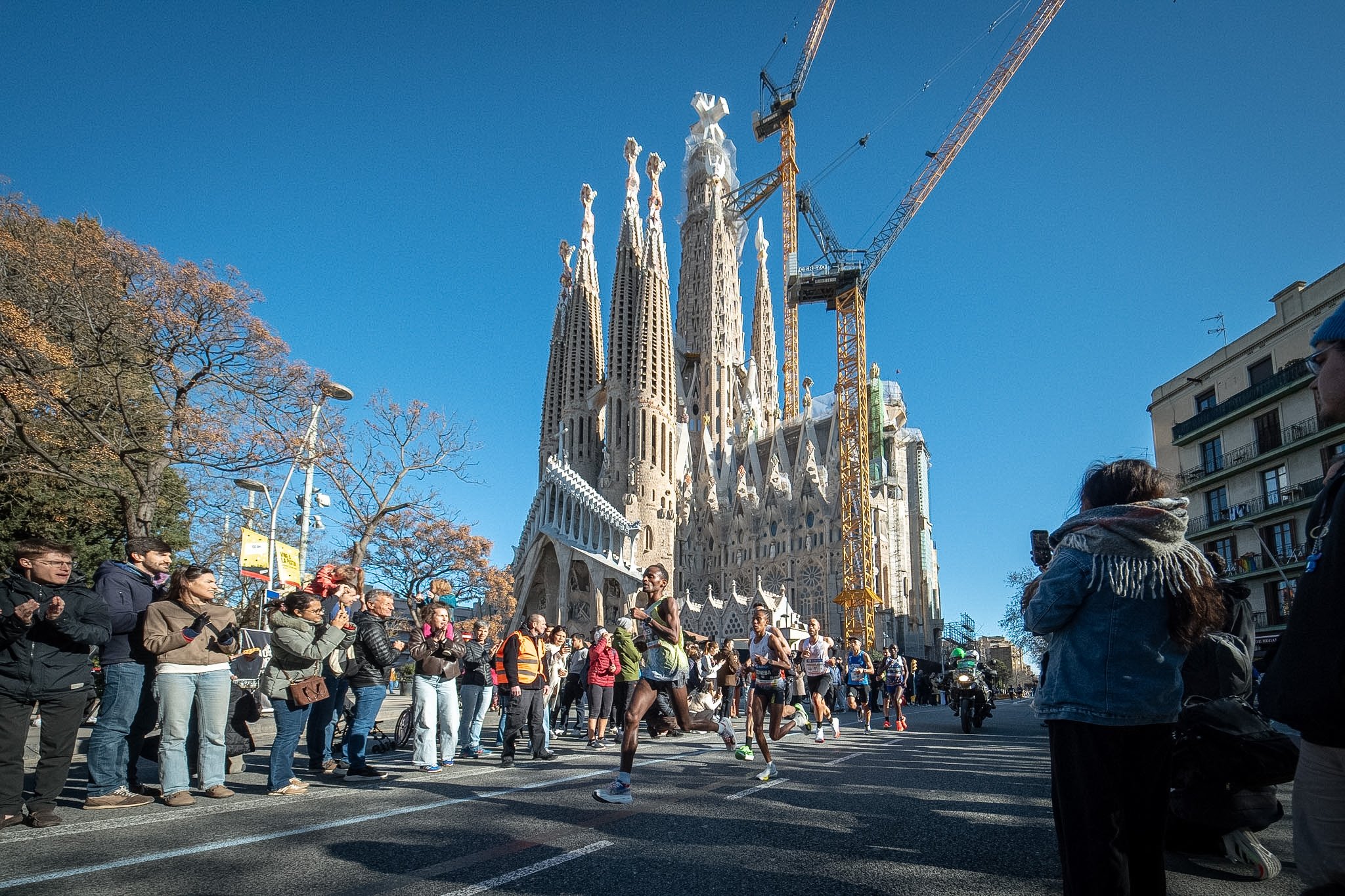
The completion of the external works does not mean the building is finished. Interior work on the Tower of Jesus Christ will continue through 2027 and 2028. The Glory Facade, the main southern entrance that Gaudí considered the most important of the three principal facades, remains under construction and is now expected to be complete sometime between 2030 and 2034. The six central towers are now complete for the first time. The building is substantially done, but not entirely.
A ceremony to mark the tower's completion is planned for June 10, the centenary of Gaudí's death. The Pope is expected to attend and consecrate the central tower. Barcelona has been named UNESCO World Capital of Architecture for 2026, and the city is hosting the UIA World Congress of Architects from June 28 to July 2. The convergence of events means that the Sagrada Familia will sit at the centre of international architectural conversation for much of this year.
For the construction world specifically, the tower carries a particular kind of weight. It is the longest continuously active building project in modern history, and it was completed without a single government contract, without a fixed client brief and across a span of time that encompassed two world wars, a civil war, a dictatorship and a pandemic. What this required was something rarer than capital or political will. It required a profession willing to keep building toward a vision it could not fully see.
Gaudí once said, when asked why construction was taking so long, that his client was in no hurry. He was referring to God. As of February 20, 2026, the building has finally reached the height he intended for it.
Comments (0)
Leave a Comment
No comments yet. Be the first to share your thoughts!