
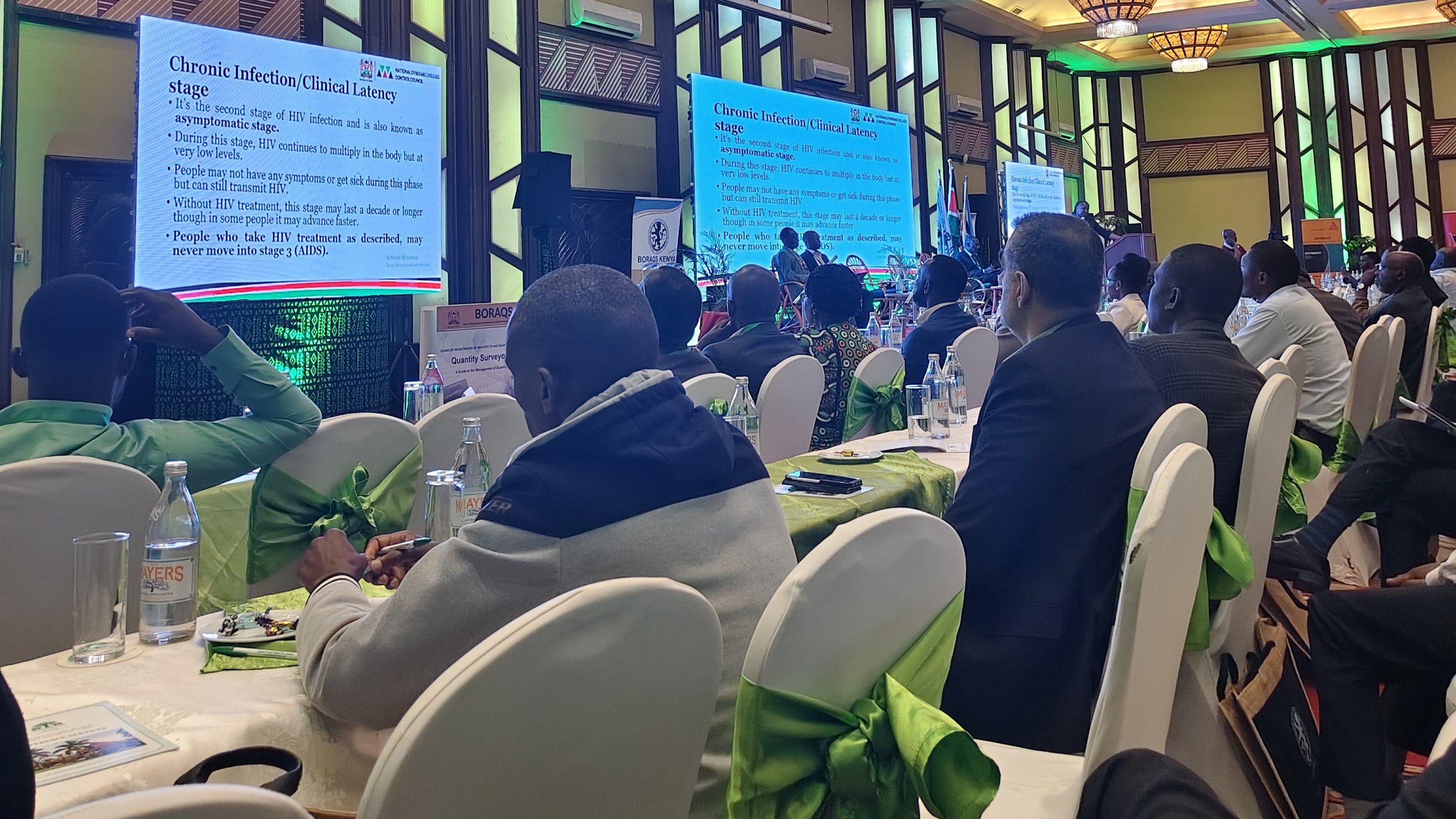

Nairobi has lost 60% of its green cover. That figure, presented by Dr L. Arch Sunday Abuye at the Board of Registration of Architects and Quantity Surveyors (BORAQS) Continuing Professional Development (CPD) Seminar on May 14, 2026, set the tone for a session that refused to treat urban design as an aesthetic conversation. For Abuye, the built environment is a public health issue, and Kenya's cities are losing the argument.
The seminar, held at Safari Park Hotel in Nairobi under the theme "Health and Dignity in the Built Environment," brought together architects, quantity surveyors, engineers, contractors and industry partners across two days. Abuye's session on biophilic design in landscape architecture was among the most discussed of the event.
Biophilia, from the Greek for life and love, describes the innate human tendency to seek connection with nature and other living systems. The concept entered architectural theory formally in 1992, drawing on evolutionary biology to argue that humans are hardwired to respond to natural light, plants, water, natural geometry and animal life. Biophilic design integrates these elements not as decoration but as structural components of how a building or public space functions.
Abuye argued that Nairobi is moving in the opposite direction. Informal sprawl, concrete expansion and the loss of green cover are producing what he described as a wellness gap, a measurable deterioration in the physical and mental health of urban residents driven directly by the built environment. The urban heat island effect, where dense built-up areas trap and retain heat significantly above surrounding rural temperatures, is worsening. Neglected public realm, absent street trees, unshaded walkways and paving over resilience are making Nairobi's streets hostile to the people who use them most.
The implications he outlined were not abstract. Respiratory illnesses arise from toxic air quality. Productivity drops. Lost working time accumulates. Walls built for security erode the sense of community and togetherness that makes dense urban living functional. And because the trees that once managed heat, absorbed stormwater, and filtered air have been replaced by cobblestones and cabros, the environmental and economic cost of undoing the damage keeps growing.
The session drew on global case studies to show what a different approach looks like. Seoul's Cheonggyecheon stream restoration project transformed a covered urban highway into a publicly accessible riverfront, rehabilitating an entire corridor of the city. New York City's High Line converted an abandoned elevated freight rail line into a planted public walkway threading through Manhattan's west side. Milan's Bosco Verticale integrates over 900 trees and 20,000 plants into the facades of two residential towers. Singapore has embedded biophilic design as a city-wide policy, requiring greenery on building surfaces and integrating ecology into infrastructure design at a municipal level.
The practical recommendations Abuye put to the room were direct. Architects and quantity surveyors should consult early and involve developers and policy makers in the design team. Biophilia should be promoted not as an add-on but as a cost-saving long-term strategy, given the measurable reductions in energy use, cooling costs, and maintenance that well-designed green infrastructure delivers. Certifications such as Leadership in Energy and Environmental Design (LEED) and Excellence in Design for Greater Efficiencies (EDGE) should be tools that architects actively deploy rather than leave to client initiative. Export of wellness services to outside regions was also raised as a commercial opportunity for Kenyan firms with biophilic expertise.
Key takeaways from the session included six practical lessons for practice. First, understand that there is an ecosystem. Second, start with ecology. Third, design for maintenance. Fourth, engage communities. Fifth, measure value. Sixth, think at multiple scales and embrace adaptation.
Partners present at the seminar included Crown Paints, Sika Kenya, the National Transport and Safety Authority (NTSA), MRM and Jumbo Chem, among others, reflecting the broad industry coalition that BORAQS has built around its professional development programme.
The conversation about what Kenya builds and how it affects the people inside those buildings is no longer confined to academic circles. At Safari Park Hotel on May 14, it was being had in a conference room full of the professionals who sign off on those buildings.
Comments (0)
Leave a Comment
No comments yet. Be the first to share your thoughts!